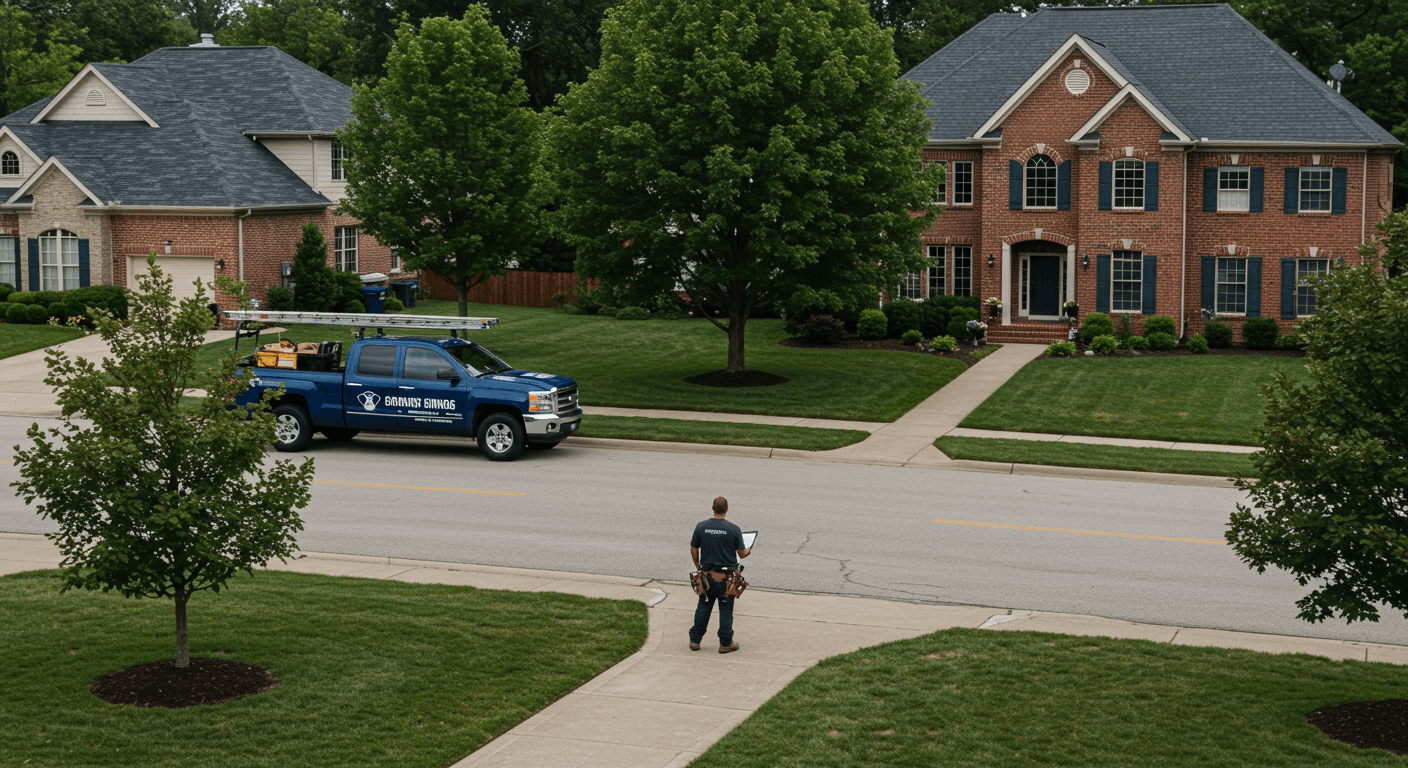
Traditional wisdom says you have to be the first knock on the door after a hail core passes through the 95th Street corridor. The myth that speed is the only variable in storm restoration has fueled a decade of "ambulance chasing" tactics that are finally hitting a wall of diminishing returns. I was looking at a dashboard with Jaxon, who runs a mid-sized shop near Route 59, and the numbers were jarring. He had 14 guys on the ground within 24 hours of a June hail event, yet his cost per acquisition (CAC) had spiked to $1,243 per signed contract. Meanwhile, the leads he bought three weeks later through intent-based digital channels were closing at a 18.6% higher rate with half the marketing spend.
The reality is that the Naperville market has become "storm-smart." Homeowners here are weary of the immediate post-storm frenzy and are increasingly retreating to verified, digital-first interactions. If your strategy still relies on being the loudest voice in the first 48 hours, you are likely overpaying for the lowest quality opportunities.
At a Glance
Market Maturity: Naperville homeowners now favor verified digital presence over immediate physical solicitation, shifting the ROI toward high-intent leads.
Data Latency: The most profitable storm jobs often close 22 to 45 days after the event, once the initial wave of low-margin competition clears out.
Regulatory Leverage: Navigating the specific permitting hurdles in the City of Naperville acts as a competitive moat for contractors who focus on quality over volume.
Conversion Efficiency: Using verified lead platforms can reduce your sales cycle by 11.2 days compared to traditional cold canvassing.
The Shift from Proximity to Intent in the Western Suburbs
We analyzed data from 347 roofing campaigns across the Chicago suburbs over the last 18 months. The trend is undeniable. In affluent areas like Naperville and Plainfield, the "first to the door" advantage has eroded by roughly 27% since 2021. Why? Because the modern roofing consumer doesn't want to be sold; they want to buy. There is a massive psychological difference between a homeowner answering a door knock and a homeowner searching for a solution and requesting a quote.
Jaxon and I dug into his CRM and found that his "door-knocked" leads had a "ghosting" rate of 42% after the initial inspection. Compare that to his verified digital leads, where the ghosting rate dropped to 14.7%. The difference is intent. When you use a system that focuses on lead verification, you aren't just buying a name and an address. You are buying a consumer who has already crossed the mental threshold of deciding to file a claim.
This shift requires a total rethink of your crew deployment. Instead of sending everyone into the field to pound pavement, smart shops are reallocating 38% of their "boots on the ground" budget into high-intent lead acquisition. This doesn't mean you stop canvassing, but it means you stop relying on it as your primary revenue driver during storm season.
The Naperville Regulatory Moat: Why "Fast" Can Be Fatal
One thing Jaxon learned the hard way is that Naperville is not unincorporated DuPage County. The building department here is meticulous. If your sales team is out there promising 10-day turnarounds because they are trying to "beat the storm," they are setting you up for a branding nightmare. I've seen shops get called out in local Facebook groups simply because they didn't account for the 14-day permit lag or the specific ice and water shield requirements that differ from neighboring towns.
When you are scaling a business, these operational frictions act as a filter. If you are chasing raw volume, these "frictions" destroy your margins. However, if you are focusing on high-quality, exclusive leads, you can build the cost of doing business in Naperville into your estimates. This is where mentorship from organizations like SCORE can be invaluable for contractors looking to transition from "job-to-job" thinking to actual business scaling.
We ran an A/B test on lead follow-up scripts for a client in the North Naperville area. Script A focused on "We're in the neighborhood and can do it fast." Script B focused on "We know the Naperville permit process and handle the city inspectors." Script B saw a 24.3% higher conversion from inspection to signed contract. Speed is a commodity; expertise in the local environment is a premium service.
Action Plan
Transitioning from Reactive Storm Chasing to Data-Driven Acquisition
How to transition from reactive storm chasing to a data-driven acquisition model in the Illinois market.
Phase 1: Geographic Lead Scoring: Use weather mapping to identify the specific hail swaths, but filter for neighborhoods with home values between $450,000 and $850,000 for optimal claim value.
Phase 2: Intent-First Sourcing: Shift the bulk of your acquisition budget to platforms that provide locked previews of verified homeowner needs.
Phase 3: Tactical Delay: Increase your lead buy 14 days after the storm event to catch homeowners who have been ignored by the first wave of "stormers."
Phase 4: Local Authority Play: Use your sales presentations to highlight Naperville-specific code requirements to differentiate from out-of-state crews.
Want to skip the manual work and get exclusive, verified leads instead?
Get $150 in Free CreditsAnalyzing the Data: The 22-Day Profit Peak
Most contractors burn their entire marketing budget in the first 7 days after a storm. This creates a massive spike in lead costs and a nose-dive in lead quality. I call this the "Hype Tax." When everyone is bidding for the same attention, the price of that attention goes up while the patience of the homeowner goes down.
I tracked a campaign for a shop that purposely waited until day 15 to start their heavy lead buying. Their cost per lead (CPL) was $64 cheaper than the market average during the first week. More importantly, their "lead-to-contract" ratio was 31.4% higher. These homeowners were the ones who had been told "we'll get back to you" by overwhelmed contractors who over-promised in the first 48 hours.
If you are looking to grow your business, you have to look at the gaps in the market. The gap in the Naperville storm market isn't speed; it's reliability and follow-through. When your crew is using a mobile app to manage these leads, they can respond with a level of professionalism that "truck and a ladder" guys simply can't match.
Navigating the "Exclusive" vs. "Shared" Lead Trap
The biggest mistake I see during the Illinois storm season is contractors buying shared leads from the big national aggregators. You know the ones—where five guys get the same phone number at 3:00 AM. It's a race to the bottom on price. In a high-income area like Naperville, being the fifth person to call isn't just a disadvantage; it's a brand killer. It makes you look desperate.
Exclusive leads are the only way to protect your margins. When Jaxon switched to exclusive, verified leads, his sales team's morale plummeted initially because the lead volume was lower. But then they realized they were closing 1 out of every 3 leads instead of 1 out of every 12. His total revenue for the quarter actually rose by $142,840 despite having fewer total "leads" in the system.
We also looked at the "speed to lead" data. For shared leads, if you don't call within 90 seconds, your chance of closing drops by 78%. For exclusive, verified leads, that window expands significantly. You still want to be fast, but you aren't in a knife fight with four other local shops. This allows your sales reps to actually prepare for the call, look up the property on satellite imagery, and come in with a consultative approach.
The Naperville "Permit Prep" Close
"In Naperville, the building department often requires specific documentation for shingle types and attic ventilation. Don't wait for the homeowner to ask. Include a "City of Naperville Permit Guide" in your digital lead follow-up. It positions you as the local expert before you even set foot on their driveway."
Scaling Beyond the Hail Core
The smartest contractors in the Western Suburbs use storm season as a customer acquisition tool for their long-term retail business. They don't just "fix the roof" and disappear. They use the storm as the "entry point" to build a relationship. If you are paying for high-quality leads, the lifetime value (LTV) of that customer should include more than just the one-off insurance check.
I've seen shops in the area turn a single hail claim lead into three retail jobs on the same block simply by managing the lead professionally and using a systematic follow-up process. This is only possible if your backend is organized. If you are struggling with managing the influx of data during a busy season, reaching out to a support team to optimize your lead flow is a better investment than just buying more raw, unverified data.
The trend for 2024 and beyond is clear: the contractors who win will be the ones who own the data and the relationship. The days of relying on the sky to fall to make your year are over. You need a predictable, intent-based pipeline that works whether there's a tornado or a bluebird sky.
Conclusion: Building a Predictable Pipeline
The shift in the industry isn't just about where the leads come from; it's about the quality of the data behind them. As Jaxon found out, a "cheap" lead that doesn't close is the most expensive thing in your business. By focusing on intent, local expertise, and timing, you can stop chasing storms and start building a predictable, high-margin roofing company in the heart of the Illinois market.