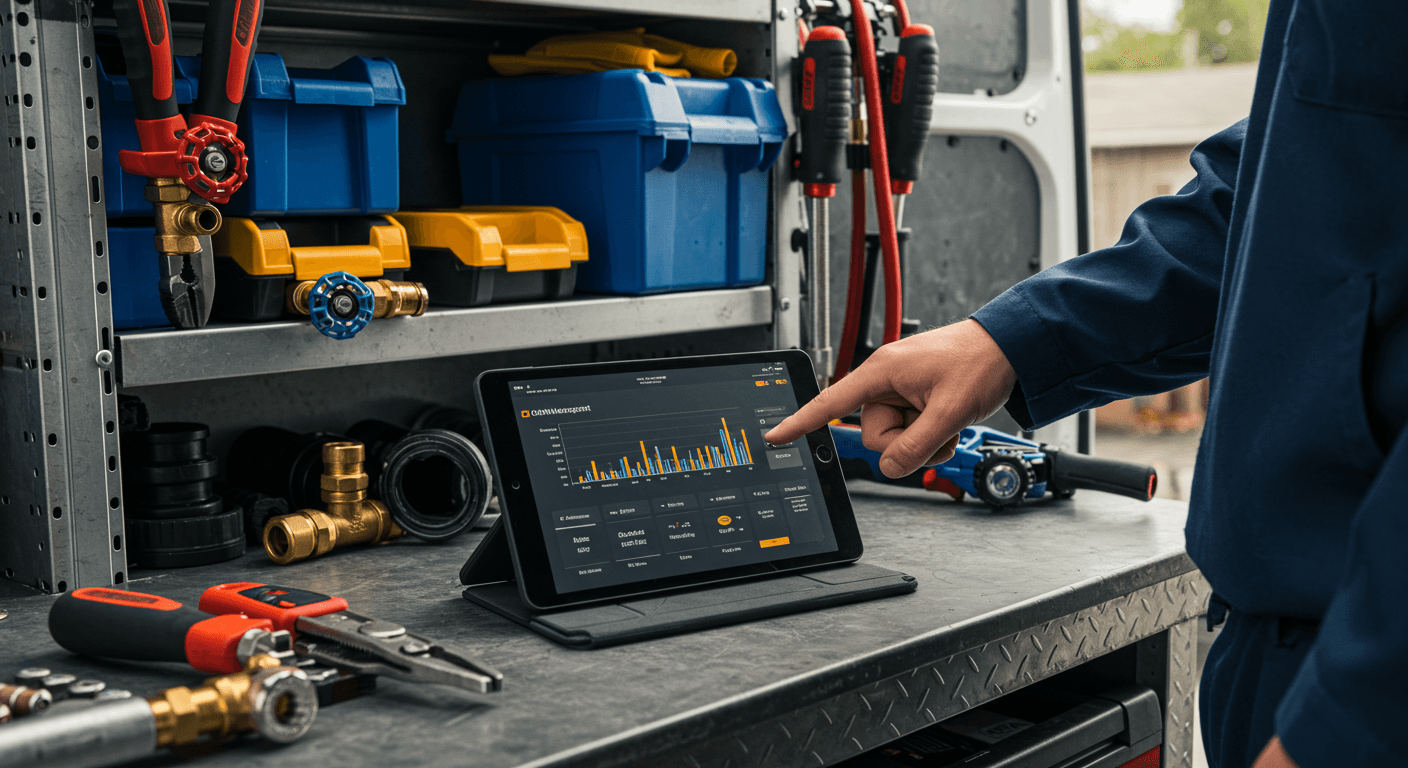
Manual whiteboards and scattered group texts cap output for a lot of residential shops. A shared CRM, used with intent, is what lets a three-truck team punch above its weight on booked revenue. The fork in the road is simple: you either spend nights hunting for missing job notes, or you spend them looking at margins that reflect disciplined follow-up.
Too many owners still file software next to copier leases, like a digital filing cabinet instead of the system that moves estimates to deposits. That mindset leaks money. Roughly 14.3% of revenue often walks out the door when callbacks slip, statuses stay vague, and nobody owns the next touch. The fix is not a prettier dashboard. It is sales velocity: how fast a qualified plumbing lead becomes a scheduled job with a clean scope.
Where spreadsheet grinding quietly taxes plumbing profit
| Operating habit | Spreadsheets and side channels | Central CRM with field access |
|---|---|---|
| Lead ownership | Who called whom lives in someone's head | Every touch logged with next step and owner |
| Pricing consistency | Different tabs, different "friend" discounts | Shared price book inside mobile estimates |
| Photo and permit trail | Camera rolls and email attachments | Job-linked photos and compliance checklist |
| Zip and ticket insight | Manual sorting when someone has time | Reports on average ticket by area and job type |
Lead ownership
Pricing consistency
Photo and permit trail
Zip and ticket insight
The goal is not more data entry. It is fewer dropped threads between dispatch, the office, and the tech on site.
The "digital filing cabinet" trap
A CRM is not just a place to park names and addresses. If your team only uses it to see where vans are, you are renting a map with extra steps. Strong sales tech should push the next action: call, text, estimate, or reschedule. Reporting from Plumbing & Mechanical often highlights how smarter dispatch cuts windshield time. The deeper win is the intake data you collect between calls, because that is what feeds better callbacks and cleaner scopes.
I worked with an owner who was sure his monthly lead spend was the issue. We audited his pipeline and found more than a quarter of inbound inquiries never got a second outbound attempt. Automated SMS nudges did not replace his team; they backed up the behavior his crew was too slammed to keep up manually. In the first three weeks, that discipline alone recovered north of $11K without adding marketing budget. The tool did not magically sell jobs. It made follow-up unavoidable.
Audit your intake leakage
"Each month, export cancelled jobs, no-shows, and dead leads. If more than about 8.4% are dying before a real diagnostic or estimate, start with intake scripts and ownership before you swap vendors. Split the list by dispatcher versus technician follow-up so you know where the process breaks."
What a CRM should do for plumbing revenue
Move from reactive scheduling to proactive nurturing with timed callbacks and SMS that match your real service hours.
Keep the price book inside the mobile workflow so every tech quotes the same numbers on fixtures, water heaters, and filtration add-ons.
Use live job costing signals to prioritize emergency work that keeps crews tight on the map during peak demand.
Tie warranty and install history to the customer record so repeat calls reference the original date, materials, and technician notes.
Conversion still happens at the house
Another myth is that sales software is only for office staff. The highest-value selling context for plumbing is still the kitchen sink, the mechanical room, and the crawlspace. When techs walk in with history, photos from the last visit, and a clear option ladder, they sound like advisors instead of order takers.
The point is to arm people before the door opens. The LeadZik mobile app is one way crews can review verified job detail and locked previews on the road so a water heater call shows symptoms, access notes, and urgency before anyone pulls tools. Less time re-asking basic questions usually means more time presenting options that fit the home.
Plumbing shops that turn on simple lead-nurturing sequences in year one often see a measurable jump in booked jobs from the same call volume.
Sales velocity and tighter dispatch
Integrated sales tech helps with dispatch density, but profit matters more than raw job count. Strong shops study which zip codes produce higher average tickets on filtration, trenchless, or tank upgrades. When the data shows a 19% lift in a suburb, routing and marketing can lean into that pocket instead of treating every lead the same.
Compliance and warranty exposure belong in the same system. When photos, permits, and a short closeout checklist are required before a job closes, you cut rework risk. I have seen shops avoid thousands in repeat labor over a few months simply because the CRM blocked the "complete" status until documentation was on file. Spreadsheets rarely enforce that kind of discipline at scale.
Do not buy software to hide a broken script
If dispatch hands off vague notes or techs skip photos because nobody checks them, a CRM will only document the mess faster. Fix the standard operating steps first, then let automation reinforce them.
Action Plan
Pick a stack that lasts past the first install
Use this sequence when you are ready to move past basic scheduling and build a plumbing-specific revenue system.
List the five costliest leaks in your pipeline: speed to first contact, second attempts, estimate turnaround, reschedule rate, and invoice collection.
Require one source of truth for customer history, equipment age, and open estimates before you add more marketing spend.
Turn on automations that mirror how your shop actually works, including after-hours rules and who owns SMS versus voice follow-up.
Train the field on mobile estimates, photo standards, and good-better-best options tied to your price book.
Review weekly reports on ticket size by neighborhood and job type, then adjust routing or capacity instead of guessing.
Why plumbing-specific detail matters
Codes, materials, and engineered systems keep getting more specific. Coverage from PM Engineer regularly underscores how technical expectations are rising for contractors. Your sales layer needs to store that complexity, not bury it in personal notes.
When inbound volume feels light, the constraint is sometimes conversion, not raw demand. Shops that pair cleaner intake with a verified lead workflow on LeadZik can focus effort on homeowners who already showed intent and shared enough detail to quote with confidence.
You can keep fighting disconnected tools that hide weak handoffs, or you can run a single thread from lead to paid invoice. The owners who commit to the second path are usually the ones widening the gap on net margin while their market stays noisy.