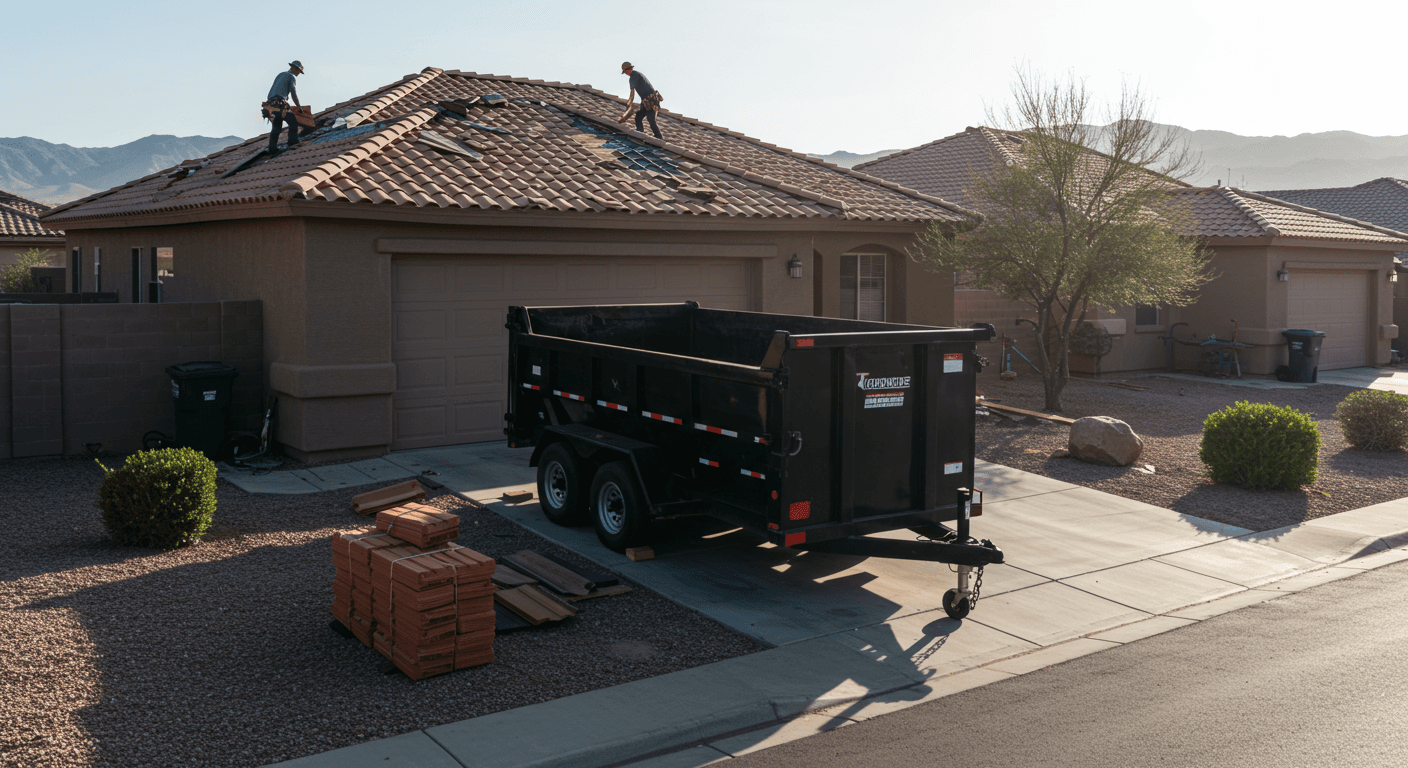
Have you actually calculated the dollar burn when your six-person tear-off crew stands on a driveway in Henderson, waiting on a roll-off driver who is stuck in Spaghetti Bowl traffic? Most owners avoid the math because the number stings. Last quarter I sat with Devin, who runs a mid-sized residential shop out of Reno. He was sure lead cost was the villain. After we walked his last 43 jobs, the real issue was "The Gap," the dead air between crew arrival, bin placement, and sloppy material handling. Logistical friction was costing him about $642 per project. In Nevada, when the thermometer pushes 108, any minute your crew is not tearing or laying is profit walking off the job.
Wait time, double-handling debris, and poor staging showed up in labor hours before anyone blamed marketing.
Efficiency is not about hustling harder. It is distance, sequence, and heat. If bundles land fifty feet farther than they need to, or tear-off starts before the trailer is ready, you pay for motion twice. Below is the operational math for turning logistics into margin instead of a quiet leak.
Dump trailer you control vs. roll-off you wait on
| Factor | Third-party roll-off | Owned dump trailer |
|---|---|---|
| Start-of-day readiness | Dispatch and traffic set the clock | Pre-placed before the crew clocks in |
| Driveway and HOA risk | Steel box, planks, heavier ground pressure | Rubber tires, easier to keep edges clean |
| Cost model on volume | Per-pull pricing stacks fast | Fixed payment + disposal you manage |
| Workflow fit | Good when you do not control the calendar | Strong when you batch starts and own the pull |
Start-of-day readiness
Driveway and HOA risk
Cost model on volume
Workflow fit
Numbers below are illustrative for a shop running predictable residential reroofs; plug your own pulls, tons, and labor rates before you buy iron.
The ROI of owned dump trailers vs. third-party roll-offs
Plenty of Nevada contractors default to a waste vendor because the phone call feels easy. The National Roofing Contractors Association (NRCA) stresses organized, safe job sites, and fast debris removal is part of that. When someone else owns the truck, you inherit their queue.
Here is a straight comparison on a 14-yard dump trailer against typical 20-yard roll-off pulls in the Vegas valley. Assume a loaded trailer near $13,450, roll-off pulls averaging $485 including the first few tons, and 85 roofs a year. Rental spend lands around $41,225. Own the trailer and your modeled per-job cost drops to roughly $332 once you roll in payment, maintenance, disposal at about $65 per ton on four tons, and $45 in tow fuel. Across 85 jobs that is about $28,220, or $13,005 back in year one before you count velocity. The quieter win is the first hour: when Devin's crew hits the deck at 6:00 AM to beat Washoe wind, the trailer is already on site because his lead dropped it the night before. No standing around waiting on a gate code and a tilt bed.
The driveway protection margin
"Nevada HOAs flag driveway damage fast. A dump trailer on rubber often avoids the planking dance steel roll-offs need. Dodge one $2,800 paver claim and you have covered a big chunk of the annual carrying cost."
Material staging: the ground-to-roof gap
Distance is a line item, especially when the sun is cooking your underlayment in the truck bed.
I watched a Summerlin crew burn ninety minutes shuttling bundles from the curb because the boom could not clear low lines. That is a staging plan failure, not a "bad crew." Trade publishers such as Roofing Contractor routinely surface labor figures in the mid-thirties to low forties as a percent of job cost. Mis-stage materials and that share climbs. In Nevada heat, bundles baking on black top can warm-stick underlayment before it ever sees deck.
For Xara, an ops lead I work with, we added a simple staging map from aerials: a primary drop, a reserve drop, and a note on roof-loading when the structure allows. We also tracked walking cost. Two bundles a trip, an extra thirty feet, sixty-five lifts: that is almost two thousand feet of unnecessary travel before lunch. On steep tile common in the south valley, fatigue shows up as speed loss later in the day.
Fatigue from staging distance shows up as slower nail rhythm and more breaks, not as a line item in your P&L.
When roof-loading is safe, use it. When ground drops are mandatory, park the dump trailer as a secondary bench so the perimeter stays clear and the path stays linear.
Action Plan
The 6:00 AM synchronization workflow
A tight sequence for northern Nevada wind days and tight HOA windows. The point is one person owns the clock, not the landfill dispatcher.
Pre-position the dump trailer the evening before the published start date.
Confirm primary and reserve drop zones are clear of homeowner cars by 5:45 AM.
Start tear-off at the farthest edge from the trailer and work back so debris travel shortens as the deck opens.
Run a clean sweep every two hours so piles do not choke foot traffic and slow the lay crew.
Tear-off timing and the heat-sync method
South of the Washoe line, if tear-off bleeds much past 10:30 AM, output falls off a cliff as triple-digit heat lands. Split the crew instead of dogpiling the deck. Send a two-person demo team at 5:30 where noise rules allow to open ridges and valleys, then bring the four-person main group at 6:15. By the time underlayment starts, half the trailer volume is already spoken for and you avoid the clogged deck dance.
Shops that give crews a locked preview of layout and penetrations waste less time guessing where debris should exit. That is one reason teams see calmer mornings when they tighten how job details show up before trucks roll. You want continuous flow: shingles off, deck drying in, storms in mind. During monsoon slots around Las Vegas, an open deck at 2:00 PM is a real liability.
Hidden disposal cost: the truck roll, not just the tip fee
Disposal is not only tonnage. It is the round trip. If Apex in North Las Vegas costs you ninety-five minutes gate to gate with two people in the cab, you just spent a little over three man-hours. At a loaded $42, that is about $130 in labor before diesel.
Teach crews to stack tear-off instead of bowling it in. When Devin's team lifted trailer density by about twenty-two percent, runs dropped from 1.8 to 1.1 per job. Season to season that was roughly $4,100 back on the bottom line, mostly in labor and fuel nobody was watching.
Tie logistics to the calendar, not just the trailer
Trailers, staging, and heat plans only work when start dates are real. Owners who built operations around predictable, exclusive intake can stagger Monday pile-ups so one logistics lead is not chasing four drops while another crew idles. With three trailers and six crews, your week should look like a puzzle, not a spike.
Operational excellence is the gap between making a living and scaling. Treat the dump trailer like capital, treat staging like distance math, and margins tend to follow. Before you buy another bundle of marketing, audit one job: sit in the truck, watch feet and minutes, and add up wait time. You may find the most expensive thing on site is motion nobody scheduled.
Audit checklist for your next Nevada reroof
Log the minutes between crew arrival and debris leaving the roof; that gap is cash.
Model roll-off pulls against owned trailer carrying cost at your real job count, not a brochure.
Map staging from aerials before the supplier truck shows up; primary and reserve beats hope.
Treat landfill runs as labor hours, then teach compaction so trips shrink.