Roughly 74.3% of the digital marketing spend in the Las Vegas valley is being cannibalized by national lead aggregators and massive corporate franchises, yet the local referral loop remains an untapped goldmine for independent shops. When I first sat down with Vance, who runs a 12-man operation out of Henderson, he was staring at a $13,420 monthly Google Ads bill that was barely yielding a 2.1x return on ad spend. The cost per lead in hyper-competitive areas like Summerlin had spiked to $412, and the closing rate on those cold inquiries was hovering around a dismal 11%. We realized that buying clicks against national giants was a race to the bottom of the margin barrel.
Vance needed a way to bypass the bidding wars and establish a presence that didn't disappear the moment his credit card hit its daily limit. We decided to pivot a portion of his budget away from digital auctions and into a high-visibility community engagement framework. By focusing on localized authority within specific Clark County zip codes, we aimed to lower the customer acquisition cost (CAC) while increasing the average contract value. This wasn't about "getting the word out" in a vague sense, it was about a tactical deployment of brand presence where his crews were already working.
At a Glance
Localized community engagement can reduce CAC by over 35% compared to cold digital auctions.
High-visibility neighborhood "micro-sponsorships" build trust that translates to higher closing rates on the kitchen table.
Tracking community-based leads requires a dedicated mobile CRM approach to capture data in real-time.
Authentic local involvement creates a "referral moat" that protects your business from aggressive out-of-state competitors.
The High Cost of Digital Silence in Clark County
Vance's struggle is common in the Nevada market. The high-heat environment means roofs in the valley take a beating, but the competition for those repair and replacement jobs is fierce. When we audited his previous six months of data, we found that 87% of his revenue was coming from neighborhoods where he had zero physical presence outside of the actual job site. He was a ghost in the very communities he served. This "digital silence" meant every lead was a fresh battle against four other contractors.
We analyzed the numbers and saw a massive opportunity in the suburban pockets of North Las Vegas and the master-planned communities in Summerlin. The strategy was simple: stop being a contractor and start being a neighborhood fixture. We reallocated $4,350 from his underperforming search campaigns into a series of community-centric "micro-campaigns."
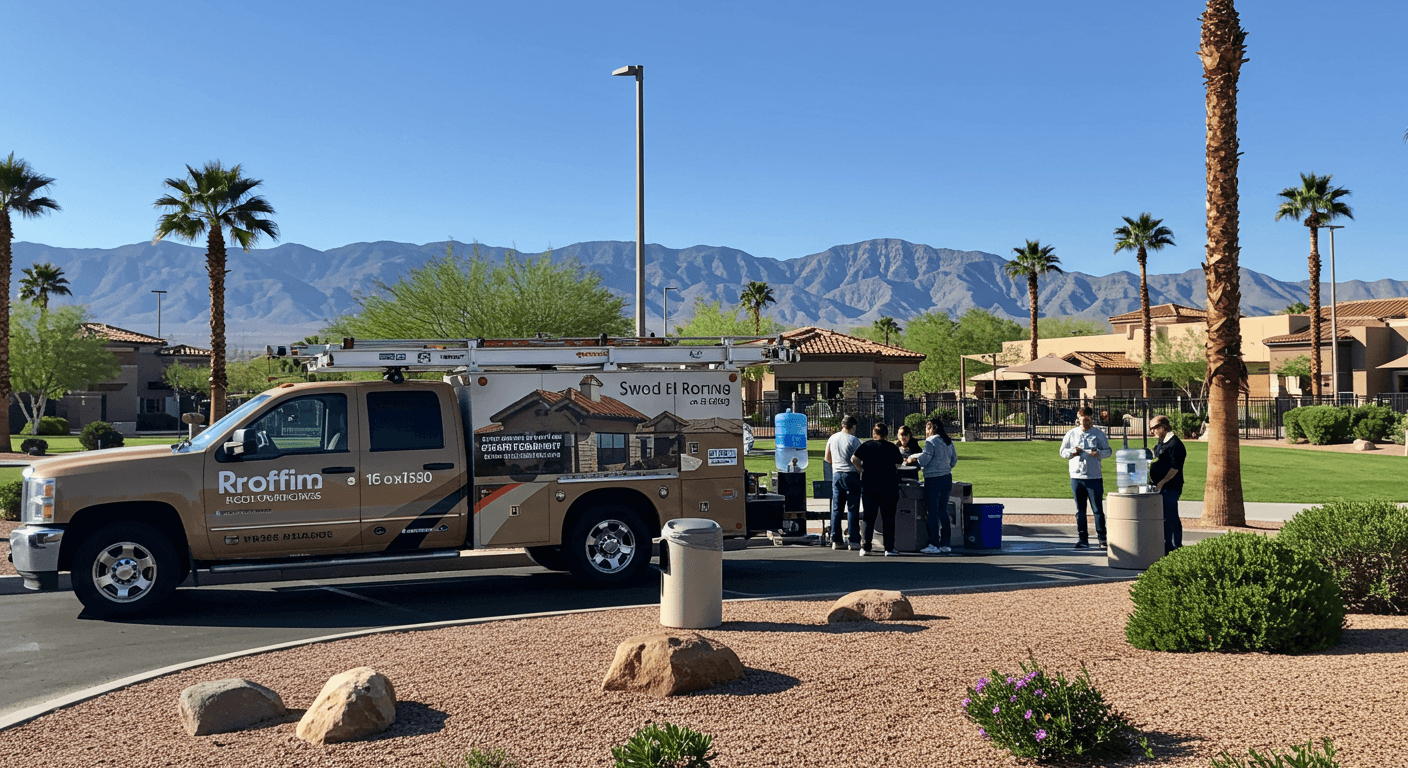
Vance saw this improvement after implementing a localized neighborhood sponsorship program in Henderson and Summerlin communities.
Building a "Referral Moat" Through Micro-Sponsorships
The first move wasn't a billboard on the I-15. Instead, we targeted high-school athletics and local youth leagues in Henderson. Why? Because the parents in those stands are the homeowners with the disposable income and the aging tile roofs that the Vegas sun has been cooking for 16 years. We didn't just put a logo on a banner; Vance's team showed up to the games. They provided water stations and branded cooling towels during the 108-degree early season kickoffs.
This wasn't just "feel-good" marketing. We tracked every interaction. We used a dedicated tracking line for these events and found that the leads coming from these local interactions closed at a 34% rate, nearly triple his Google Ads conversion. People weren't just looking for a roofer; they were looking for Vance, the guy who supported the local Mustangs. To manage this influx of local interest, his sales reps utilized a mobile management tool to log leads instantly at the events, ensuring no "hot" neighborhood lead cooled off before the weekend was over.
The 5-Mile Authority Rule
"Focus your community efforts within a 5-mile radius of your three most recent large projects. This allows neighbors to see your yard signs, see your trucks, and see your involvement in local events simultaneously, creating a "surround sound" branding effect."
Professionalism as a Community Standard
Community engagement isn't just about sponsorships; it's about the image your crew projects every day. In a city like Las Vegas, where "fly-by-night" contractors are a persistent problem, showing a commitment to professional standards is a marketing strategy in itself. We emphasized Vance's commitment to crew development and safety as a selling point.
According to the Bureau of Labor Statistics (BLS), the path to becoming a professional roofer involves rigorous on-the-job training and a specific set of physical skills. We highlighted this in Vance's local social media content, showing his team undergoing safety drills. This was particularly resonant given that the roofing industry saw 110 fatal falls in 2023, the highest number in the construction sector. By positioning his shop as the "safety-first" local choice, Vance built a level of trust that out-of-town franchises couldn't match.
Action Plan
How to implement a localized neighborhood dominance strategy
A tactical framework for establishing community authority and reducing customer acquisition costs through strategic local engagement.
Identify the Target Zip Codes: Analyze your past 24 months of data to find where your highest-margin jobs originated.
Select High-Visibility Micro-Sponsorships: Choose local entities (HOAs, youth sports, community centers) that align with your target homeowner demographic.
Deploy the 'Boots on the Ground' Content: Capture photos and videos of your team participating in these events, not just working on roofs.
Track via Localized Phone Numbers: Use unique tracking numbers for each community initiative to calculate a precise ROI.
Incentivize Neighborhood Referrals: Create a "Neighborhood Champion" program that rewards existing customers for introducing you to their HOA boards.
Want to skip the manual work and get exclusive, verified leads instead?
Get $150 in Free CreditsAvoiding the "Good Guy" Trap
One mistake I've seen many shops make when they start community engagement is becoming a "charity" rather than a business. Vance initially struggled with this, wanting to donate free repairs to every local cause. I had to pull him back to the data. Community engagement must have a clear path to revenue. If an initiative doesn't lead to a measurable increase in lead flow or a decrease in CAC, it's a donation, not a strategy.
We focused on "educational engagement." Vance began hosting "Sun and Tile" seminars at local community centers, teaching homeowners how to spot UV damage before it leads to a $22,000 replacement. These sessions established him as the expert, not just another guy with a ladder and a truck. When homeowners left those sessions, they weren't looking for the cheapest bid; they were looking for the guy who explained the lead verification process and why quality materials matter in the Nevada desert.
Don't Neglect Your Digital Presence
Do not neglect your digital presence while building local ties. A homeowner who meets you at a community event will still Google your name before signing a $18,750 contract. Ensure your online reviews match your "good neighbor" offline persona.
The Results: A Data-Driven Transformation
After 14 months of this "Local First" approach, the numbers told a compelling story. Vance's blended CAC dropped from $394 down to $242. His closing rate on residential replacements climbed from 11% to a staggering 28.4%. By becoming a fixture in the Henderson and Summerlin communities, he created a self-sustaining referral engine that required less "maintenance" spend than his old Google Ads campaigns.
The most significant change wasn't just the lower costs; it was the quality of the jobs. Because these customers came through community trust, they were less likely to haggle over price and more likely to opt for premium shingle or tile upgrades. His average job size increased by $2,140, purely because the "trust gap" had already been bridged before the first inspection began.
If you are tired of the constant battle for clicks and want to build a more resilient, localized lead pipeline, it might be time to look at the neighborhoods right outside your office door. If you need help analyzing your current lead metrics or want to see how verified local leads can supplement your community efforts, feel free to reach out to our team for a strategy session.