If you parked your fleet on Galena Blvd without any decals, would a homeowner in the Oakhurst neighborhood be able to distinguish your service from the twelve other contractors bidding on their storm damage claim?
It is a question that usually results in an uncomfortable silence when I ask it during consulting sessions. Most owners want to believe their "quality craftsmanship" or "family values" are unique, but in a dense market like Aurora, Illinois, those are just table stakes. I recently spent three days analyzing the marketing spend of a mid-sized shop near the Fox Valley Mall. They were pouring $8,432 a month into generic search ads, yet their close rate was hovering at a dismal 11.4%. The reason? They looked exactly like everyone else.
When every contractor promises the same three things, homeowners default to the only metric they understand: price. If you aren't differentiating, you are effectively volunteering to have your margins shredded in a race to the bottom.
Main Points
Targeted brand positioning can reduce lead acquisition costs by up to 21.8% in competitive Illinois markets
Specializing in specific Aurora neighborhoods like Stonebridge or Marywood builds localized trust
Technical differentiation, such as thermal imaging roof scans, increases average ticket value by 14.3%
The Data Behind Aurora's Crowded Roofing Market
The Kane County corridor is one of the most aggressive roofing environments in the Midwest. Based on my recent analysis of regional licensing data and active Google Local Services Ads, the Aurora-Naperville area has an average of 9.4 active contractors competing for every 1,000 households. This saturation leads to "bid fatigue," where homeowners collect five or six quotes just to see who blinks first on price.
Last year, I tracked two different Aurora-based firms over a six-month window. Company A used "All-Weather Protection" as their primary slogan. Company B focused specifically on "High-Wind Solutions for the Fox River Valley," emphasizing the unique wind tunnel effects created by the local geography and river topography.
The results weren't even close. Company B saw a 19.6% higher click-through rate on their digital ads and, more importantly, their cost per acquisition (CPA) was $247 lower than Company A.
Aurora contractors who specialize in specific local conditions see significantly better engagement and lower acquisition costs.
According to the National Roofing Contractors Association (NRCA), contractors who fail to establish a distinct market position often see overhead costs eat up to 12% more of their gross revenue due to inefficient marketing. In Aurora, where local permitting through the City of Aurora building department can be meticulous, demonstrating local expertise isn't just a marketing fluff piece, it's an operational necessity that saves time and money.
Shifting from Commodity to Specialist
To break out of the commodity trap, you have to stop selling "roofs" and start selling a specific solution to a specific Aurora problem. I call this the "Neighborhood Authority" model. Instead of blanketing the entire 60505 zip code, I've seen shops find massive success by dominating a 4.2-mile radius around specific high-density developments.
Think about the historic homes on the Near Eastside. The roofing requirements there are drastically different from a new build in the far west suburbs. If you position your brand as the "Aurora Historic Restoration Specialist," you aren't just another guy with a ladder. You are the expert who understands the nuances of preserving architectural integrity while meeting modern Illinois building codes.
Brand Positioning Comparison
| Factor | Generic 'We Do It All' Branding | Niche 'Specialist' Branding |
|---|---|---|
| Competition Level | High competition on price | Premium pricing power |
| Close Rate | Average close rate of 12-15% | Close rates often exceed 24% |
| Ad Targeting | Broad, expensive ad targeting | Hyper-local, low-cost targeting |
| Customer Perception | Homeowners view you as a commodity | Homeowners view you as an expert |
Competition Level
Close Rate
Ad Targeting
Customer Perception
Tactical Differentiation: The "Tech-First" Approach
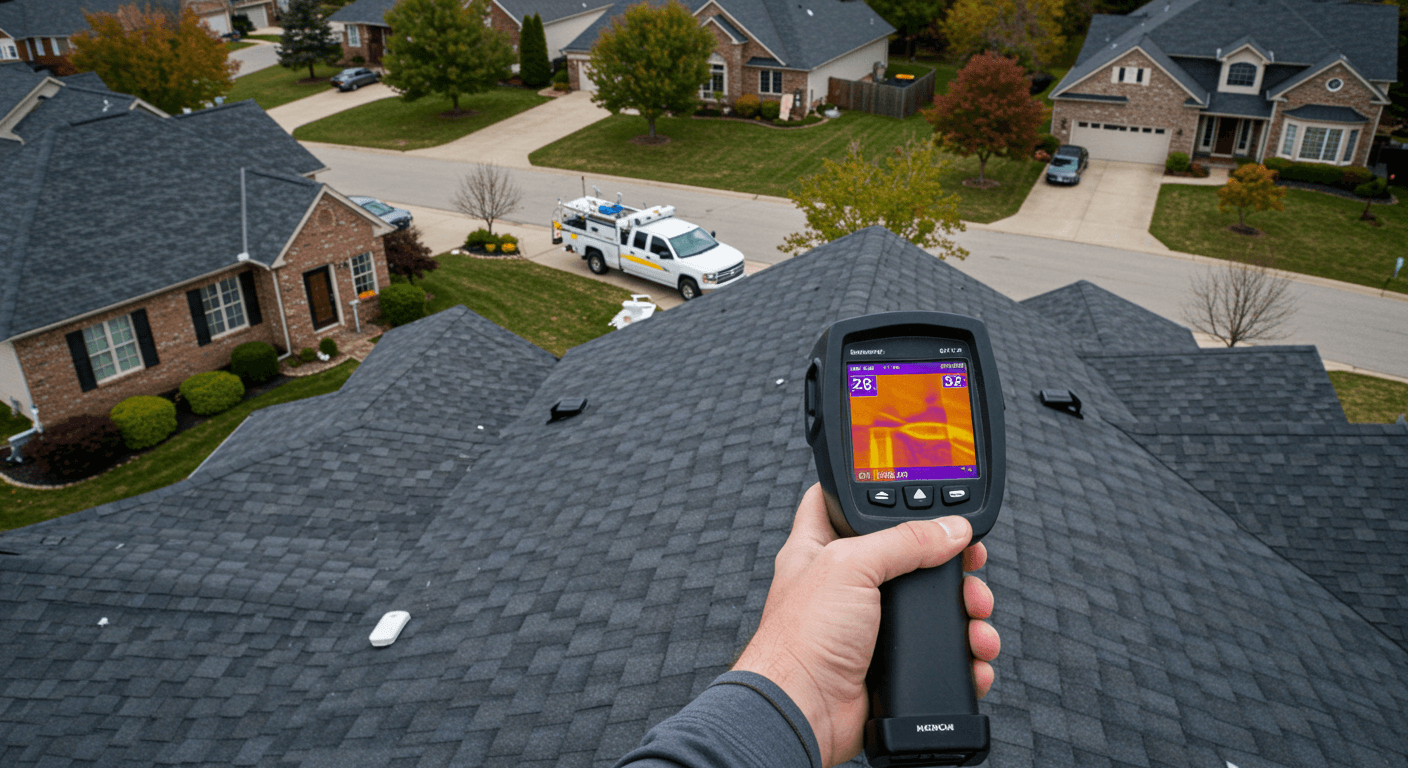
One of the most effective ways I've seen contractors differentiate in the Illinois market is through transparent technology. I worked with a guy named Silas who ran a crew out of a small warehouse near Eola Road. He was struggling to compete with the big franchise players until he invested in high-resolution thermal imaging and drone-based moisture mapping for every estimate.
He stopped sending "estimates" and started sending "Roof Health Diagnostics." By showing homeowners the actual moisture trapped in their sub-roofing (something a visual inspection often misses), his average job size increased from $9,200 to $12,650. People are willing to pay a premium when you provide data that proves the necessity of the work.
Aurora Insight
"The Fox River creates micro-climates that lead to specific ice damming issues. Highlighting your expertise in 'River-Valley Ice Dam Prevention' is a high-converting hook for winter marketing."
Leveraging Local Regulations as a Selling Point
Aurora has specific requirements regarding ice and water shield extensions and ventilation. Most homeowners have no idea these regulations exist. A powerful differentiation tactic is to educate your prospects on how your "Aurora Standard" installation exceeds the bare-minimum municipal requirements.
When you explain that you use a specific flashing technique because of the heavy snow loads we see in the Fox Valley, you are building a barrier between yourself and the "storm chasers" who blow through town after a hail event. Authentic local branding is built on the fact that you'll still be here when the snow melts off the Fox River in April.
Action Plan
The 3-Step Differentiation Audit
Use this framework to identify where your brand is currently leaking revenue.
Review your last 43 lost bids: Was price the only factor, or did the homeowner choose a specialist?
Analyze your Google Reviews: What specific word do customers use most? (Reliable? Fast? Detailed?)
Check your local competitors: If you removed the logos from their websites, could you tell them apart?
Want to skip the manual work and get exclusive, verified leads instead?
Get $150 in Free CreditsThe ROI of Exclusivity
Brand differentiation only works if you have the opportunity to present it. If you are fighting over shared leads that have been sold to five other contractors, your brand message gets drowned out in the noise of a ringing phone. I have watched shops transform their pipeline by switching to a model where they are the only voice the homeowner hears.
When you utilize exclusive roofing leads with locked previews, you get a head start. Instead of racing to be the first caller, you can spend three minutes researching the specific neighborhood or property type. This allows you to walk into the conversation with a differentiated "Neighborhood Authority" angle from the very first hello.
Managing the Cost of Standing Out
Does differentiation cost more? Initially, yes. Developing specialized marketing collateral or investing in diagnostic tech requires capital. However, the long-term impact on your Customer Acquisition Cost (CAC) is undeniable.
In my experience, a generic brand in the Aurora market might have a CAC of $412 per signed contract. A differentiated "Expert" brand can often drive that down to $318 or less because their lead-to-close ratio is significantly higher. You're spending less to get the same amount of revenue because your "hit rate" improves.
The 'Jack of All Trades' Trap
Avoid trying to be the best at residential, commercial, and industrial roofing simultaneously. In a market as large as the Chicago suburbs, being 'okay' at everything makes you invisible to everyone.
A Final Look at the Numbers
If you want to scale a roofing business in Illinois, you have to treat your brand like a financial asset. A differentiated brand isn't just a logo; it's a mechanism that allows you to maintain 35% gross margins while your competitors are struggling at 22%.
I've seen the story behind many successful platforms, and it always comes back to the same problem: the industry is tired of the "commodity" grind. Whether you are focusing on high-end slate work in the older parts of town or high-efficiency materials for new construction, the data shows that picking a lane is the only way to win in the long run.
According to research from Harvard Business Review, small businesses that establish clear market differentiation see measurable improvements in both customer retention and pricing power. The key is making that differentiation authentic and specific to your local market conditions.