Every callback your crew makes to a job site in Northwest Crossing or the Old Mill District is a direct theft from your bottom line. It is not just the fuel or the wasted shingles, it is the 14.6% margin erosion that happens when your best lead technician is fixing a flashing leak instead of starting a new $28,450 tear-off. I recently audited the operations of a local contractor, Nolan, who couldn't figure out why his bank balance stayed flat despite a six-month backlog of high-end residential projects. We tracked his team's movements for 19 days and found they spent 22% of their "productive" hours returning to completed sites to address punch-list items that should have been caught during the initial install. In the high-desert climate of Central Oregon, where UV exposure and rapid freeze-thaw cycles punish poor workmanship, "good enough" is a slow-motion business suicide.
At a Glance
Callbacks cost an average of $1,242 per incident when factoring in labor, opportunity cost, and fuel.
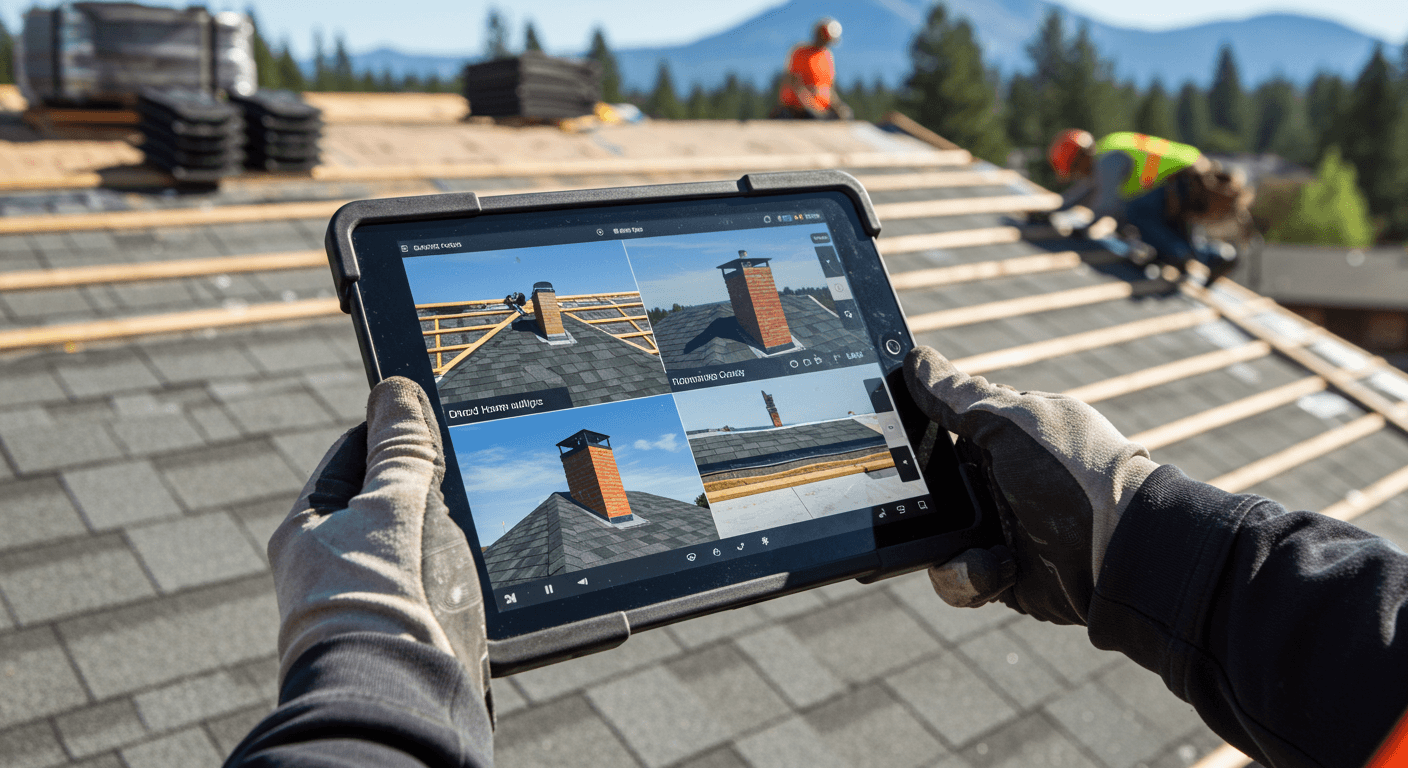
Systematic photo-documentation reduces liability and speeds up final payment collection by 4.3 days.
In Bend, climate-specific QC (like ice shield transitions) is the primary differentiator for high-margin brands.
Delegating QC to a dedicated lead instead of the owner is the first step toward true operational scaling.
The High Cost of the "Tailgate Inspection"
Most roofing owners in Deschutes County rely on what I call the "Tailgate Inspection." You drive by the site, look up from the street, see that the ridge vent looks straight, and keep driving. This approach ignores the reality of modern roofing complexities. According to small business insights from SCORE, failing to implement standardized quality processes is a top reason why trade businesses fail to scale beyond their first five employees.
When Nolan shifted from "glance-and-go" to a documented 14-point inspection, his callback rate dropped from 11.2% to 1.8% in less than four months. We realized that his crews weren't lazy, they were just missing the subtle transitions where the roof meets the siding on those complex Craftsman-style homes in Awbrey Butte. Without a checklist, those details are left to memory, and memory fails when the sun is beating down and the crew is rushing to beat a 3:00 PM thunderstorm.
QC Method Comparison
| Factor | Owner-Led QC | Digital Photo-Documentation |
|---|---|---|
| Direct Cost | High (Owner's Time) | Moderate ($200-$500/mo) |
| Scalability | Poor | Excellent |
| Legal Protection | Low (Hearsay) | Maximum (GPS/Time Stamped) |
| ROI Potential | 1.2x | 4.8x |
Direct Cost
Scalability
Legal Protection
ROI Potential
Why Bend's Climate Demands a Different Standard
We aren't roofing in the Willamette Valley. Bend's 300 days of sun combined with heavy snow loads in neighborhoods like Seventh Mountain means our quality control must focus on thermal expansion and moisture barriers. I have seen countless $30,000 roofs fail because a sub-contractor skimped on the ice and water shield in the valleys, thinking they could get away with it because it "doesn't rain that much here."
If you aren't verifying that your crews are using high-temperature underlayment under metal accents, you are asking for a warranty claim within 6.5 years. Systematic QC ensures that your brand reputation—which is everything in a tight-knit market like ours—stays intact. Professionalism in the field also translates to better lead conversion. When you can show a prospect a sample of a 42-point completion report from a nearby neighborhood, you stop competing on price and start competing on certainty. This is particularly vital when you are viewing exclusive job details and preparing to bid against four other hungry contractors. Understanding the lead distribution process helps you align your QC standards with the expectations of high-value prospects.
Implementing the 4-Point Bend Compliance Workflow
Shifting your culture toward quality control doesn't require a degree in systems engineering. It requires a repeatable workflow that removes the "choice" from the process. Based on Harvard Business Review studies on operational excellence, consistency in small business stems from reducing the cognitive load on front-line workers.
Action Plan
The 4-Point Bend Compliance Workflow
A phased approach to implementing a QC system that actually sticks with your crews.
The Staging Audit: Before a single shingle is pulled, the lead hand must photograph all delivered materials against the work order to ensure 100% accuracy.
The Mid-Point Teardown: Inspect the decking and drip edge installation before the field shingles cover the most critical transition points.
The Digital Punch-List: Use a mobile app to capture 12 specific photos, including flashings, pipe boots, and gutter clean-outs, before the crew leaves the site.
The Client Hand-Off: Present the photo report to the homeowner digitally, which triggers the final invoice and a request for a Google review simultaneously.
Want to skip the manual work and get exclusive, verified leads instead?
Get $150 in Free CreditsTraining Your Lead Hands to Think Like Owners
The biggest bottleneck in any roofing company is the owner's brain. If you are the only one who knows what a "good" roof looks like, you don't have a company; you have a very stressful job. I coached a contractor in Redmond who was terrified that his crews would "slack off" if he wasn't there to watch the final cap go on.
We incentivized his lead hands by offering a "Quality Bonus" of $165 per job, but there was a catch: if a callback occurred within the first 9.5 months due to installation error, they forfeited the bonus for the next three jobs. Suddenly, the lead hands became the most demanding inspectors on the planet. They started catching errors before the shingles were even nailed down. This shift allowed the owner to focus on testing new lead sources and growing his commercial division instead of crawling around in gutters.
Quality Bonus Warning
Never tie QC bonuses to speed alone. If you reward a crew for finishing a 30-square roof in a single day without a quality gate, you are essentially paying them to hide their mistakes.
The 'Hidden Valley' Audit
"Most leaks occur in valleys or behind chimneys. Require your crews to take a photo of the "dry-in" stage of every valley BEFORE the shingles are installed. This proves the underlayment was lapped correctly and is your best defense against "mysterious" leaks three winters from now."