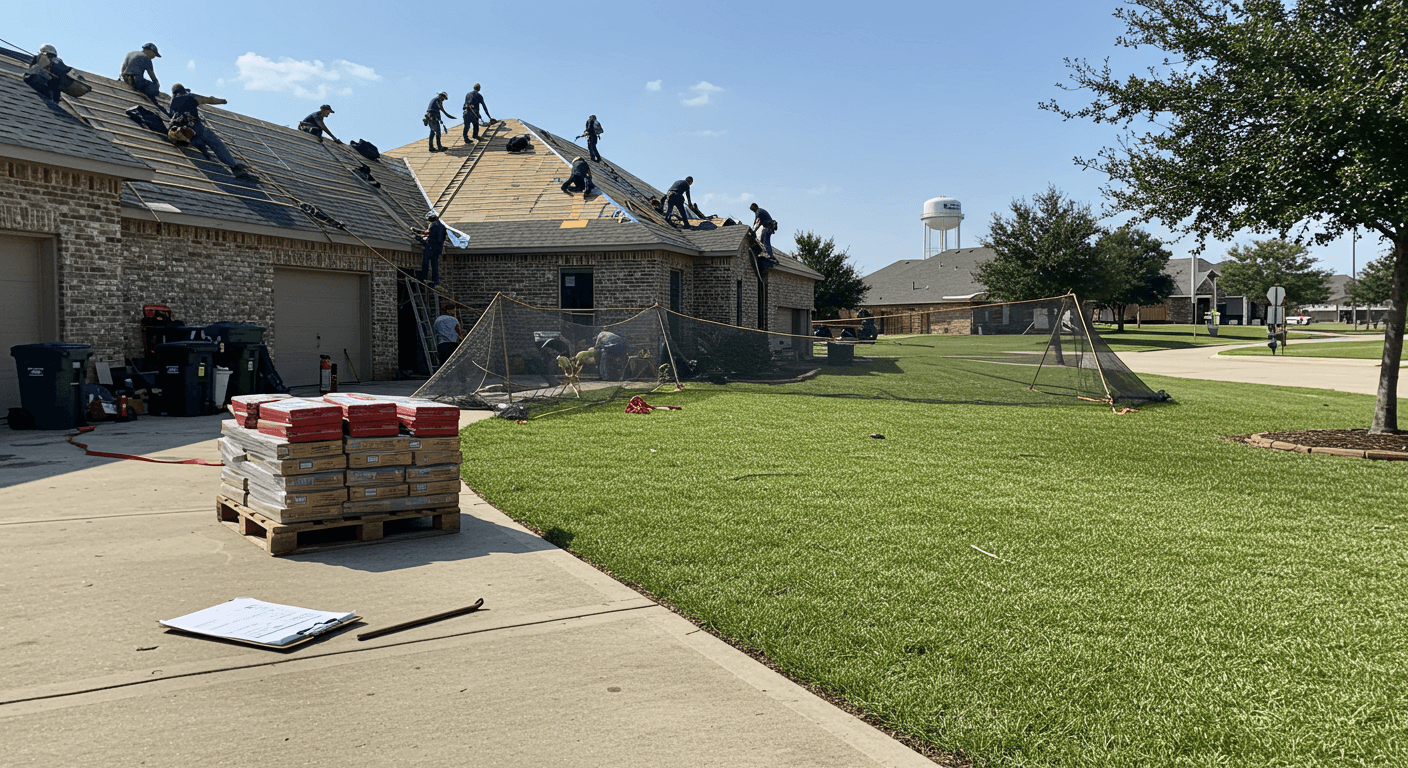
Are you actually running a roofing company, or are you just a high-stakes babysitter for six different crews scattered across the Dallas-Fort Worth Metroplex? I was walking a residential job site in Frisco last Tuesday with a contractor named Preston. We watched as a sub-crew tossed roughly $1,342 worth of perfectly good GAF Timberline HDZ shingles into a dumpster simply because they didn't want to carry the partial bundles back down the ladder. Preston looked at me and joked that it was just the "cost of doing business," but I could see his jaw tighten. That "cost" is exactly why his net profit margin was sitting at 9.4% while his competitors in Richardson were clearing 22.7% on similar projects.
Managing subcontractors in North Texas is a different beast than in other regions. We deal with brutal 105-degree August days that lead to crew burnout and a hyper-competitive storm-chasing environment that makes loyalty feel like a myth. If your management strategy consists of a morning text and a prayer that they show up at the right address on I-635, you aren't scaling. You are just gambling with your overhead.
At a Glance
Implementing a mandatory digital photo checklist can reduce labor-related callbacks by 31.4% within the first four months.
Tiered pay structures based on "clean site" scores incentivize subcontractors to treat your reputation as their own.
Standardizing material waste thresholds prevents the $1,000+ per-job "dumpster tax" common in Dallas residential roofing.
Exclusive leads require high-capacity, vetted crews to maintain a speed-to-install metric under 9 days.
The Reality of the North Texas Labor Market
The labor shortage in the DFW area isn't just about a lack of bodies. It is a lack of alignment. When a major hailstorm hits Plano or McKinney, every subcontractor with a truck suddenly thinks they are a general contractor. This creates a volatile environment where your "go-to" crew might ghost you for a job paying $12 more per square down the street.
I've analyzed the books for over 43 roofing companies in the last 18 months. The ones that survive the "feast or famine" cycle of Texas weather are the ones who treat subcontractors like a strategic partnership rather than a commodity. This starts with a rigid vetting process. You cannot wait until the peak of storm season to find talent. According to data from Roofing Contractor Magazine, labor availability remains a top three concern for owners, yet few have a formal "bench" of backup crews ready to deploy.
Subcontractor Management Models
| Factor | The 'On-Call' Method | The 'Structured Partner' Model |
|---|---|---|
| Reliability | Low - Crews jump for higher pay | High - Guaranteed weekly volume |
| Quality Control | Reactive - Fixing errors after the bill | Proactive - Real-time photo checkpoints |
| Profit Leakage | High - 12-15% material waste | Low - Under 6% waste thresholds |
Reliability
Quality Control
Profit Leakage
Tactical Vetting: More Than a General Liability Accord
Preston used to hire anyone who could show him a certificate of insurance. The problem is that a piece of paper doesn't tell you if they know how to properly flash a chimney on a 12/12 pitch in Highland Park. We shifted his strategy to a "Trial Run" protocol. Every new crew starts on a small repair or a simple gable-to-gable roof in a less demanding neighborhood like Mesquite before they ever touch a premium job.
We also started checking references specifically for "site cleanliness." In the Dallas market, your reputation is built on the neighbor's sidewalk. If a crew leaves nails in a driveway in a $1.2M Frisco development, you aren't just losing that customer. You are losing the five referral leads that should have come from that block. Our team at LeadZik was founded by roofers who experienced this frustration firsthand, which is why we obsess over lead quality. But even the best lead won't close if your crew has a reputation for trashing the flower beds.
The Digital Handshake: Real-Time Accountability
The biggest mistake I see in Dallas shops is the "End of Day" check-in. By 5:00 PM, the crew is tired, the shingles are laid, and any mistakes are already buried under ridge caps. You need a mid-day checkpoint.
I helped a contractor in Fort Worth implement a simple 5-photo requirement:
- Ice and water shield application in valleys.
- Drip edge staggering.
- Starter strip alignment.
- Flashing detail at the steepest wall.
- Magnetic sweep of the perimeter.
If these photos aren't uploaded to their project management tool by 1:00 PM, the crew doesn't get their "on-time" bonus. It sounds harsh, but it changed his business. His callback rate dropped from 11.2% to a staggering 2.4% in just six months. This level of oversight is what allows you to handle higher volumes of verified roofing leads without losing your mind or your margins.
The 'Scrap' Incentive
"Offer your crews a $145 'Material Efficiency Bonus' if their waste is under 5%. It costs you less than the extra shingles they would have tossed and builds a culture of precision."
Managing the Cash Flow Gap
Subcontractors in Texas expect to be paid fast. If you are waiting for the insurance check to clear before you pay your labor, you will lose your best crews to the big guys who have deeper pockets. However, paying 100% upfront is a recipe for disaster.
The most successful framework I've seen is the 40/50/10 split:
- 40% when the materials are delivered and the crew arrives.
- 50% upon passing the final city inspection (especially important with strict Dallas or Irving building inspectors).
- 10% held for 7 days to ensure the site remains clean and no "hidden" issues arise.
This keeps the crew's "skin in the game" until the very end. For more details on how we handle these operational hurdles, check out our comprehensive FAQ which touches on how we support contractor growth through reliable lead flow that keeps these payment cycles moving.
The 1099 Misclassification Trap
Texas workforce commission auditors are cracking down on contractors who treat subs like employees. If you provide the tools, set the exact hours, and demand they wear your uniform, you might be liable for back taxes and penalties. Always consult a local Dallas labor attorney to review your sub agreements.
Scaling with Storm Season in Mind
In the Dallas market, you have to be able to "flex." One week you have zero jobs, the next week a cell moves through Rockwall and you need 10 crews. You can't keep 10 crews on payroll. The answer is a tiered subcontractor list.
Tier A crews get your exclusive, high-margin leads first. They are your partners. Tier B crews get the overflow. By maintaining these relationships year-round, even during the "dry" months in January, you ensure they are there when the hail hits in April. Many regional resources, such as the Western States Roofing Contractors Association (WSRCA), offer templates for sub-agreements that help define these tiered expectations.
Final Thoughts on Margin Recovery
Preston eventually stopped watching shingles go into the dumpster. He implemented the photo checklist and the waste incentive, and by the end of last year, his net margin had climbed by 6.8%. On a $2.1M revenue run rate, that is an extra $142,800 in his pocket.
Subcontractor management isn't about being "bossy." It is about setting a standard that high-quality crews actually appreciate. The best subs want to work for organized contractors because they know they will get paid on time, the materials will be there, and they won't have to return to the job site three times to fix sloppy mistakes.