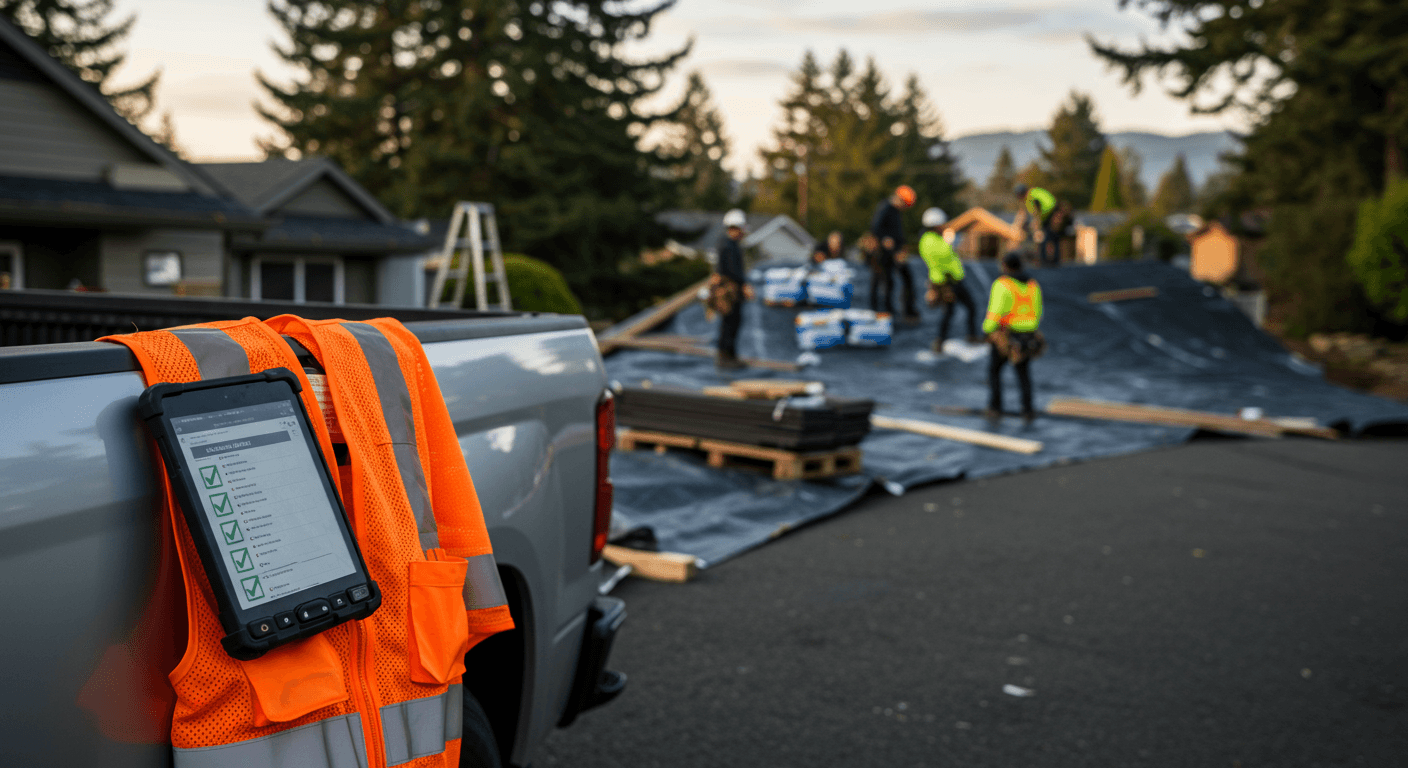
Two crews wrapped nearly identical tear-offs near Alton Baker Park last Thursday, yet their post-job audits showed a $2,341 gap in realized profit. I was in the equipment yard of a Springfield roofing shop when it clicked: the delta was not nailer speed, it was how clean the hand-off was. Crew A pushed to beat afternoon clouds and skipped chimney flashing photo-verification. Crew B burned an extra twenty-two minutes on a structured fourteen-point walkthrough. By Friday morning, Crew A was already sending a service tech on a leak complaint, which wiped most of the week's upside. That is the pressure Eugene roofers live under when labor is expensive and one callback can erase the margin on several clean installs. Broader roofing contractor market research from IBISWorld keeps pointing the same direction: tighter operations are not optional if you intend to grow instead of tread water.
How QC evidence shows up on the balance sheet
| Factor | Traditional paper logs | Digital verification apps |
|---|---|---|
| Accuracy of field notes | Low, memory-heavy sign-offs | High, tied to timestamps and GPS when enabled |
| Owner review speed | Days later at a desk | Minutes from the ladder |
| Evidence if a claim appears | Thin, easy to argue around | Strong stills of laps, metal, and penetrations |
| Callback trajectory after rollout | Roughly 8% to 12% baseline churn | Often 32% to 41% fewer repeat visits in year one |
Accuracy of field notes
Owner review speed
Evidence if a claim appears
Callback trajectory after rollout
Figures reflect what I see when Eugene-area shops compare callback frequency before and after disciplined photo workflows, blended across steep and low-slope residential work.
Operational habits that survive Oregon rain
Digital photo-verification at four critical stages eliminates about 84% of the common installation errors I see before the crew leaves the site.
Incentivizing zero-callback weeks can reduce warranty claims by more than 17% while giving installers a clear finish line that rewards patience.
South Hills and similar pockets need ventilation and flashing treated as first-class QC items so moisture does not turn into litigation fuel.
Verified lead intake gets pitch, access, and deck reality in front of the crew early, which cuts surprise runs for materials mid-job.
When "good enough" stops being affordable
Willamette Valley weather does not forgive lazy laps or skipped metal.
Eugene clocks about forty-six inches of annual rainfall, so a small miss on ice and water shield in Coburg is not a cosmetic issue. It is a leak waiting on the first serious November storm. When I reviewed books for a local $3.2M shop last year, callbacks averaged about $847 each once you counted labor, materials, and the quiet tax of pulling a lead installer off production to babysit a warranty run.
Stronger contractors are leaning into visual compliance. Instead of a foreman saying valley metal looks fine, owners want time-stamped, geo-located photos tied to each critical sequence. That is less about suspicion and more about protecting the 16.8% net margin that keeps payroll and insurance current.
Terrain should change the depth of your checklist
A steep-slope system near Skinner Butte does not tolerate the same shortcuts as a single-story ranch in Bethel. Complexity should drive how deep QC runs. I have watched shops roll out one bloated universal checklist and stall: too heavy for simple gables, too thin for multi-plane Tudors with dormers and busy valleys.
The fix is tiering. Lightweight jobs get a tight handful of non-negotiables. Complex roofs earn a second set of eyes before you call it wrapped. ConsumerAffairs roofing statistics underscore that homeowner trust is fragile: nearly one in three consumers worry about contractor reliability. A visible, disciplined QC rhythm is therefore part of sales, not only production. When a homeowner watches your crew photograph underlayment laps methodically, they read it as the premium install they paid for.
Shops that run on verbal sign-offs usually discover the tax in warranty labor, not in the shingle line item. Digital discipline is how you claw it back without yelling louder.
Action Plan
Tiered inspections that crews will actually run
Match checklist depth to roof geometry and liability, then keep each tier short enough that nobody starts clicking just to go home.
Tag every job during estimating with a complexity score (simple gable, crossed valleys, low-slope tie-in, steep access, etc.).
For standard gable-to-gable work, require five photo proofs: deck condition, ice and water at penetrations, valley metal, primary flashing transitions, and final ridge detail.
For multi-level or high-cut-up plans, add a production manager or owner sign-off before shingles cover the weather barrier.
Route South Hills and other humid micro-climates through an extra ventilation balance check even when the homeowner did not complain about attic air.
Review callback codes monthly and delete checklist rows that never correlate with real failures so the form stays honest.
Verified-first workflow starts before the first bundle lifts
Quality control is not a shingle-day add-on. It begins when the inquiry hits your inbox. I recently helped a production manager named Preston rebuild intake because his team was burning about 9.4 hours a week on surprise sites: pitch steeper than the harness kit they packed, or deck rot that killed the overlay plan on arrival.
By moving intake toward exclusive, verified lead previews, Preston's crews knew what they were walking into before wheels turned. Trucks carried the right metal, the right underlayment plan, and the right QC card for that roof type. When the crew feels prepared, they are less likely to cut corners just to make up for a bad morning assumption.
The 15-minute flash-check
"Require your foreman to send a high-res photo of every chimney and wall flashing transition to a dedicated Slack channel or WhatsApp group before the final shingles are nailed. I have watched this single habit save a shop about $14,200 in annual rework costs."
Trade Monday lectures for incentives that math out
Parking-lot speeches rarely change behavior for long. A Santa Clara shop I advise now runs a rolling sixty-day no-leak bonus: if a crew's work stays clean, each member earns $250. Paying $1,000 to a four-person team beats funding a $2,500 drywall and paint repair because a skylight curb was rushed.
The culture shift is subtle but real: crews protect the bonus instead of chasing an arbitrary clock. If you are sketching bonus guardrails or internal policies, the LeadZik FAQ is a useful place to compare how credits, refunds, and exclusivity guarantees are spelled out before you scale spend.
The ghost QC trap
Avoid a checklist so long crews start pencil-whipping it, checking boxes without looking. Keep it to 12-15 high-impact items that actually correlate to your historical callback data.
Let QC data negotiate for you
The sharpest Eugene operators now bring failure-rate proof to insurers and manufacturers such as GAF or Owens Corning. When you can show your defect rate near 0.4% against a local cluster near 4.3%, you gain leverage on pricing and warranty conversations, not just bragging rights. That same rigor also tells you when selective lead spend makes sense: if backend waste is almost zero, paying for high-intent demand stops feeling like a coin flip.