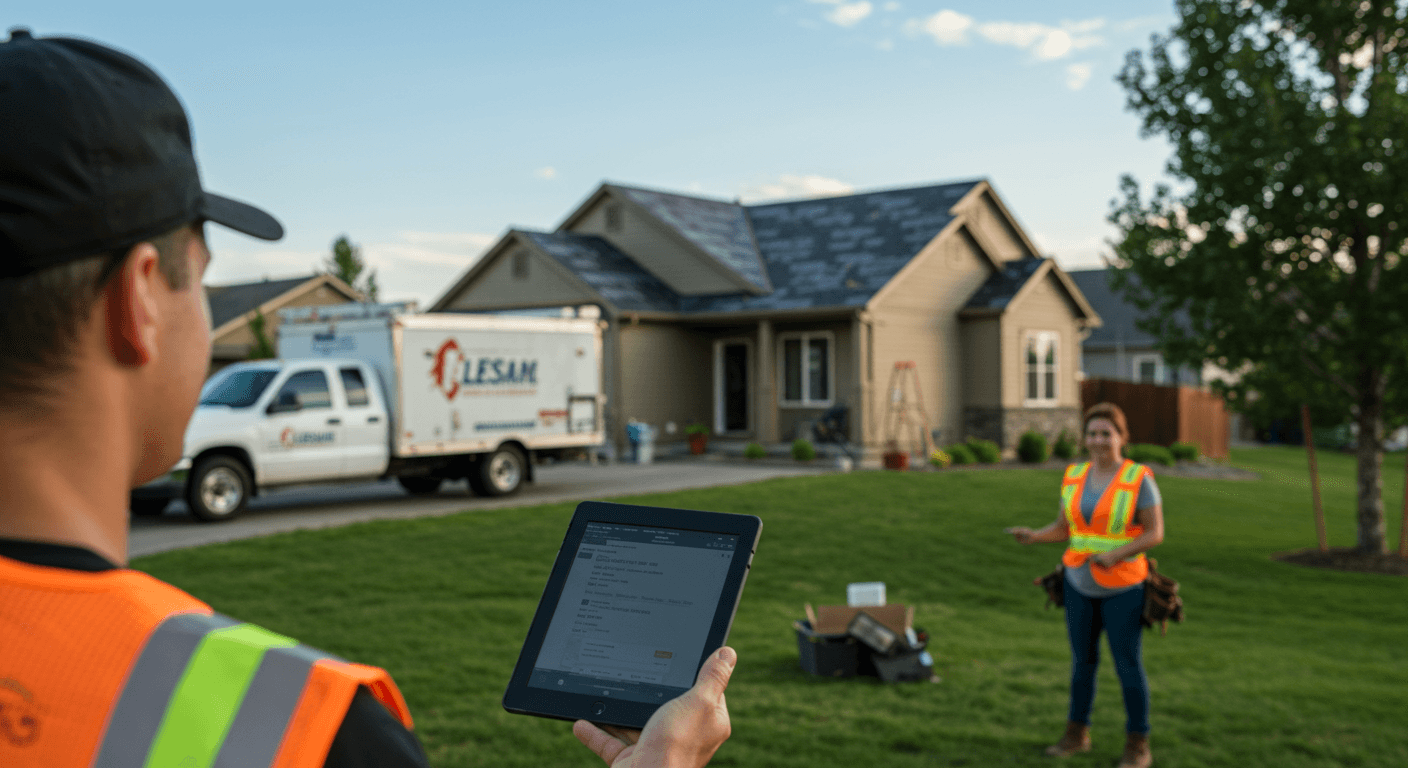
Sitting across from Xavier in a mid-sized shop near Meridian, watching his face tighten as we scrolled through the Google Maps results for "roof repair Boise," I hit a realization that changed how I view local marketing. Xavier had better crews, higher quality materials, and more experience than the guys ranking in the top three spots. However, his competitors had 114 more reviews with a 4.8-star average, while Xavier sat at a 4.2 with only 17 entries. He was losing at least eight high-value residential leads every week simply because his digital reputation didn't match his physical craftsmanship.
That afternoon, we stopped talking about shingles and started talking about social proof as a measurable financial asset. In the roofing industry, specifically within the Idaho market where word-of-mouth travels fast from Nampa to Coeur d'Alene, a review isn't just a compliment. It is a conversion catalyst. When I looked at Xavier's data six months later, the correlation was undeniable: as his review count crossed the 50-mark, his cost per acquisition (CAC) dropped by 18.7%.
At a Glance
Social proof directly impacts your Google Local Services Ads (LSA) auction price and organic ranking.
Automated review collection reduces the administrative burden on your project managers by roughly 4.3 hours per week.
High-velocity review growth (getting 3-5 new reviews monthly) is more valuable than having 100 old reviews from three years ago.
Idaho homeowners prioritize "local reliability" over the lowest bid in 67% of documented sales interactions.
The Idaho Trust Factor and Market Dynamics
The roofing landscape in Idaho is unique because of the regulatory environment and the seasonal nature of the work. Unlike some states with rigid statewide licensing boards, the Idaho Contractors Board focuses on registration, which means the burden of proof for quality often falls squarely on the shoulders of the business owner. Homeowners in the Treasure Valley or the Magic Valley rely heavily on social proof to vet who is actually local and who is just a "storm chaser" passing through after a hail event.
According to the latest IBISWorld Roofing Industry Report, the national market is becoming increasingly fragmented, making local reputation the primary differentiator for small to mid-sized firms. In Idaho, where community ties are tight, a single negative review regarding a messy job site or a late crew can have a disproportionate impact on your bottom line.
Comparing Three Social Proof Strategies
When I work with shops to scale their lead flow, we usually look at three distinct paths for building social proof. Each has a different ROI profile and requires varying levels of internal "buy-in" from your crews.
1. The Manual "Hustle" Method
This is where Xavier started. The project manager finishes the job, shakes the homeowner's hand, and asks them to leave a review.
- Pros: Zero software cost; highly personal.
- Cons: Extremely low conversion rate. In my experience, manual requests result in a review only 6.4% of the time. People forget the moment the truck pulls out of the driveway.
- ROI Analysis: Low upfront cost, but high "opportunity cost" because you're missing out on 90% of potential social proof.
2. Reputation Management Software
Tools that integrate with your CRM (like JobNimbus or AccuLynx) to send automated texts and emails once a job is marked "complete."
- Pros: Consistency. The system doesn't "forget" to ask.
- Cons: Can feel impersonal if not customized. Monthly subscription fees can range from $197 to $445.
- ROI Analysis: High. I've seen automation jump review conversion rates from 6.4% to 24.8% within the first 90 days of implementation.
3. Verified Lead Platform Profiles
Using platforms that provide verified, exclusive leads and allow you to showcase your credentials directly to the prospect.
- Pros: Short-circuits the trust gap by placing your business in a "pre-vetted" environment.
- Cons: Requires maintaining a high standard of service to stay in the platform's good graces.
- ROI Analysis: Exceptional for immediate cash flow. Instead of waiting months for SEO to kick in, you're leveraging the platform's existing authority.
Manual vs Automated Review Collection
| Feature | Manual Hustle | Automation Software |
|---|---|---|
| Cost | $0 | $200 - $500/mo |
| Effort | High | Low |
| Scalability | Poor | Excellent |
| Conversion Rate | 6.4% | 24.8% |
Cost
Effort
Scalability
Conversion Rate
The ROI of Review Velocity
I once tracked a campaign for a roofer in Idaho Falls who was frustrated that his Google Ads weren't converting. We dug into the analytics and found that while his click-through rate was a healthy 4.1%, his "on-page" conversion was abysmal. Why? Because the landing page had zero testimonials from people in Bonneville County.
We shifted his strategy to focus on "Review Velocity"—the speed at which new reviews are posted. Google's algorithm (and human psychology) prizes recency. A 5-star review from 2019 is practically invisible to a homeowner dealing with a leaking roof today. By implementing a simple text-back system at the final inspection, we increased his velocity from 0.8 reviews per month to 5.2. Within two months, his cost per lead (CPL) dropped from $84.30 to $61.15.
The "Final Inspection" Script
"Don't ask for a 'review.' Ask for a 'favor.' Have your foreman say: 'Xavier, our goal was to make this the cleanest job site in Ada County. If we hit that mark, would you mind doing me a huge favor and letting the office know via this link? It's how my team gets recognized.' This simple shift in framing increases completion rates by nearly 31%."
Leveraging Certifications as Social Proof
Social proof isn't just about what customers say; it is also about the standards you hold. In an industry where "fly-by-night" operations can hurt the reputation of legitimate shops, displaying your commitment to professional development is vital. For example, referencing your team's adherence to standards from the National Center for Construction Education (NCCER) can differentiate your technical expertise during the sales presentation.
I suggest my clients include these certifications directly on their quote sheets. When you show a homeowner in Eagle that your crew isn't just "some guys with a ladder" but a team trained to national standards, the price becomes less of a sticking point. This is a form of "institutional social proof" that backs up your customer testimonials.
Building Your Review-Generating Machine
Creating a systematic approach to review generation requires addressing both the technical and human elements of your operation. The most successful Idaho roofing contractors I've worked with treat review collection as a core business process, not an afterthought.
Action Plan
How to Build a Review-Generating Machine in Your Idaho Roofing Shop
A step-by-step framework for transforming review collection from a sporadic request into a predictable revenue driver.
Identify the Friction Point: Determine why your team isn't asking for reviews. Is it lack of a link? Fear of rejection? Solve this first.
Standardize the Link: Use a tool to create a "short link" (e.g., yoursite.com/thanks) that redirects straight to your Google Business Profile review window.
Incentivize the Crew: Offer a small bonus (I've seen $25 work well) for every 5-star review that mentions a crew member by name.
Respond to Everything: Reply to every review within 24 hours. This shows prospective leads that you are active and responsive, which is a major platform feature of successful modern businesses.
Audit Monthly: Check your review growth against your lead volume. If you did 20 jobs but got 0 reviews, your process is broken.
Want to skip the manual work and get exclusive, verified leads instead?
Get $150 in Free CreditsDealing with the Dreaded Negative Review
Every roofer gets a bad review eventually. It's usually a misunderstanding about a gutter color or a piece of stray flashing. In Idaho's tight-knit market, how you respond matters more than the negative comment itself.
I worked with a contractor in Pocatello who received a scathing 1-star review because a crew member drove over a flower bed. Instead of getting defensive, he replied publicly, apologized, and offered to pay for the landscaping repairs. He then posted a follow-up photo of the restored flowers (with the customer's permission). That interaction actually became his best sales tool. Prospects saw that if something went wrong, this guy would make it right. That's a level of company transparency that builds a brand for the long haul.
Common Questions
Turning Reputation into Revenue
At the end of the day, your social proof strategy should serve one purpose: making your sales process easier. When your reputation precedes you, your sales reps don't have to spend the first 20 minutes of a call proving the company isn't a scam. They can get straight to the technical requirements of the job.
If you find that your organic efforts are taking too long to gain traction, consider balancing the long-game of SEO with immediate, high-intent opportunities. I've seen shops transform their pipeline by combining a solid review strategy with exclusive, verified job previews that allow them to claim the best opportunities in their territory before the competition even wakes up.