What You'll Walk Away With
Localized material plans—Lake Effect ice versus Ohio River humidity—are how Indiana shops dial callbacks down without chasing more leads.
SBS-modified assemblies swallow repeated hot/cold shocks so sealant lines stay engaged; that is warranty risk you can price as expertise, not guesswork.
Upgrade nail zones and underlayment specs often lift crew pace and cut punch-list hours, which is margin you feel on payroll, not just on paper.
Climate-literate selling reframes bids from commodity labor to engineered protection, which protects average ticket when storms get ugly.
Table of Contents
Scattered across the driveway in Zionsville, the brittle ceramic granules looked like dark sand—but to Vance, they looked like a $14,280 refund waiting to happen. He was standing on a job site his crew had finished only 19 months prior, listening to a homeowner point at a ridge vent that had buckled under a typical Hoosier ice storm. The shingles carried a 30-year story on the wrapper, yet Indiana's mix of humidity and violent temperature shifts had accelerated everything the lab label promised to delay. Vance realized his standard material package was liability dressed up as thrift savings.
The 22% upsell framework
"When you bid high-wind corridors along I-65, run a Durability Audit that lines up standard three-tabs next to SBS-modified shingles. Show deductible exposure against a roughly $2,400 upgrade—Indiana owners respond to the math, and I routinely see average contract value climb about 22.4% without buying a single extra lead."
From lake-effect snow belts around South Bend to thick, muggy river air in Evansville, Indiana roofers are not fighting weather alone—they are fighting unit economics. Every warranty run to finesse a blow-off or chase a flashing leak vaporizes the net you thought you banked when the job closed. Across the shops I work with here, a single warranty visit—including burdened labor and opportunity cost—averages about $1,147. Run 200 roofs annually at a 9% callback rate and you are donating roughly $20,646 a year back to jobs you already thought you won.
The Hoosier micro-climate trap
Your Fort Wayne playbook will choke in Evansville if you treat the state like one SKU list.
Indiana refuses to behave as a monolith. What sells in Indianapolis can invite winter grief in Gary, while what survives in Bloomington might be needless overspend in Muncie. Operators who scale treat every material pick as a localized risk decision rather than a purchasing convenience.
In the state's northern third, ice damming is the quiet profit killer. I recently picked through the books of a mid-sized Elkhart company bleeding winter leaks despite meeting code-minimum ice and water at three feet. Local architecture often pushes four-foot overhangs; a single strip was legal but not survivable. Mandating two full courses of peel-and-stick on every north-facing slope bumped material spend about $460 a roof—yet winter service calls fell 74%. Net margin still expanded 5.8% because crews stopped chipping ice in February for free.
Where Indiana forces different stacks
| Climate driver | Typical "one spec" shop | Regionalized playbook |
|---|---|---|
| Lake-effect ice loads | Code-only ice shield at eaves | Extra courses + defined transition detailing |
| Central Indiana thermal shock | Basic asphalt tabs year-round | SBS flex package sold as longevity insurance |
| Ohio River humidity | Standard granules, reactive cleaning | AR granules priced in from day one |
| Western Indiana wind exposure | More fasteners, higher nail-error risk | Reinforced nail zone + documented install spec |
Lake-effect ice loads
Central Indiana thermal shock
Ohio River humidity
Western Indiana wind exposure
The goal is underwriting fewer trucks rolling backward to warranty work—not winning on commodity price alone.
The physics of the 43-degree swing
Thermal shock is a line item, even if your spreadsheet hides it.
Central Indiana builds entire spring days that begin near freezing and finish in shirt-sleeve warmth. For traditional asphalt, that is a fatigue test: brittle at dawn, rapid expansion by afternoon, repeated hundreds of times until granules release from the mat. Across seven to nine seasons the failure mode is rarely mysterious—it is granular loss, sealant slip, and tabs that start telegraphing wind noise long before the homeowner calls you back.
A Noblesville team I mentor retired its Preferred bundle for all-SBS assemblies. Rubberized polymer lets the mat breathe with temperature instead of fighting it. Square-cost rose about $19, yet closing rate improved 12% once reps named the process the Hoosier Stress Test and showed homeowners why flexibility beats a prettier brochure price. Midwest buyers already distrust weather volatility; translate flexibility into deductible avoidance and objections quiet down.
Revenue impact is double-barreled: easier cold-morning handling improves install quality, and a roof that still looks intentional at year fifteen seeds referrals that paid ads cannot buy. Need more operating frameworks beyond the truck stock conversation? Browse additional growth-focused contractor articles for the wider playbook.
Navigating the wind corridor margin drain
More nails are not the same as more certainty.
Crews hugging I-65 or sweeping western prairie exposure see gusts that flirt with 60 mph—right where sloppy installs and economy laminates start to surrender. Many supers throw labor at the problem with extra nails, but high-nailing by a half inch torches wind uplift ratings faster than most foremen admit.
That is the hole before you count brand damage when neighbors watch your magnet truck return to the same street twice.
Xavier, a Lafayette-area owner I coached, was bleeding roughly $34,000 a year on wind call-backs. We moved his production to a laminate with a reinforced nail zone—basically a fabric strip that keeps heads from blowing through mat holes. Blow-off tickets fell toward zero, but the surprise was speed: installers quit micro-aiming every strike and picked up about 2.3 squares per man-day. In Indiana's labor-scarce market, that productivity is pure margin without a new hire.
Action Plan
Stabilize wind zones without slowing crews
Re-map production so wind resistance comes from materials and documented patterns instead of heroic nailing.
Specify a laminate with a published wide/reinforced nail zone and train supers to audit nail lines on the first 25 squares daily.
Pair that spec with starter compatibility checks so you are not mixing generations that void uplift charts.
Log photo evidence at peaks and valleys so warranty conversations start with data, not arguments.
Want to skip the manual work and get exclusive, verified leads instead?
Get $150 in Free CreditsMoisture, algae, and the southern Indiana profit leak
Aesthetic callbacks sting even when the deck stays dry.
Head south toward Evansville and the Ohio River humidity curve steepens. Algae streaks may not dribble into kitchens, but they light up phones from picky homeowners who expected showroom curb appeal. I have watched owners spend thousands pressure-washing five-year-old installs just to protect referral flow.
In those microclimates, algae-resistant granules with meaningful copper content belong in the base bid—roughly $85 a job beats mobilizing a wash crew plus goodwill discounts halfway through a shingle's life.
Safety, regulations, and the Indiana business climate
Grip underfoot is an ops decision, not a footnote.
Indiana is contractor-friendly next to Illinois, but friendlier paperwork never forgives sloppy field culture. Higher-friction underlayments and staging plans that respect frost and dew keep your people upright on the steep pitches you see around Geist Reservoir or Meridian-Kessler rebuilds.
Federal expectations still anchor every pitch: review OSHA roofing compliance highlights with your safety lead so harness programs match real slope work. Tie planning back to the Stop Falls campaign emphasis on plan, provide, and train—material choices that increase traction on a frosty Muncie morning belong inside that planning step, not after an incident.
If you want clearer visibility into how supplier-grade specs intersect with liability before you ever accept a lead, read how we qualify job details inside the LeadZik FAQ hub.
Turning material truth into marketing leverage
Transparency outsells discounts once storms politicize every bid.
Most owners treat distribution like a coupon drawer—whatever is cheapest or most familiar. Growth shops partner upstream for science, not just truck drops. A Carmel contractor I advised launched a Certified Indiana Proof series: side-by-side clips of standard laminate shingles frozen then struck beside SBS samples that flexed instead of spidering. Those reels fed social and digital pitch decks alike.
Conversations shifted from why you cost $1,500 more to why competitors spec materials destined to craze before the first tree loses its leaves. The team graduated from chasing tire-kicker leads toward homeowners who buy resilience. If your reps cannot make that pivot stick, talk with our strategy desk about lining premium positioning with the lead quality you actually want to feed closers.
The real cost of cheap underlayment
That twenty-dollar roll rebate can torch six jobs of profit.
Underlayment is your hidden general liability fuse
Skipping high-performance self-healing layers at penetrations to shave a few hundred dollars ignores Indiana's simultaneous rain and snow loads—once laps take water and fasteners tear film, you are funding interior trades, not just shingles.
Bargain synthetic feels smart when Fort Wayne bids get bloody. Yet Indiana delivers pineapple-express style rain while winter decks are still shedding snow loads—often before seal-down completes if you are working late fall. A Hamilton County outfit nearly capsized after low-spec underlayment on a 45-square project let wind-driven water wander; fasteners tore through film, drywall and hardwoods drowned, and the owner swallowed about $18,700 in repairs—a $300 material win that erased the profit from half a dozen clean installs.
Self-healing membranes at chimneys, valleys, and skylights are the insurance policy professional operations already budget elsewhere. With 40-plus inches of rain and 20-plus inches of snow annually across much of the state, pretending underlayment is decorative is how you stay small and stressed.
Building for the long haul
Vance stopped apologizing for standards—and stopped funding rework.
Scaling an Indiana roofing company requires technical fluency in how atmosphere attacks every layer you sell. If your horizon is 20 years, feeding crews assemblies that fail in a decade is a strategic lie. Vance rebuilt his entire stack, killed the budget shingle line, and leveled with homeowners: he would not install anything he would reject on his mother's house in Carmel. Margins held, crews stopped living on punch lists, and word-of-mouth became the main lead faucet.
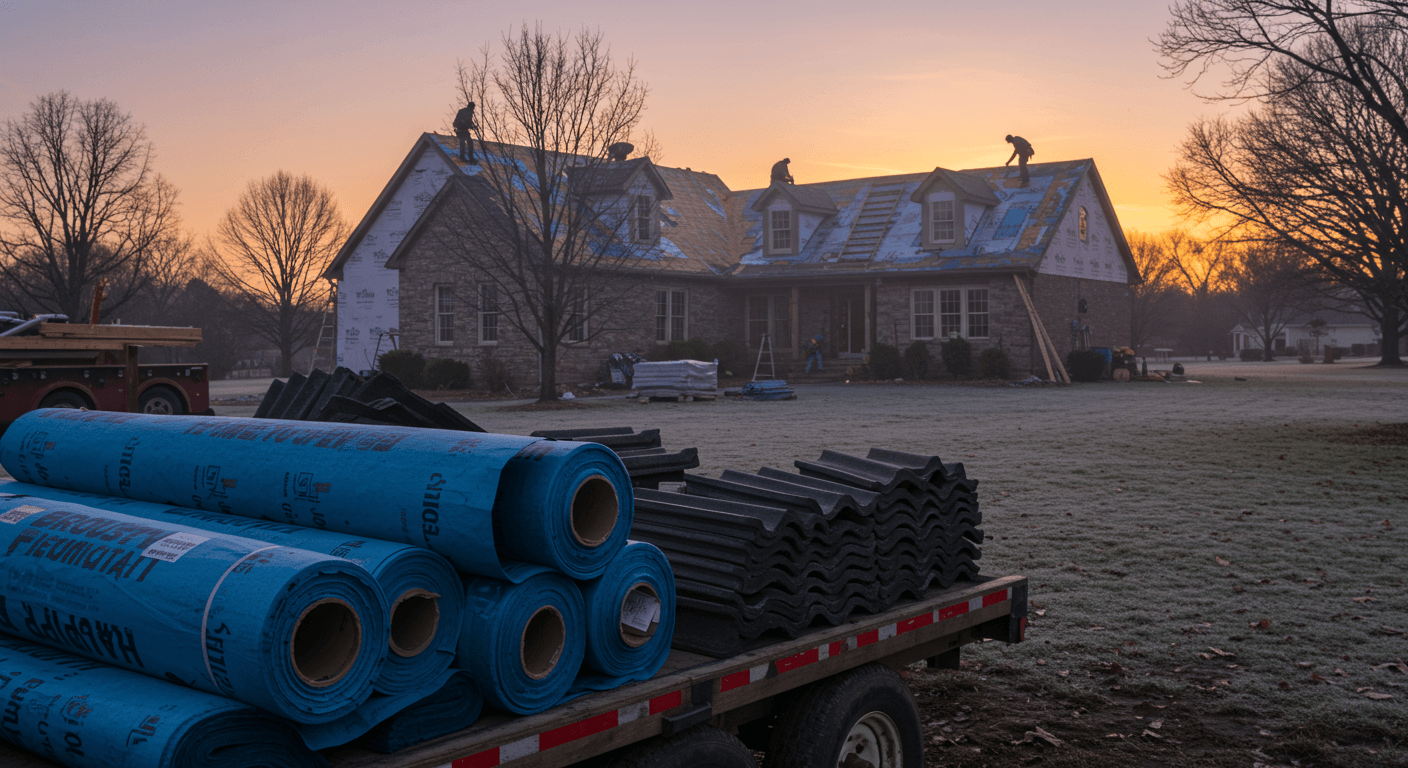
The mission is not just winning today's contract—it is keeping the profit, dodging warranty landmines, and earning the next three neighbors without buying their attention. In Indiana, that starts with what loads into the trailer each dawn.