Climbing down from a 12-pitch hip roof in the sweltering heat of August, I watched Owen wipe grit from his forehead while staring at a deck that had buckled like a cheap accordion. He was looking at a nine-year-old roof that should have lasted twenty-five, but the shingles were already brittle enough to snap between two fingers. Owen's company was on the hook for a massive "warranty" repair that wasn't a product failure at all—it was a systemic ventilation oversight. The attic temperature had hit 143 degrees by noon, effectively baking the asphalt from the inside out. This single mistake was poised to eat $4,120 out of his quarterly net profit, purely in labor and wasted materials.
When I dive into how a shop runs day to day—and when I need sharper context beyond a single job file—I still start with our blog archives, because the pattern across markets is the same even when the ZIP codes change. We talk a lot about sales and leads, but we rarely budget for the silent profit killer: weak airflow. Ventilation is not only a code checkbox; it is the factor that decides whether the product you sell actually hits its life-cycle numbers. As an operations strategist, I treat every roof as a system that either compounds trust through longevity or seeds a liability that eventually starves your referral engine.
At a Glance
Reduces systemic callback rates by approximately 28.4% when intake-to-exhaust ratios are standardized on every job packet.
Extends asphalt shingle life by 14.7% on average when deck temperatures stay out of the slow-bake range all afternoon.
Lifts average job tickets by roughly $643–$1,120 when crews confidently sell high-performance ventilation packages.
Preserves manufacturer warranty eligibility by proving net free area (NFA) math instead of hoping the ridge line was "enough."
The Math of Heat: Why 1:300 Is No Longer Enough
Legacy rules still show up on material orders. Modern envelopes punish guesswork faster than crews can finish punch lists.
For decades, crews leaned on the 1:300 rule—one square foot of ventilation for every 300 square feet of attic floor. Building envelopes are tighter now, moisture loads are stranger, and ridge lines on complex plans do not always cooperate. According to the National Roofing Contractors Association (NRCA), inadequate ventilation remains a top driver of premature roof system failure. I have audited shops where ridge vent cuts were still based on a feeling instead of a tape measure and an NFA chart. The fix is boring and profitable: measure first, then order.
Nationwide, the crews winning on callbacks are shifting toward 1:150 (or engineered equivalents) when rooflines are busy or interior moisture is high. This is not aesthetics—it is structural. When the deck cruises past 150 degrees, adhesive lines in the laminate begin to surrender. If your estimators are not running a quick attic square-footage calculation before the lift goes up, you are letting brand equity ride on luck.
Legacy 1:300 Thinking vs. Modern Balanced NFA
| Decision Point | Old-School Shortcut | 2026-Ready Standard |
|---|---|---|
| Sizing approach | Eyeball ridge length, hope it breathes | Attic SF × required ratio = documented intake + exhaust NFA |
| Moisture reality | Ignore humidifiers, tight homes, and buried soffits | Model higher moisture loads and add intake capacity |
| Callback risk | Heat-baked decks, brittle tabs, angry warranty calls | Cooler decks, fewer premature failures, cleaner reviews |
| Crew behavior | "We will fix it on the back end if someone complains" | Ventilation audit lives in the job binder before production starts |
Sizing approach
Moisture reality
Callback risk
Crew behavior
That is not a marketing scare stat—it is what deck heat does to asphalt chemistry over hundreds of roasting afternoons.
The Intake Imbalance: The Most Common Operational Failure
You can spec ten cases of ridge vent and still lose the job science if soffits are decorative only.
The biggest bottleneck in roofing operations is rarely the ridge cap—it is intake. I recently walked a Midwest warehouse where a production manager vented about "faulty" ridge leaks. Site photos told a different story: forty feet of ridge exhaust and almost no working soffit path. The ridge was scavenging air from wherever it could, including pulling weather through the slot on wet days because the attic was under vacuum.
Operationally, you need a non-optional intake audit on the checklist. Soffits painted shut, insulation dams without baffles, or fascia that was never cut for flow—all of it makes exhaust cosmetic. Plenty of contractors skip soffit upgrades to keep proposals thin; that is also how you buy a callback worth triple the margin you thought you protected.
The "Short Circuit" Disaster
Never stack competing exhaust types on the same roof plane—think powered fan a few feet from a continuous ridge. The fan will happily inhale through the ridge path instead of pulling from soffit intake, leaving most of the attic lethargic and hot while your crew thinks the problem is "solved."
Emerging Trends: Smart Fans and Solar Integration
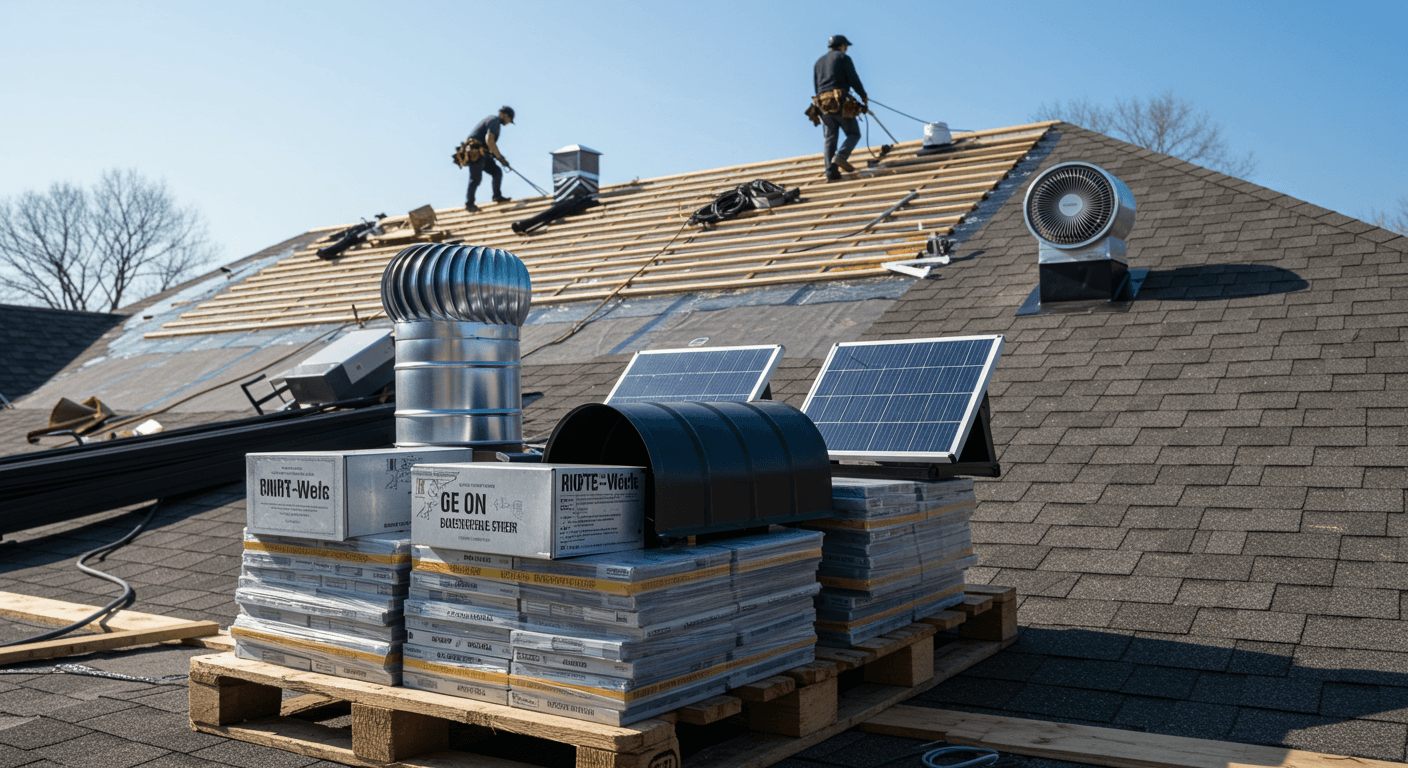
Ventilation is shifting from passive-only to hybrid systems with sensors behind them. High-end roofing shops are packaging solar attic fans with humidistats so airflow responds when the attic is still and sticky. Sales gets a cleaner story: you are not swapping shingles—you are delivering a climate-controlled building shield.
Premium assemblies can move upward of 1,475 cubic feet per minute without nudging the homeowner's utility bill. When Owen reframed the upgrade as a Performance Package priced near $940, take-rate landed at 22.4%. Average job value climbed, and the stuffy-second-floor tickets that used to swamp customer service tapered off. Trade publishers have been covering the same convergence of building science and margin for years—readers of Roofing Contractor Magazine already know the playbook: prove the science, price the outcome, document the install.
The 12-Minute Airflow Audit
"Train estimators to hold a digital anemometer at the soffits while air is moving—leaf blower aimed at the ridge on a calm day works—then log the reading. If intake airflow is negligible, you have a blocked path, not a bad ridge. Photo evidence belongs in the file before you sign."
Systematic Training: Turning Crews into Technicians
Scaling a roofing business means retiring "we have always done it this way." Stand up an SOP for ventilation that crew leads acknowledge before the first bundle flies. NFA requirements should reference the actual attic volume, not a napkin sketch from last season.
When your platform features include photo documentation, make the intake baffle shot mandatory. Baffles are the first thing tired crews skip at 3:00 p.m., yet they are the only thing keeping insulation from smothering the airway. Treat that detail with the same intensity you give counter flashing.
I have seen owners flip gross margin simply by requiring a Ventilation Audit form on every contract. It catches gaps before production, and it trains crews to think like technicians. The team behind LeadZik baked that philosophy into the company mission: exclusive demand means nothing if the finished roof fails three years later and shreds your reputation.
Action Plan
Standardize Ventilation on Every Job Site
Operationalize airflow the same way you track tear-off tonnage—predictable steps, predictable outcomes, fewer warranty landmines.
Calculate the attic footprint and translate it into total NFA before you spec ridge, static, or powered exhaust.
Verify intake flow at the soffit plane; plan over-the-fascia or edge intake when existing vent stripes are useless.
Balance the system so intake NFA matches or slightly exceeds exhaust NFA, killing the vacuum that pulls weather uphill.
Document baffles, openings, and math with timestamped photos so insurers and shingle reps see a code-ready story.
Want to skip the manual work and get exclusive, verified leads instead?
Get $150 in Free CreditsLooking Ahead: The Cost of Ignoring Science
Energy codes are not loosening as we roll through 2026. Shops that treat ventilation as optional will get screened off premium insurance programs and high-trust residential work. If you are pushing 400 roofs a year, trimming callbacks by just 5% can free roughly $82,000 in labor—real money that could fund a new lead truck or a retention pool for superintendents.
Efficiency is not only how fast you peel a deck. It is how long that assembly stays out of your dispatch queue after the final check clears. When you master airflow, you stop exporting margin to repeat service visits and start compounding referrals.