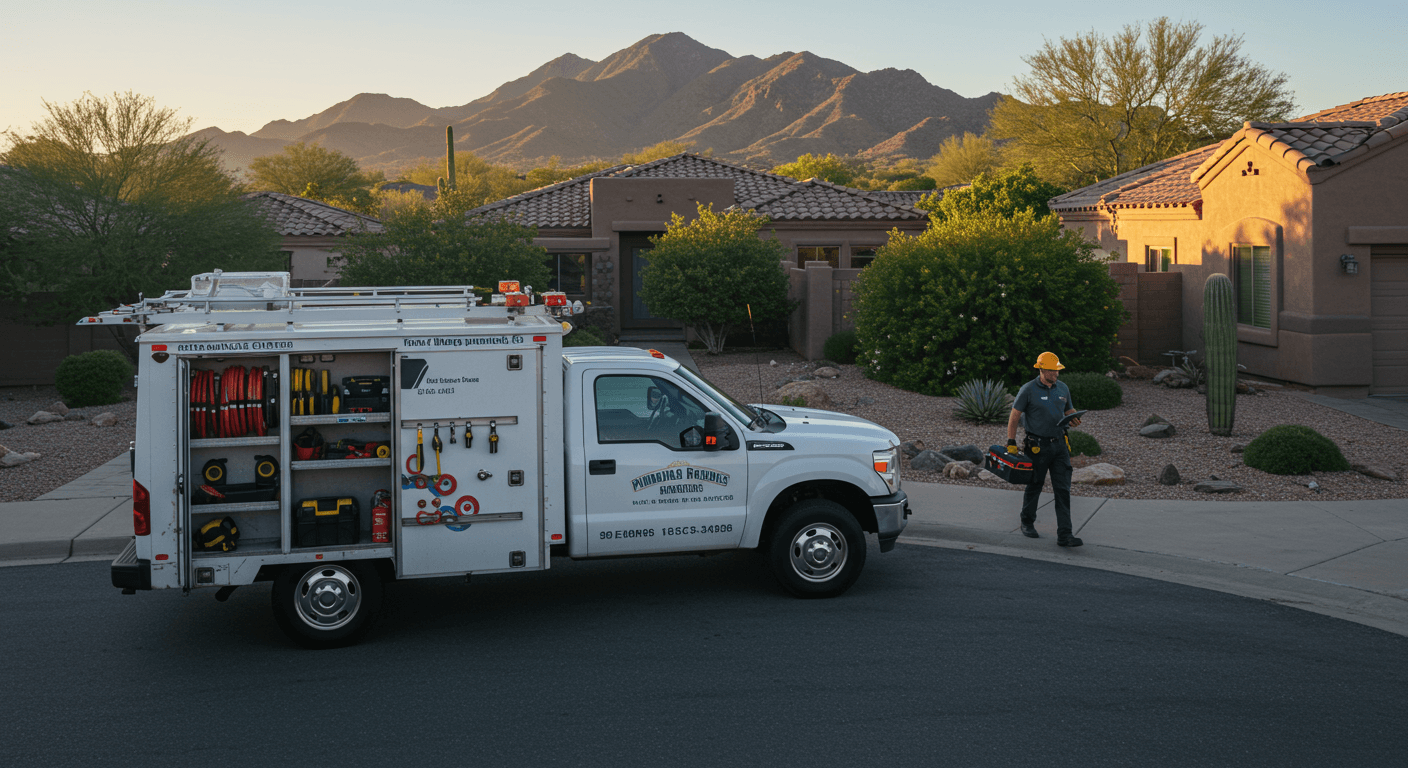
Operating a plumbing shop in the Sonoran Desert heat means choosing between two very different balance sheets. One shop might post an 18.3% lift in top-line revenue during the summer surge while net profit margins slide about 6.4% because overtime stacks up and dispatching stays reactive. Another shop, the one I am writing about from Tucson, held a 26.4% net margin through the worst weeks of July and August while still running a full board. The gap is not mysticism. It is whether you treat busy like a strategy problem or a volume problem.
Owners still confuse a loud phone for a healthy business, yet trade guidance from PHCC keeps pointing back to operational discipline as the long-term driver of contractor viability. This article is not about working more hours in a 115-degree attic. It is about the math behind every paid dispatch, and how to keep growth from eating the money you thought you made.
Table of Contents
Unoptimized dispatching and overtime-heavy weeks quietly convert record demand into record stress, not record profit.
The Arizona overhead reality: why busy is not the same as profitable
Triple-digit weeks change fuel burn, insurance posture, and how fast people fatigue. Your rate card has to reflect that, not hope it away.
Growth in the Arizona plumbing market can feel like a runaway train once temperatures sit in the triple digits. Phoenix and Mesa see emergency leak calls and water heater changeouts spike. The hidden issue is that the cost of doing business here runs hotter than in milder regions. You are paying for more idle fuel, higher exposure on heat-related worker compensation, and the plain human cost of technician fatigue.
When I review a P&L that looks busy but thin, the problem is rarely lead count. It is margin discipline. If your billable hour prints at $165 but fully burdened labor, including a 1.4x overtime multiplier, lands near $112, you are squeezing overhead and owner profit harder than it looks on a simple job board. In a state where the Registrar of Contractors keeps quality expectations high, shaving workmanship to save minutes is not a real lever. You have to find margin inside process.
I recently sat with an owner in Gilbert whose three strongest crews were booked weeks out, yet he could not justify another van. His dispatch logs told the story. He sent a master plumber from Gilbert to Surprise for a $145 faucet repair. After roughly forty-five minutes each way on the Loop 101 plus fuel, the ticket lost about $22.40. That is not a rounding error when it repeats across a season.
Dispatch density: when the freeway becomes the margin leak
Sprawl turns windshield time into a line item. Density-based planning is how Tucson and Phoenix teams buy back finished work per day.
Geography is either your enemy or your ally. Across Greater Phoenix or the long ribbon between Oro Valley and Sahuarita, travel can eat nearly a third of a technician's day if you let it. Protecting margin in surge weeks means moving off pure first-in-first-out and toward intentional route clustering.
Last season we rolled out a zone lock cadence for a twelve-van fleet. East Valley days and West Valley days replaced random zigzags. If a Scottsdale homeowner wanted a non-emergency softener install on the wrong day, we offered a modest local-efficiency credit to slide into the tighter window. The point was not gimmicks. It was to keep skilled time inside a radius where work actually finishes.
Two dispatch philosophies in Arizona surge weeks
| Operating signal | Reactive dispatching | Strategic route density |
|---|---|---|
| Fuel and maintenance pressure | Higher fuel and maintenance costs from scattered runs | Lower fleet overhead when routes stay clustered |
| Non-billable drive time | About 32% of the day on the road | Near 14% when zones hold |
| Technician load and finish quality | High burnout risk, fewer jobs finished clean | More consistent finish times in tighter loops |
| Weekly job completion | Lower daily completion when miles spike | Roughly 22% more jobs per week at target shops |
Fuel and maintenance pressure
Non-billable drive time
Technician load and finish quality
Weekly job completion
Density is not rudeness. It is a service promise that honest arrival windows and sane crews outperform heroic cross-town sprints.
This is not only a fuel story. It is psychology. When Preston, one of the techs I coach, knows his day lives inside a four-mile bubble, his shoulders drop. He runs a fuller whole-home inspection because he is not watching a navigation estimate that looks like a flight plan. That calm is where the higher-ticket work shows up, the filtration conversation, the manifold upgrade, the replacement that actually matches how the house behaves.
Water quality as a quiet margin protector
Hard Arizona water is a diagnostic clue, not a footnote. Treat it that way and average tickets move without turning your team into caricatures.
Most Arizona municipalities run anywhere from fifteen to twenty-five grains of hardness. That is a margin conversation hiding inside a drip call. Train the team to treat mineral load as root cause, not background noise, and the ticket mix shifts toward equipment that actually solves the failure mode.
I have watched shops lift average tickets from about $312 into the low four figures by making a digital hardness read part of every service visit. That is not predatory upselling. It is consulting with numbers. Fixture performance and longevity also line up with EPA WaterSense guidance when water quality is managed instead of ignored.
The hardness read that sells itself
"Put a digital grains-per-gallon tester on every van. When a homeowner sees 22 on a screen, it lands harder than another speech about vague water quality. Pair the number with what it did to their last heater or manifold and the filtration path feels obvious, not forced."
When Preston leaned into that data-led story, his filtration close rate moved from about 9% to 27.4%. He was not pushing. He was explaining why a heater failed early in a garage that cooks all summer. That is margin defense through better outcomes, not through squeezing people on tiny repairs alone.
Sales psychology when the garage feels like an oven
Heatwave homeowners want relief and permanence. Price is not the first question if you lead with risk they can feel.
Selling in Arizona summer is different. When a garage is north of 120 degrees and a failed water heater has soaked the floor, people are not hunting for a clever discount. They want the problem to stop forever. Role plays in my sessions keep failing when reps anchor on unit price first. Anchor on the cost of waiting instead.
Relief-first framing (example language for training)
Elara, I can patch this line today for $285. The scale on your manifold says we are likely back in July when Tucson books three days out and every crew is running hot. If we move to a tankless solution now, you reclaim floor space and pick up a fifteen-year warranty that keeps this garage from flooding again. Does it make more sense to treat the symptom today, or remove the failure loop for the next decade?
That frame keeps the conversation off a race to the bottom when competitors start slashing quotes. It protects your pricing integrity because you are selling outcomes and calendar reality, not a SKU skirmish.
The yes-to-everything trap
Peak season rewards saying yes until your calendar punishes you. Low-margin errands outside your core territory steal the same hours that high-margin replacements need. Protect a profitability profile the same way you protect tool inventory.
Callbacks, photo proof, and intake as a filter
Second trips are margin poison. Tight intake keeps the right tech on the right ticket before anyone leaves the yard.
A plumbing callback is almost always a full loss on the second visit. In Arizona, where ROC attention is real, one complaint can also cost admin time and reputation in tight neighborhoods like Sun City or Verrado. We built a photo-first finalization habit for a Peoria shop. Before a tech could close a ticket, four images hit the field app: finished work, cleaned surrounding area, pressure test gauge, and the signed satisfaction form.
Photo set before you mark the job complete
Clear shot of completed repair or install with serials readable when applicable
Wide photo proving area cleanup and safe access
Pressure test or relevant gauge face with needle in range
Signed homeowner satisfaction form or digital acknowledgment captured on screen
That extra few minutes per stop cut callbacks by about 31.2% across six months. If a repeat visit burns roughly $245 in labor and fuel on average, the savings land straight in cash flow. It also keeps review pages quieter, which matters more than people admit in master-planned communities.
As you add capacity, intake should behave like a filter, not a wide-open funnel. You should know pipe era, home age, and symptom severity before you commit a loaded van and a $45-an-hour tech. Shops that tighten verification and previews upstream stop burning senior talent on errands that never needed a senior hand. When you can confirm intent and job fit early, revenue per lead stabilizes, which is the hidden half of the Tucson margin story when daylight is expensive.
Action Plan
Four-step margin guard for Arizona plumbers
This is the same backbone the Tucson crew used: know your true labor cost, defend territory with scheduling, monetize water chemistry with integrity, and close the loop with proof that prevents callbacks.
Audit fully burdened labor, including overtime multipliers, and reset billable targets off reality, not nostalgia.
Implement zone-based dispatching until non-billable drive time falls below roughly eighteen percent of paid hours.
Mandate hardness testing on every eligible call so repairs can graduate into durable treatment solutions when data supports it.
Require digital photo verification on completions so quality is visible before the truck leaves the curb.
What the Tucson shop proved on paper
A 26.4% net margin in peak heat came from route discipline and ticket mix, not from ignoring the phone.
Density planning buys finished jobs per tech, which is quieter profit than stacking overtime on scattered addresses.
Hardness data turned small repairs into legitimate equipment conversations without turning techs into caricatures.
Photo-close standards and sharper intake kept expensive second visits from eating the summer win.
Margin work is daily maintenance, not a poster. As Arizona keeps stretching toward Queen Creek and Marana, opportunity will stay loud. I would rather run five vans at twenty-five points than ten vans at ten points. The culture is calmer, the bank statement matches the revenue, and the summer stops feeling like a prize fight you paid to enter.