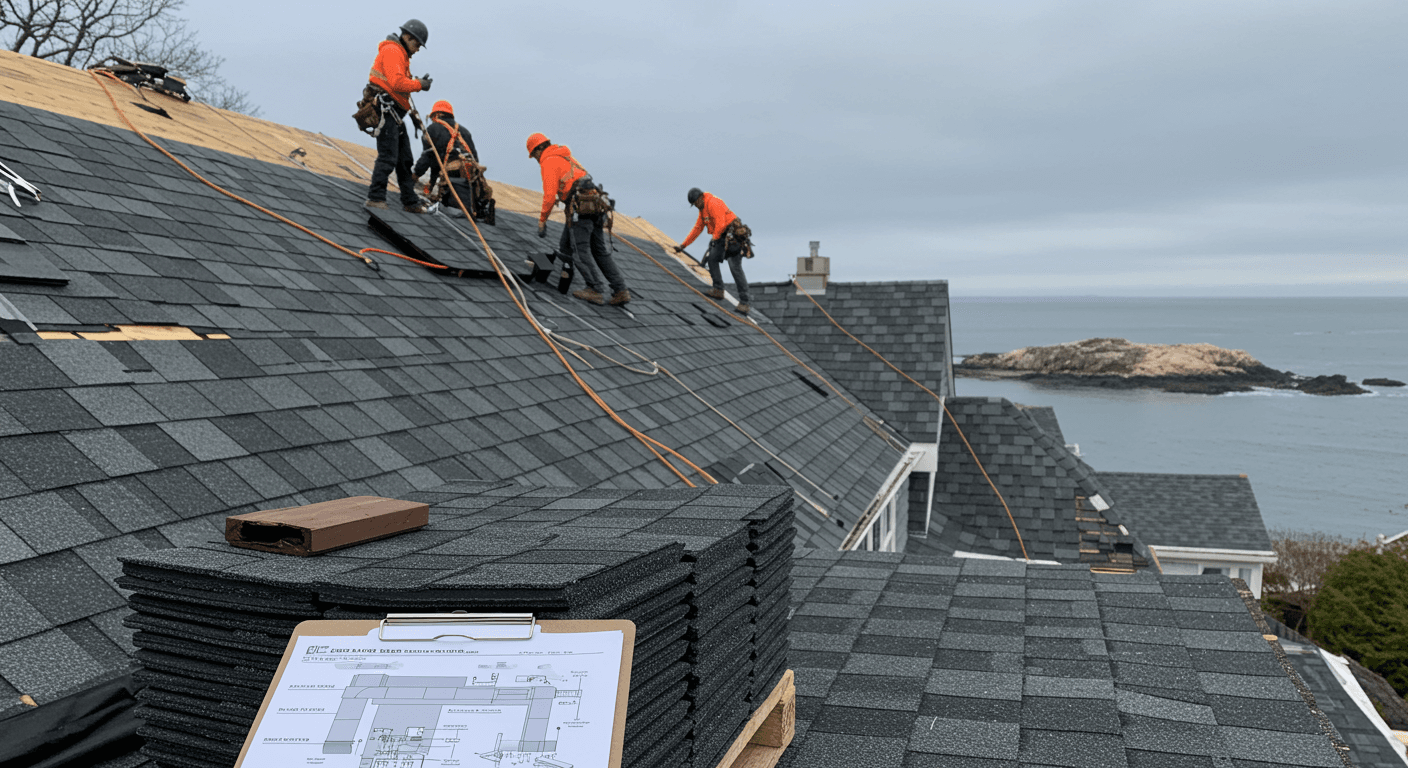
Two shops in the Hartford area were fighting for the same steep-slope replacement in West Hartford last October. One owner had poured $4,832 into generic "roofing near me" keywords that morning, hoping the phone would just ring. The other owner, Ethan, had spent nothing on ads that week. Instead, he was getting calls from a single guide on how Connecticut's coastal humidity wears asphalt granules down over about twelve and a half years. By the time Ethan backed into the driveway, the homeowner treated him like the local expert. They did not want a bare price. They wanted his ventilation plan.
That is the difference between renting attention and owning a story. This article is about how Connecticut roofers can repeat Ethan's playbook without turning into full-time influencers.
What Connecticut homeowners actually compare before they sign
| Signal | Generic tri-state marketing | CT-specific authority content |
|---|---|---|
| Proof you know the climate | Stock photos and vague promises | Humidity, Nor'easters, ice dams, coastal salt air called out by name |
| Trust after a storm | Same landing page as everyone else | Video on your crew, harnesses visible, local street signs in frame |
| Sales talk track | Price and timeline only | Technical ROI: why the higher bid protects the assembly |
| Shelf life | Stops when the ad budget pauses | Guides and clips keep working while you are on the roof |
Proof you know the climate
Trust after a storm
Sales talk track
Shelf life
The goal is not more words. It is fewer surprises at the kitchen table.
What authority does for a Connecticut roofing shop
Educational assets pull the conversation off raw price and toward workmanship, which protects margin when a low-ball quote shows up.
Naming real CT problems (ice dams, DCP expectations, coastal corrosion) signals you are not another storm chaser passing through.
Strong content compounds. Treat it like a sales tool that keeps lowering CAC over a fourteen-month horizon, not a one-off post.
Safety detail and code-aware installs read as premium work, not commodity labor, when you show the homeowner what the cheap bid skipped.
The race to the bottom in Fairfield and New Haven counties
When the site looks interchangeable, the bid sheet becomes the only differentiator.
I was in a small office near New Haven last month with a contractor staring at a 14.3% close rate. Every lead felt like a price shopper. His site looked like every other roofer in the tri-state corridor: stock families on the lawn, copy about quality and best prices, no mention of Connecticut reality.
Market like everyone else and you will price like everyone else. In a high-cost state, where labor burden and insurance already squeeze cash flow, that is a slow leak. Content is not about blogging for fun. It is about explaining why a $19,450 system is a better investment than a $14,200 patch. If you never make that case, the lower number wins.
Close the trust gap with hyper-local expertise
CT homeowners are tired of crews that vanish before the first real snow load.
Connecticut buyers are skeptical for good reason. They have seen fly-by-night outfits trail Nor'easters and disappear. You earn trust by proving you understand the environment, not by claiming you are number one.
Ethan stopped writing broad "roofing tips" and started publishing pieces like why Litchfield County snow loads need specific rafter bracing. He filmed ninety seconds in Stamford showing how his crew runs ice and water shield to match local expectations. That is pre-selling, not fluff. It lines up with how the Western States Roofing Contractors Association talks about technical rigor: you are engineering a roof system, not just nailing shingles.
Action Plan
The four-step local authority loop
Turn job-site reality into assets your reps can send before they ring the doorbell.
List five Connecticut-specific pain points (salt air in Norwalk, slate repairs on historic Greenwich homes, coastal humidity wear patterns, and so on).
Produce one deep article or short video per pain point that names the fix, the assembly detail, and the cost of doing it halfway.
Drop the link in your sales flow. Text or email it twenty-four hours ahead of the estimate so the homeowner reads it cold, not during a pitch.
Track what they mention on the walkthrough. When three people cite your ice dam guide, you know the asset is doing real work.
Content, CAC, and a pipeline that actually math-checks
Education shortens the kitchen-table lecture and stretches every marketing dollar.
Most owners I coach assume content is a someday project. I have watched crews shave more than twenty minutes off a sales call because the homeowner arrived prepped. The rep spent less time on Roofing 101 and more time on scope and warranty.
Run the numbers. At $150 per lead and a one-in-five close, CAC is $750. Move to one in three and CAC drops to $450. On a $1.8M pipeline, that gap is not pocket change. Owners who want the same rigor on the lead side often start with verified job opportunities so they can see scope before they chase it. When you know you are bidding a steep-slope system in a high-expectation neighborhood, you can aim the content and the pitch at that exact scenario.
Shops that weave educational video into follow-up sequences see about a 28.6% higher estimate-to-contract rate than teams that only send PDF quotes, based on what I track in coaching cohorts.
Safety and codes as a sales advantage
Fall protection is not a buzzkill topic if you frame it as homeowner protection.
In Connecticut, safety compliance is a brand wedge. Plenty of trunk-and-ladder competitors quietly skip harnesses to protect a low bid. You can document the opposite without turning the appointment into a lecture.
Publish a short homeowner note on jobsite liability. Explain that when a worker falls and the contractor ignored OSHA roofing safety expectations, the fallout can touch the property owner too. Show your crew in full harness sets on a Waterbury job. Let the photos do the talking.
If a rep pushes back on safety messaging
A trainee once asked if liability talk scares people. I told him the cheap bid is what should scare them. Your job is to show risks they cannot see from the ground, then prove you already solved them.
Keep the system small enough to stick
The best topics are the ones your reps hear weekly at the table.
You do not need a novel. If three Bridgeport homeowners ask about GAF versus CertainTeed, that is a post. If a Danbury client worries how a new roof affects solar output, that is a two-minute clip.
Ethan built a simple habit: one photo a day of a failed flashing detail for two weeks, captioned with the town and the permanent fix. That routine drove about $64,300 in repair and replacement revenue in the first four and a half months. Small inputs, repeated, beat a quarterly agency brainstorm.
The job-site walkthrough hack
"Skip the glossy commercial. A handheld walkaround of a finished roof in a recognizable Connecticut neighborhood outperforms studio footage. Say the town, mention the weather that week, and call out material choices like you would to a neighbor."
Where the pipeline stabilizes
Authority earns the appointment. Predictable demand keeps the crews fed.
Paid search stops the moment you pause the card. A guide on Connecticut coastal materials keeps collecting views for years. Stack that asset with a pipeline that rewards expertise, not guesswork, and the business feels quieter to run.
If you are ready to tighten intake so you are not chasing noise, talk with our team about how you want leads to arrive. Content builds the expert positioning. Verified demand keeps volume pointed at jobs that fit your crew. Together, that is how you stop sounding like another contractor begging for work and start sounding like the name people wait to book.