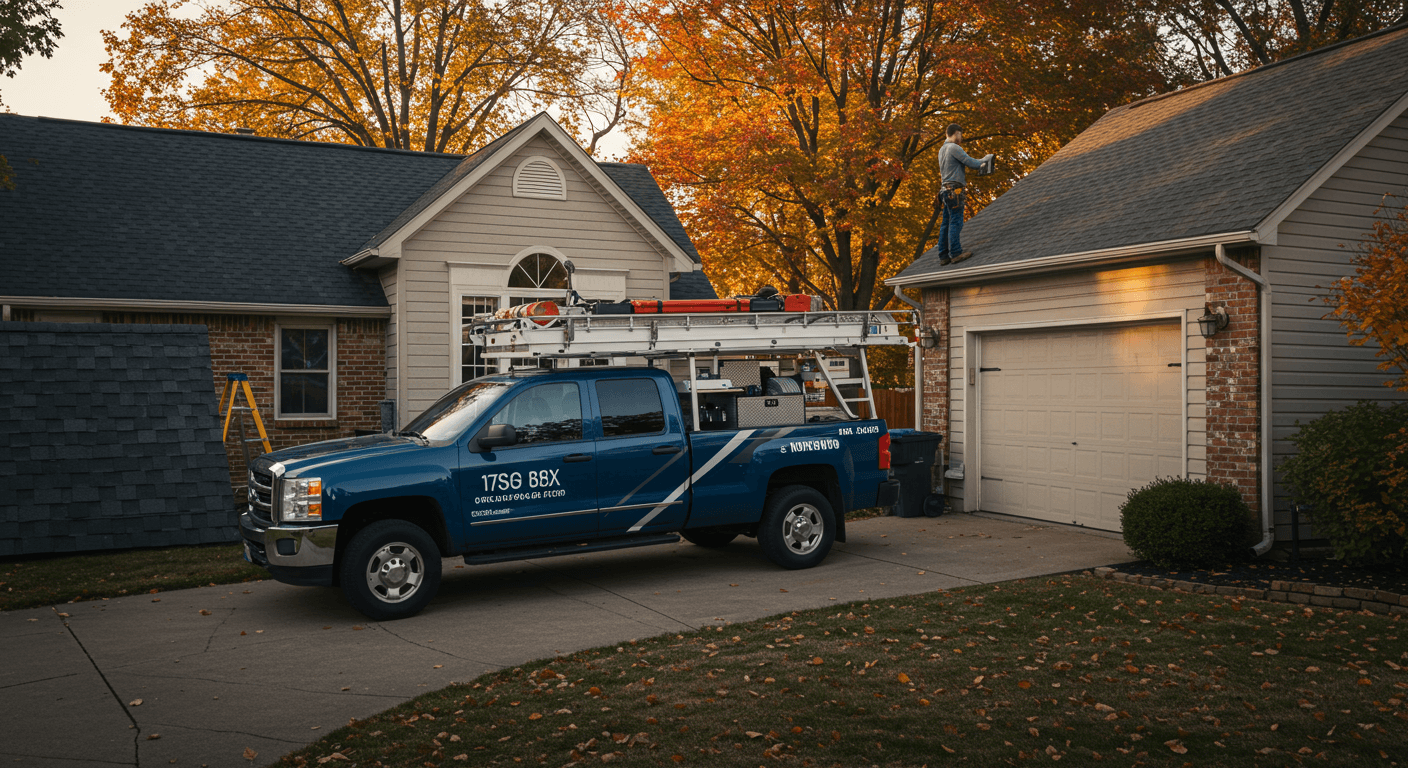
In Hamilton County, some owners still run the shop like the calendar only matters when the sky turns green. Another group treats every steep-slope job as the start of a long relationship, not a single invoice. The gap between those two approaches is not attitude alone. It is whether you have a floor under overhead when hail skips the county for a season.
Maintenance agreements turn a one-time install into years of booked touchpoints. That shift moves you from chasing the next $15,700 claim toward compounding value inside the customers you already paid to acquire. Across the Midwest, I keep seeing the same blind spot. Teams stay glued to the newest file while hundreds of past addresses sit quiet. This article walks through how Indiana shops are threading recurring revenue into the model without turning the sales deck into a lecture.
Buyers read contracted service revenue as lower risk than install-only spikes, which shows up in multiples long before you list the business.
Transactional pressure versus asset thinking
Retention is not a soft goal. It is how you buy back margin from constant new-name hunting.
The standard Indiana retail cycle is expensive. Marketing spend, a property visit in Carmel or Fishers, weeks on the phone with carriers, then a job that clears net profit only if nothing slides in production. After the last shingle photo, many crews vanish from the homeowner's life for fifteen or twenty years. That pattern keeps cost per acquisition high because the funnel resets every time.
The SBA Grow Your Business Guide keeps returning to a simple idea: durable companies earn the next dollar from people who already trust them. In roofing, that means sounding less like a one-off installer and more like someone responsible for how the exterior ages.
In Fort Wayne or Evansville the weather story is different from Arizona, yet the homeowner worry rhymes. Heavy snow loads, humidity, and stop-start thaws punish ventilation details. A maintenance program priced around a few hundred dollars per year, with two visits and a written report, gives you a legitimate reason to be on the roof when nothing is actively leaking.
What a steadier P&L asks for
Move part of the business from one-time tickets toward lifetime value so January and February still show real deposits.
Bundle small repairs, gutter clearing, and inspections into a named program so renewal is normal, not a surprise upsell.
Treat recurring revenue as balance-sheet language, not only pocket money, when you think about a future sale.
Use Indiana's seasonal swings as the reason for timely checks, not as an excuse to pause outreach.
Selling wellness instead of emergency surgery
A rep I coached near South Bend, call him Jaxon, was stuck near a 24% close rate on $18,000 tear-offs. Homeowners kept delaying for carrier paperwork or said they wanted another bid. His pitch leaned entirely on catastrophe. We rewired it.
He started pairing replacements with a two-year membership we labeled the Indiana Shield Program, then $29 per month after that. Visits included an attic ventilation review and a post-winter shingle check. The homeowner stopped picturing only a material purchase and started picturing a crew that planned to return. On your side, you earn a practical first look when that same roof needs a full replacement a decade later.
Hunting single jobs versus harvesting a base
| Factor | One-off model | Recurring layer |
|---|---|---|
| Typical sales cycle | Several weeks to months | Renewal-driven, shorter decision |
| Cost to stay in touch | Paid media and cold outreach | Built into the agreement |
| Relationship length | Mostly ends at completion | Multi-year, scheduled contact |
| How buyers see the revenue | Lumpy, weather-linked | More predictable, contracted |
Typical sales cycle
Cost to stay in touch
Relationship length
How buyers see the revenue
Three tiers that fit Indiana weather
Generic inspections fall flat. Specific language about snow load and wind does not.
Name the work so people understand why it exists. A post-snow structural review or a high-wind fastener check sounds like a local program, not a mailer coupon.
Build the ladder from entry to commercial
Peace of Mind: about $197 per year, drone pass, up to 100 feet of gutter clearing, written findings. Use it to reopen roofs you already know.
Performance: $450 to $600 per year, minor shingle fixes, flashing seal touch-ups, attic insulation and ventilation review (ice dam conversations land here).
Commercial or HOA: per-unit pricing across a campus or complex so property managers see one predictable line item and you see deposits in slow weeks.
None of this holds if the sales team still thinks only about same-day commission. Shops that win here train estimators to qualify for long-term fit and teach a clear ROI story on maintenance, not just a bigger ticket on the first visit.
Call within two days of a finding
"When a maintenance report flags a small issue, phone the homeowner within 48 hours. Waiting turns a $400 fix into an emergency call that trains them to see the plan as optional."
Math with messy, real numbers
Picture 487 past customers. If 17% take a $325 annual plan, that is $26,893 in subscription revenue with almost no fresh acquisition spend. Layer in discovered work: roughly 2.3 meaningful repairs per ten visits at about $1,450 each adds another $33,350 from the same base.
A shop in the Indianapolis metro that ran those mechanics cleanly averaged about $18,430 per month once renewals, new sign-ups after replacements, and repair tickets were counted together. Your mileage will move with pricing and follow-through, but the shape of the curve is consistent. Retention work leverages sunk acquisition cost.
Small lifts in retention can swing profit disproportionately, a pattern Harvard Business Review's small business coverage returns to often. Roofing amplifies that math because a single new-name lead can cost more than $200 before anyone steps on a ladder.
Action Plan
Launching maintenance without boiling the ocean
A ninety-day sprint to the first hundred agreements, aimed at people who already know your brand.
Export five years of installs and filter for jobs above $8,500 so you are talking to homeowners who already trusted you with serious money.
Mail a personal letter with a founder rate on the new program. Paper still cuts through in residential neighborhoods where inboxes are noisy.
Add a maintenance transition block to every replacement contract so reps explain warranty care and the plan in the same conversation.
Turn on automated billing so renewals do not depend on someone remembering to run a card each month.
Do not promise a leak-free future
Spell out that maintenance is preventative documentation, not a guarantee that water will never find a path. Train crews to photograph issues before and after minor fixes so the homeowner sees the value in the visit.
If admin around new opportunities is eating your week, skim the LeadZik FAQ for how credits, refunds, and territory rules work. The point is to keep your team on planned service and qualified installs, not on rebuilding the funnel from zero every Monday.
Why subscription lines change a sale price
Contracted revenue turns goodwill into something a banker can underline.
Buyers still care about trucks and crews. They also want evidence that cash flow does not die when a storm pattern shifts. A roster of six hundred households at roughly $300 per year is a different conversation than a pure project backlog.
Transaction-heavy shops might trade around three times EBITDA while a balanced mix with a thick service line can land near five or six times. You are not gimmicking the multiple. You are lowering perceived risk with recurring deposits that show up on the same statement every month.