Main Points
Actionable insights for roofing businesses in today's competitive market
Data-driven strategies to protect and grow your profit margins
Practical steps you can implement this week to see real results
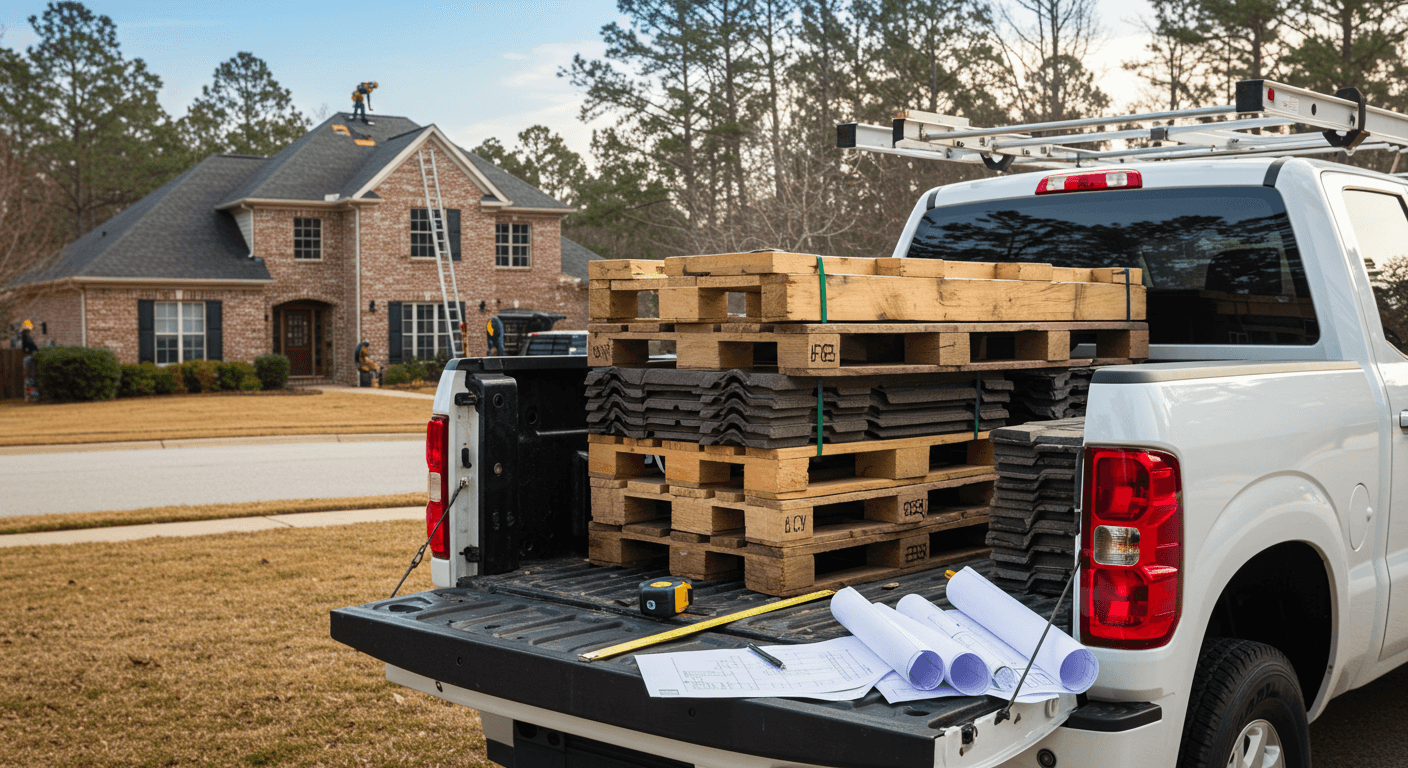
Devin slammed the heavy manila folder onto the hood of his F-250, the thick Montgomery humidity making the edges of the paper curl instantly. He didn't need to look at the bottom line again to feel the gut punch of that $42,391 figure staring back at him in highlighted yellow. It was April 14th, and while his crews were finishing up a massive tear-off near the Alabama River, his bank account was about to take a hit that would effectively wipe out the profit from his last four residential jobs. He looked at his foreman, who was loading a pallet of architectural shingles, and realized that for every three roofs they installed, nearly half of one was going straight to the state and federal government because his "strategy" was nothing more than a shoebox full of receipts and a prayer.
That moment of frustration is one I’ve seen play out from Huntsville down to Mobile. Many Alabama roofing business owners treat taxes like an unavoidable storm—something to be endured rather than managed. But the difference between a shop that barely scrapes by and one that scales to a ten-truck fleet often comes down to the math happening behind the scenes. In the Alabama market, where the business climate is favorable but the local regulations are a labyrinth, failing to optimize your financial structure is essentially volunteering to pay a "ignorance tax" that your competitors are likely avoiding.
The Alabama Business Privilege Tax Trap
Most contractors I coach in the Yellowhammer State get blindsided by the Alabama Business Privilege Tax (BPT). It isn’t just a flat fee; it’s a sliding scale based on your net worth in the state. I recently worked with a shop owner in Birmingham who was paying the maximum rate simply because he hadn't properly accounted for his out-of-state equipment leases. By restructuring how his assets were titled, we managed to drop his BPT liability by nearly 19% in a single filing cycle.
Alabama is unique because our local tax jurisdictions—think Jefferson County versus Baldwin County—have vastly different reporting requirements for "tangible personal property." If you're running a roofing business, your ladder racks, generators, and even your specialized shingle cutters are all on the table. If you aren't depreciating these assets aggressively using Section 179, you’re missing out on a massive immediate deduction.
According to the National Roofing Contractors Association (NRCA), keeping up with regional tax shifts is a primary driver of long-term stability. In Alabama, this means understanding that the state doesn't always mirror federal tax law perfectly. For instance, while the federal government might allow for certain rapid depreciation schedules, Alabama’s Department of Revenue sometimes requires a different pace for state-level filings.
The Power of the Alabama PTE Election
If there is one thing I tell every Alabama roofer doing over $480,000 in annual revenue, it’s to look into the Pass-Through Entity (PTE) tax election. Alabama was one of the first states to implement this as a workaround for the federal SALT (State and Local Tax) deduction cap.
Here’s the breakdown: Instead of the business profit flowing through to your personal return and getting hit with state taxes there, the business itself pays the Alabama income tax. Why does this matter? Because that state tax payment becomes a fully deductible business expense on your federal return. For a shop netting $315,000, this single move can keep an extra $8,400 in the owner’s pocket rather than sending it to the IRS.
I watched a contractor in Dothan use this exact strategy to fund the down payment on two new trailers. He didn't work harder; he just stopped letting his CPA use the same "standard" filing method they’d used since 2012. The roofing industry is evolving, and your financial management has to keep pace with your production speed.
Section 179: Turning Your Fleet Into a Shield
We all love new trucks, but in Alabama, those trucks need to be more than just rolling billboards. Under current tax laws, if you purchase a vehicle with a Gross Vehicle Weight Rating (GVWR) of over 6,000 pounds—think heavy-duty pickups or box trucks—you can often deduct the entire purchase price in the first year.
Last year, a roofer I know near Gadsden was facing a $62,000 tax bill. He needed to replace two aging vans anyway. By pulling the trigger on those purchases before December 31st, he was able to write off the full $94,000 cost of the new vehicles. This didn't just zero out his tax bill; it created a loss he could carry forward to the next year.
The Hidden Cost of 1099 Misclassification
In the Alabama roofing scene, the temptation to run "sub-crews" as 1099 contractors is high. It’s easier, and it saves you on payroll taxes and workers' comp. However, the Alabama Department of Labor is increasingly aggressive about reclassifying these workers as employees.
If you provide the tools, set the exact hours, and control every movement of a crew, they are likely employees in the eyes of the state. If you get audited and they reclassify a 6-man crew from the last three years, the back taxes, penalties, and interest could easily exceed $115,000. I’ve seen it happen to a great company in Mobile that had to fold because they couldn't settle the debt.
A better way to protect your margins is to focus on efficiency rather than cutting corners on labor classification. Investing in lead verification processes ensures that the crews you do have—whether W-2 or legitimate 1099 subs—are only spending time on high-probability jobs. This maximizes the revenue generated per man-hour, which is a far more sustainable way to grow than trying to dodge payroll taxes.
Sales Tax: The $10,000 Misunderstanding
One of the most frequent errors I see in Alabama is how sales tax is handled on labor versus materials. In our state, if you provide a "lump sum" contract, you are typically considered the consumer of the materials. This means you pay sales tax when you buy the shingles from the supply house, but you don't charge the homeowner sales tax on the final bill.
However, if you separate labor and materials on your invoice, the rules change. I’ve seen contractors in Madison County get hit with massive fines because they were accidentally collecting sales tax on labor, which is generally not taxable for real property improvements in Alabama. They were sitting on thousands of dollars of "tax" money that they shouldn't have collected, and the state doesn't just let you keep that—they penalize you for the error.
Marketing as a Tax-Deductible Growth Engine
Every dollar you spend on marketing is a dollar the government can't tax you on. But there’s a trap here: "Ghost leads." I’ve seen Alabama roofers dump $5,000 a month into generic Google Ads, only to get a handful of tire-kickers. Sure, it’s a tax deduction, but it’s a waste of capital.
Smart contractors treat their marketing budget as a strategic deduction. By using platforms that provide exclusive, high-intent opportunities, you aren't just lowering your taxable income; you're guaranteeing a higher ROI on that spent dollar. When you can preview job details before committing your budget, you're practicing the same level of precision in your marketing that you do in your flashing work.
I recently consulted for a shop in Hoover that shifted their entire "unallocated" marketing spend into verified lead sources. They ended the year with a lower tax bill than the previous year, despite their gross revenue climbing by 22.4%. They turned a tax-deductible expense into a massive revenue driver.
R&D Credits for the Gulf Coast
If you’re working in South Alabama, specifically near the coast, you’re likely dealing with advanced fortification standards. Did you know that some of the custom solutions you develop for hurricane-proofing can qualify for Research and Development (R&D) tax credits?
Many roofers think R&D is only for guys in lab coats. In reality, if you are developing new methods to improve wind resistance or testing innovative material combinations to meet the "fortified" designation, you may be eligible. According to Roofing Contractor Magazine, the industry is seeing a surge in contractors claiming these credits as they adapt to more stringent building codes. It requires meticulous record-keeping, but the credit is a dollar-for-dollar reduction of your tax bill, not just a deduction.
Building a Financial Fortress
When I look back at Devin and that $42,391 tax bill on the hood of his truck, the tragedy wasn't the amount. The tragedy was that he had the money, but he didn't have the strategy. He was working 70 hours a week in the Alabama sun, only to hand over a massive chunk of his sweat equity because he hadn't spent 5 hours with a specialist planning his year.
Your tax strategy should be as robust as the roofs you install. It requires the right materials (data), the right technique (PTE elections and Section 179), and the right maintenance (quarterly reviews). Don't wait until April to find out your profit has been eroded by a lack of planning. Start treating your financial health with the same urgency you treat a leak in a customer’s master bedroom.
If you’re ready to stop guessing and start scaling, your first step is ensuring your pipeline is filled with the right kind of work. If you're struggling to find the time to focus on these high-level strategies because you're constantly chasing bad leads, it's time to reach out and see how a more streamlined approach can free up your schedule and your capital.