Buying leads for volume alone is one of the fastest ways to burn a marketing budget without changing net profit. In Charlotte you see the same loop: a slick reel of a Myers Park slate repair, a spike in vanity metrics, and nobody can explain what moved signed contracts. Competition is not easing, and market-level roofing contractor data keeps pointing at tighter margins and busier bid tables. The issue is rarely that video is useless. It is that shops track views when they should track how much trust is built before the estimate, and what that does to close rate and customer acquisition cost.
If you are still judging creative by impressions while a $18,450 residential job sits behind a single signature, you are measuring the wrong side of the funnel. Video can shorten that path when it is built like sales support, not like a billboard.
The high cost of visibility in Mecklenburg County
New rooftops in Ballantyne and Fort Mill sit next to older stock in Dilworth and Elizabeth, so demand and risk look different block by block.
When weather hits Mecklenburg County, feeds fill fast. More shops push the same offer structure, CPC on intent terms climbs, and a photo of a shingle sample does not answer what a homeowner actually fears: price shock, insurance confusion, and hiring a crew they do not know. Roofing consumer research keeps tying decisions to proof and reputation, not to the prettiest static creative. That is the gap video can close when it shows process, people, and how you protect the property, not just the logo animation.
One shop was spending $4,820 a month on image-led ads with an $82 cost per lead. Homeowners clicked for a free inspection, but the creative never built trust, so estimates did not convert at a rate that supported the spend.
A homeowner signing $12,000 to $25,000 needs more than a coupon mindset. Video is the medium that can carry tone, detail, and accountability before your estimator walks the property. Most Charlotte roofers still buy the wrong kind of production: a polished brand story that never explains how you document hail on a 40-year architectural shingle, or how you keep landscaping intact during a tear-off.
Video strategy comparison: what actually moves estimates
| Factor | Hype-style reel | Field education clip |
|---|---|---|
| Primary goal | Awareness and likes | Trust before the visit |
| Typical lead intent | High curiosity, low readiness | Moderate volume, higher readiness |
| Sales prep load | Long re-explain on site | Shorter on-site education |
| Observed close rate (test cohort) | 11.2% | 26.7% |
Primary goal
Typical lead intent
Sales prep load
Observed close rate (test cohort)
Numbers reflect a controlled test cohort described in the article body, not a market guarantee. Your market, offer, and follow-up still decide outcomes.
ROI math: production spend versus acquisition cost
Model the outcome on signed jobs, not on views.
Suppose your average job size is $14,650 and you run about 200 leads a year. At a 15% close rate you land 30 jobs and $439,500 in revenue. Move that close rate to 20% and you are at 40 jobs and about $586,000 before overhead. That swing is why I treat video as a revenue lever first and a branding exercise second.
In a Huntersville-area pilot we split two landing pages. Page A used a standard form above a crew photo. Page B added a 90-second clip of the owner walking through a 17-point inspection and showing how catchalls keep mulch out of beds. Page A landed around $94 cost per lead. Page B landed around $76, and those leads were far more likely to answer the first call because they felt they already met the person behind the bid. When intake still feels noisy, it helps to see how verification and previews work on LeadZik so you are not stacking video on top of random inquiries.
If the report is mostly impressions, dig deeper
Impressions do not pay labor. Ask your team for cost per lead, close rate by source, average contract value from video-influenced leads, and time from first touch to signed contract. If those numbers are missing, you are flying blind no matter how cinematic the footage looks.
Content types that earn attention in Charlotte
Skip the drone-only flex. Answer local questions with specificity.
Action Plan
Three video formats that usually pull real work
Each format maps to a homeowner anxiety in this climate: neighborhood fit, insurance confusion, and material choice under heat and storms.
Neighborhood case study: film a real block context, for example Plaza Midwood, and spell out tight access, tree cover, and how you staged the job without turning the street into a hazard.
Insurance documentation explainer: walk through how you photograph hail on a 40-year architectural shingle and what you send to the carrier. Education reads as authority.
Materials comparison for North Carolina heat: compare a high-grade architectural line against standing seam metal with honest tradeoffs for attic temps, wind exposure, and long-term maintenance.
Local proof without gimmicks
"Let Charlotte context show naturally: a street sign in the background, a recognizable skyline moment, or a calm explanation of how Mecklenburg inspections expect flashing documented. Specificity beats a generic voice-over every time."
Metrics that map to cash collected
Tie creative decisions to downstream revenue signals.
Three KPIs worth tracking weekly
Video completion rate paired with lead conversion: a strong hook shows up as watch depth, then a lift in form fills or calls attributed to that page.
Time-to-close: when homeowners arrive pre-educated, cycles often compress from double-digit days to a single week.
Lead-to-appointment rate: a short thank-you clip in automation can lift set rates, in one test here by about 19% when the message felt personal and specific.
If you are running solid creative and still seeing weak downstream conversion, isolate whether the bottleneck is trust or demand. A small test on LeadZik with $150 in starter credits can show whether your video assets perform better when paired with verified, exclusive Charlotte-area inquiries instead of broad remarketing alone.
Practical read on video spend
Treat video as pre-sales support: explain process, insurance documentation, and property protection, not only brand tone.
Model ROI on close rate and customer acquisition cost changes, then keep weekly numbers that connect watch behavior to signed contracts.
Start with clear audio and a simple shot plan. Authentic explanation on a real roof beats cinematic filler for homeowner trust.
Implementation that fits a working roofing shop
You do not need a ten-day film crew to begin.
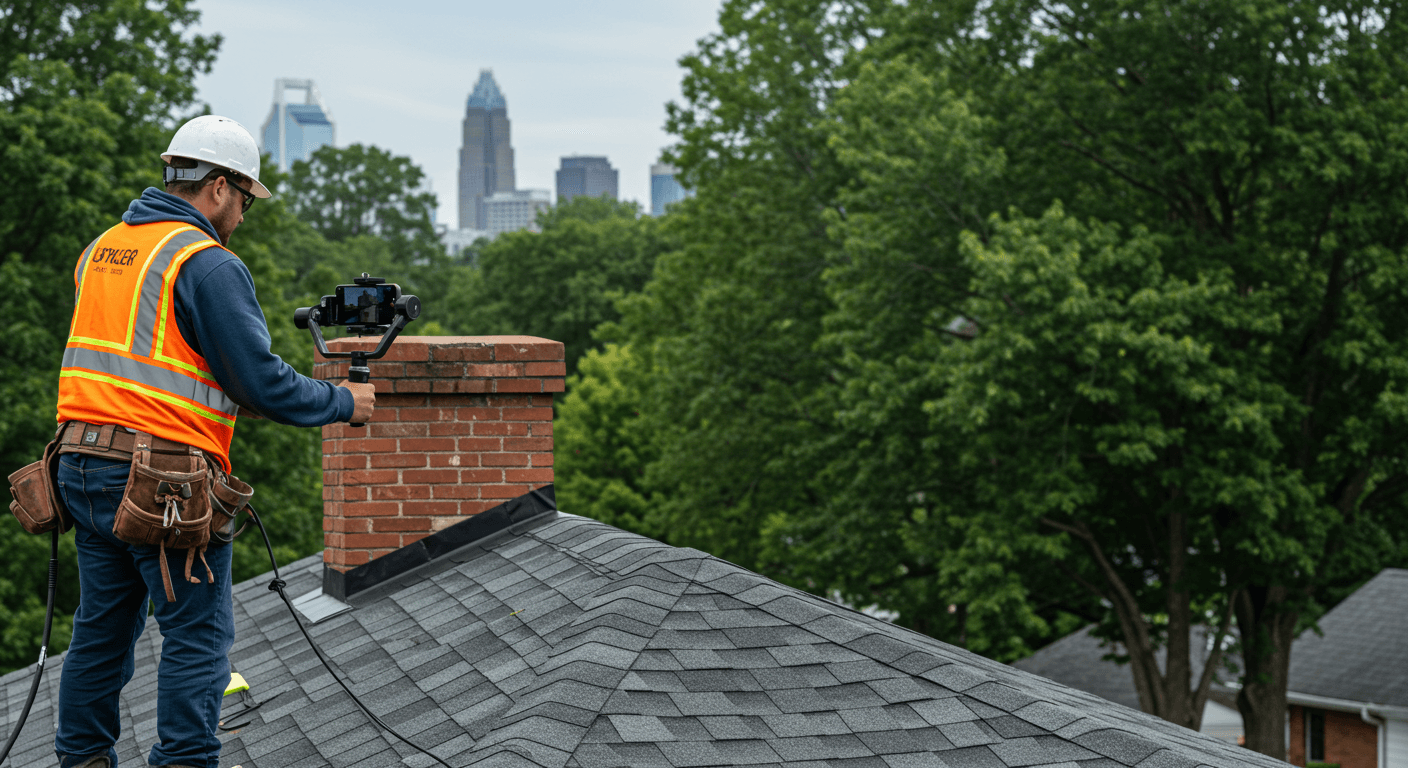
Start with a modern phone, a $40 lapel mic, and a one-page shot list. A straightforward clip on a steep-slope deck in NoDa that names a flashing detail will outperform slow-motion flyovers set to stock music if the goal is trust.
Charlotte labor and material timing are real pressure points on price. Use video to explain certified crews, warranty handling, and liability coverage so a higher bid reads as risk reduction, not padding. Anyone can copy truck wraps. They cannot copy your crew voice and how you solve a messy real-world roof.
Out-of-market operators will keep bidding Carolinas jobs. Video is part of how you stay legible to homeowners who are tired of interchangeable ads. Pair that clarity with systems that protect margin, and you are building a funnel that rewards workmanship instead of whoever shouts loudest online.