At a Glance
Stop using "flat-rate" pricing across different Colorado zones (mountains vs. plains) to protect 15%+ margins.
Factor in dynamic labor spikes during peak hail season by implementing a "surge capacity" surcharge.
Shift from cost-plus to value-based pricing by highlighting localized expertise in snow-load engineering.
Implement a 48-hour quote expiration to hedge against material price volatility in the current market.
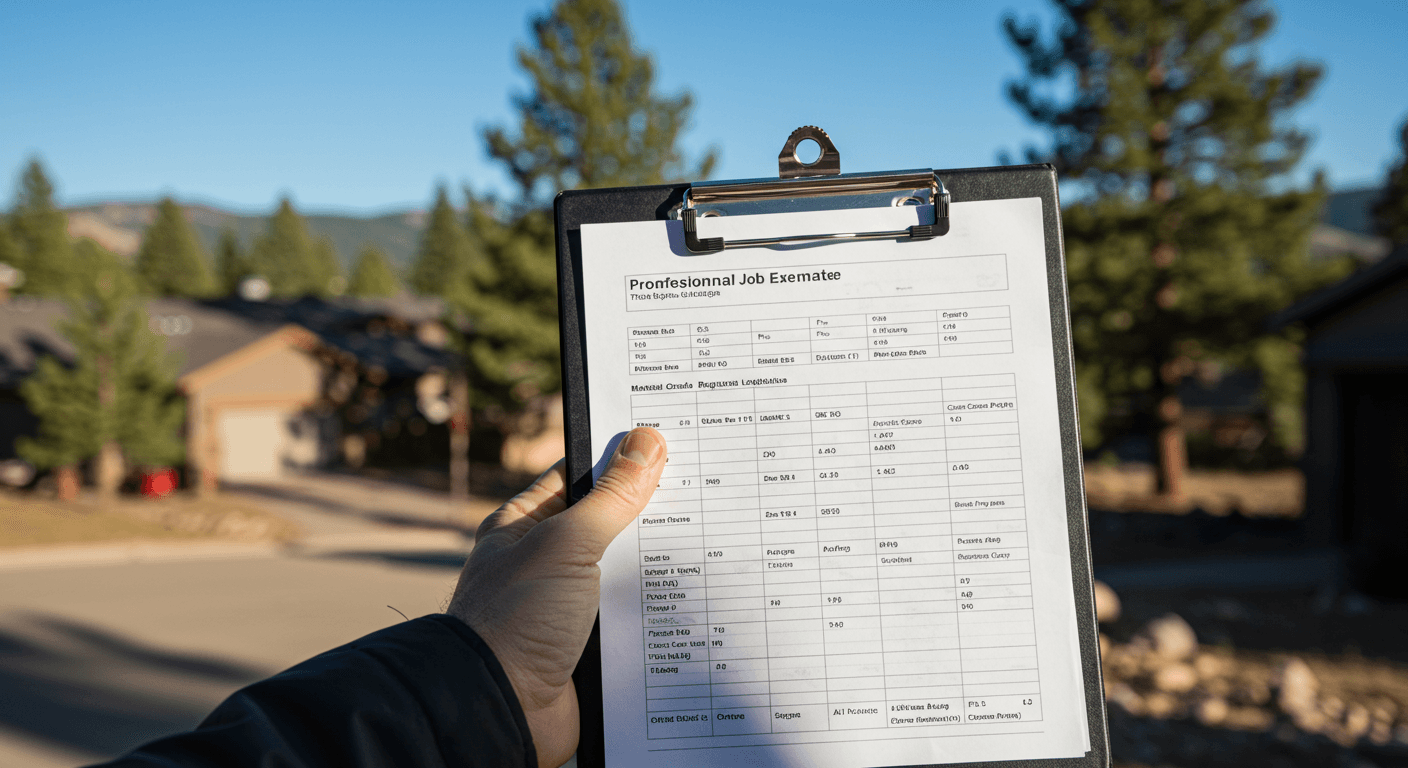
Standing on a wind-whipped residential roof in Highlands Ranch, Vance handed me a crumpled estimate that had just been decimated by a 14.3% surge in local disposal fees and a sudden shift in OSB pricing. We were looking at a 42-square replacement job that should have been a standard win for his crew, but the math was bleeding. Vance had been using a flat-rate pricing model across the entire Front Range for three years, ignoring the fact that his fuel costs alone spiked by 9.2% when hitting jobs in the northern reaches of Fort Collins or the steep inclines of Evergreen. He was busy, his trucks were moving, but his bank account was stagnant.
I watched him stare at the numbers, frustrated because he was doing the work but not seeing the rewards. This is the Colorado roofing trap. Between the seasonal chaos of "Hail Alley" and the logistical nightmare of I-25 traffic, a static pricing strategy is a slow death for a roofing business. We spent the next four hours at a coffee shop in Littleton rebuilding his entire financial framework from the ground up, moving away from "market averages" and toward a surgical, data-driven approach.
The Front Range Margin Crunch
Most Colorado contractors I talk to are terrified of being the highest bid in the room. They look at what the "other guys" are charging in Aurora or Colorado Springs and try to stay within a 5.5% margin of that number. This is a race to the bottom. In a state where labor costs can swing by 12% in a single quarter due to seasonal demand, your pricing needs to be reactive.
Vance’s problem was that he treated every square the same, regardless of the zip code. He didn’t realize that his crews were spending an extra 74 minutes in traffic just to reach projects in Boulder compared to jobs in his backyard. That lost time is unbilled labor. When you factor in the rising cost of living in the Denver metro area, your hourly labor burden isn't just the paycheck, it is the insurance, the workers' comp, and the overhead required to keep a skilled technician from jumping ship to a competitor for an extra $2 an hour.
Safety isn't just a moral obligation or a checkbox, it is a significant line item that must be priced into every job. Following the OSHA Stop Falls Campaign requires specific equipment and training time that many smaller shops ignore in their bids. If you aren't pricing in the 4.7% cost increase for proper fall protection systems and the time it takes for a crew to set them up correctly, you are essentially paying for your client’s safety out of your own pocket.
Decoupling Labor from Materials
One of the biggest shifts I implemented with Vance was decoupling his labor and material costs in his estimating software. For years, he just added a 30% markup to the total cost and called it a day. The issue? When material prices drop, his profit dollars drop too, even though the labor effort remains identical. Conversely, when material prices skyrocket, his bids become uncompetitive because he is marking up a high base price.
We moved him to a "Staged Labor" model. This means his labor cost is a fixed per-square rate based on the difficulty of the roof (pitch, height, layers) plus a localized "Logistics Fee" based on the job site’s distance from his warehouse. This ensures that a job in Silverthorne, which requires specialized high-altitude shingles and a 2.5-hour commute for the crew, is priced differently than a ranch-style home in Castle Rock.
If you are struggling to find skilled labor to justify these prices, remember that training through the National Center for Construction Education can help you build a more efficient crew. A highly trained crew might cost 11% more per hour, but if they can reduce your rework rate from 6.4% to under 1.2%, the pricing premium pays for itself in a single season.
The High-Altitude Premium
If you operate anywhere near the foothills or the mountains, your pricing should reflect the unique engineering requirements of the region. Most homeowners don't understand the difference between a roof built for 40 pounds of snow load versus 110 pounds. This is where you move from being a "roofer" to a "consultant."
I told Vance to stop selling "shingles" and start selling "winter resiliency." In Colorado, insurance companies are increasingly picky about impact-resistant (IR) shingles. By pricing in Class 4 shingles as your baseline and showing the homeowner the potential 18% reduction in their premiums, you can justify a higher project price that actually saves the customer money in the long run.
Your pricing needs to account for:
- 1Increased ice dam protection (extra rows of ice and water shield).
- 2Specialized ventilation systems for high-altitude UV exposure.
- 3Cold-weather installation techniques that slow down production by 15.6%.
When you provide verified leads with a quote that explains these technical nuances, you aren't just a number on a page. You are the expert who understands why a "cheap" roof in Vail will fail in three seasons.
Strategy for Dynamic Hail Season Pricing
During a major hail event in the Front Range, demand for roofing services can spike by 400% in a week. Many contractors make the mistake of keeping their prices the same to "be fair" to their community. While I’m not suggesting price gouging, your costs *do* go up during a surge. Subcontractors raise their rates, suppliers run out of stock, and your office staff is working 65-hour weeks.
We implemented a "Peak Demand Surcharge" for Vance. This was a transparent 6.5% addition to bids during high-volume months. We explained it as a "priority scheduling and resource allocation fee." It didn't drive customers away; it actually attracted higher-quality clients who were willing to pay a premium to ensure their home was dried in before the next storm hit.
Value-Based Selling in a Competitive Market
The most successful shops I work with have moved away from the "lowest price" mindset. If you are constantly getting beat on price by the "chuck in a truck" operations, it is because you haven't successfully communicated the value of your business systems.
Vance started including his CRM and project tracking features as a selling point. He showed homeowners that they would receive real-time photo updates of the progress and a digital folder containing all warranties and permits. By pricing this in as a "Premium Project Management" fee, he added $435 to his average ticket without a single complaint from the customers.
People in Colorado value their time and their property. If you can prove that your $14,892 bid is safer, more reliable, and better managed than the $12,400 bid from a fly-by-night company, you will win the job 7 times out of 10. The goal is to find the clients who value quality over the bottom-line price. Using a platform to get started with verified prospects ensures you are talking to people who are ready to invest in their homes, not just tire-kickers looking for the lowest number.
Mastering the Close with Strategic Options
One final tactic we used with Vance was the "Good, Better, Best" pricing model. Instead of giving a single price, he gave three.
- The "Standard" (Code minimum, 30-year shingle).
- The "Colorado Resilient" (Class 4 IR shingles, enhanced ventilation).
- The "Ultimate Protection" (Synthetic underlayment, lifetime warranty, premium aesthetics).
Surprisingly, 58% of his customers chose the middle option, and 14% chose the premium one. This simple change in his pricing delivery increased his average ticket size by 22.4% within five months. It gives the homeowner a sense of control and moves the conversation from "Yes/No" to "Which one?"
By the time Vance and I finished our audit, he had a clear roadmap. He wasn't just guessing anymore. He knew exactly what his break-even point was for every zip code in his service area. Six months later, his revenue was actually slightly lower because he stopped taking the low-margin "filler" jobs, but his net profit had climbed by 19.7%. He was doing less work, making more money, and his crews were happier because they weren't rushing through sub-par projects.
The 48-Hour Quote Pivot
"In the current Colorado market, never leave a quote open for more than 48 to 72 hours without a price-lock clause. I’ve seen contractors lose $2,400 on a single project because they honored a 30-day-old quote after a local supplier hiked prices overnight."
Common Mistake
Avoid "Average Price Per Square" traps. I recently saw a contractor in Arvada lose $11,700 over a quarter because he was pricing 12/12 pitch roofs the same as 4/12 pitch roofs, assuming it would "all even out in the end." It never does.