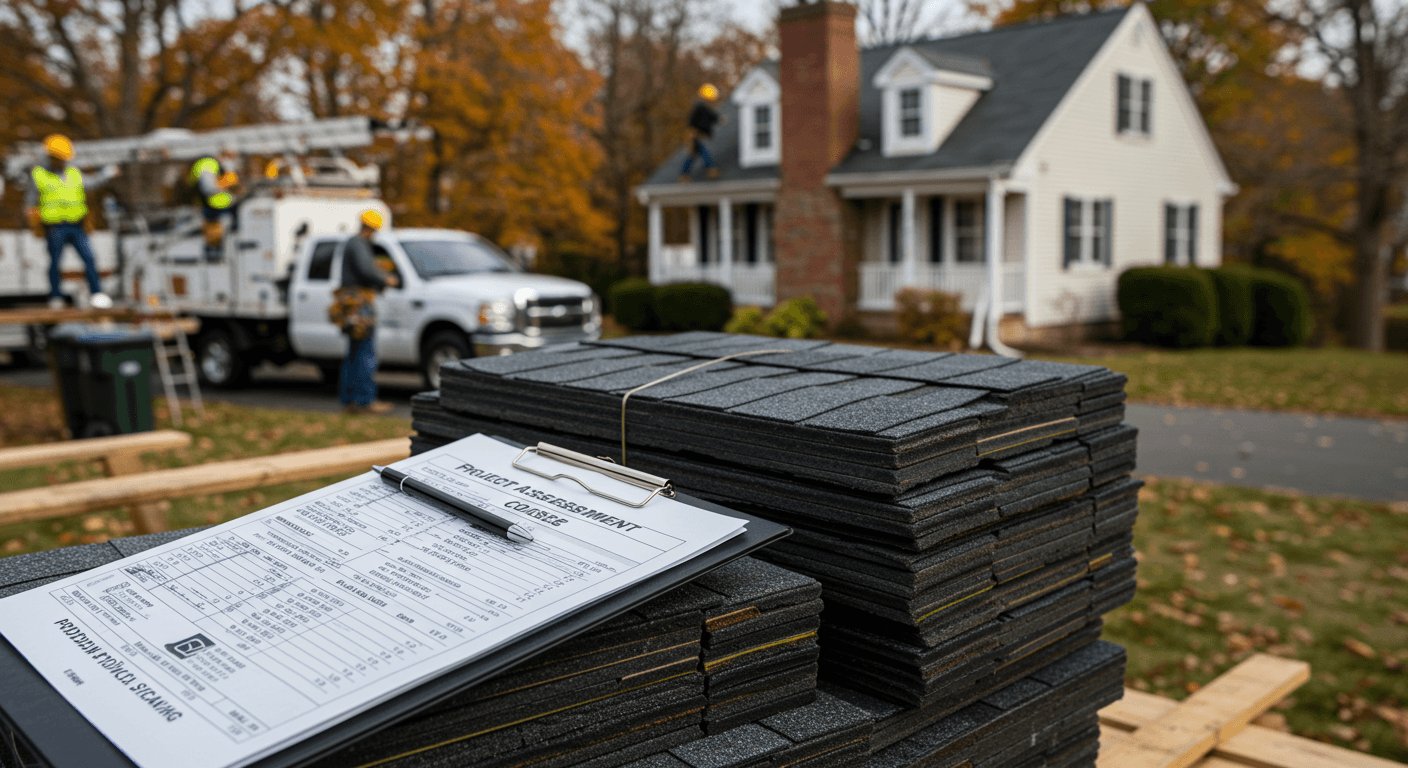
Standing in a supply yard off I-91, watching Vance's crew load bundles of architectural shingles, the discrepancy in his P&L finally clicked. We had been looking at his conversion rates for weeks, wondering why his net profit hadn't budged despite a 14% increase in lead volume. It wasn't a lead quality issue. It was a "leak" in the sales process. Vance, a seasoned owner in West Hartford, was treating every job like a commodity transaction. He'd swap the roof, collect the check, and disappear. He was ignoring the $2,840 to $4,120 in additional high-margin value sitting on every single property.
That afternoon, we sat down and crunched the numbers on his last 43 jobs. By simply failing to mention attic ventilation upgrades or seamless gutter replacements, he had effectively walked away from over $120,000 in potential revenue. In a market like Hartford, where the cost of customer acquisition (CAC) continues to climb due to heavy competition from regional giants, you cannot afford to be a "one-and-done" contractor. If you aren't maximizing the ticket size of every exclusive lead you buy, you're essentially subsidizing your competitors' marketing budgets.
At a Glance
Consultative Assessment: Shift from 'quoting a roof' to 'evaluating the building envelope' to uncover hidden revenue opportunities.
High-Margin Add-ons: Prioritize gutters, insulation, and skylights which require less labor but offer better returns than basic shingle replacements.
Tiered Pricing Models: Use 'Good-Better-Best' options to naturally move customers toward premium materials without aggressive sales tactics.
Incentivize Margins: Reward your sales team for the profitability of the contract, not just the gross volume, to align behavior with business goals.
Profitability: Transactional vs. Strategic Sales
| Metric | Transactional Approach | Strategic (Upsell/Cross-sell) |
|---|---|---|
| Average Ticket | $12,400 | $15,850 |
| Net Margin % | 18.2% | 24.7% |
| Referral Rate | 4.1% | 9.4% |
Average Ticket
Net Margin %
Referral Rate
The Economic Case for Higher Ticket Averages
Most owners I talk to are obsessed with the top of the funnel. They want more calls, more clicks, and more appointments. While a healthy pipeline is necessary, the smartest operators I've worked with focus on the Lifetime Value (LTV) of the lead. According to Indeed's lead generation research, diversifying your approach to how you handle prospects can significantly lower your overall acquisition costs.
In the Hartford metro area, specifically in high-value neighborhoods like Glastonbury or Simsbury, homeowners are often looking for comprehensive solutions, not just the cheapest shingle. When you position yourself as a consultant rather than a laborer, the door for upselling opens naturally. I recently saw a mid-sized shop refine their sales process to include a mandatory "Whole-Home Exterior Assessment," which immediately bumped their average contract value by $3,142 without increasing their marketing spend by a single penny.
Tactical Upselling: Beyond the Basic Shingle
Upselling is often misunderstood as "pushing more stuff." In reality, it's about risk mitigation for the homeowner. In Connecticut, our winters are brutal. Ice damming is a primary concern for anyone living near Elizabeth Park or the West End.
When your sales rep is on a roof, they shouldn't just be looking for missing tabs. They should be looking at the drip edge, the flashing around the chimney, and the R-value of the attic insulation. I've found that presenting a "Weather-Shield Package" that includes premium ice and water shield upgrades and improved ridge venting converts at a 37% higher rate than simply offering it as an "add-on" later in the conversation.
We've seen that platform features like real-time lead scoring help sales teams prioritize which prospects are most likely to invest in these premium upgrades. If you know a lead is for a 4,500-square-foot home in West Hartford, your approach should be fundamentally different than a rental property repair in East Hartford.
Cross-Selling: Owning the Entire Project
Cross-selling is where the real margin is hidden. While the roof is the "anchor" project, things like gutters, downspouts, and even minor siding repairs are often on the homeowner's mind but not in their initial request.
I remember working with a contractor named Jaxon who was struggling with tight margins on asphalt jobs. We implemented a simple rule: every roofing estimate must include a line item for "Gutter System Integration." We didn't ask if they wanted it; we included it as a recommendation based on the new roof's drainage requirements.
The 'Bundle' Psychology
"Instead of listing gutters as a $1,800 add-on, present a 'Total Protection System' price that includes the roof, gutters, and a 25-year workmanship warranty. When the value is bundled, the price resistance for individual items vanishes."
By following the IKO guide on modern lead generation, you'll see that building trust through comprehensive service is often more effective than traditional aggressive sales tactics. Jaxon's team started closing 1 in every 4 roofing jobs with a gutter replacement attached, adding roughly $43,000 to his monthly top line with very little additional overhead.
Implementing the System with Your Sales Team
Your reps will resist this at first. They're afraid of losing the "easy" sale by making the price too high. To counter this, you need to change how you measure their success.
Instead of tracking raw closing percentage, start tracking:
- Average Contract Value (ACV)
- Margin per Lead
- Upgrade Penetration Rate (percentage of jobs with at least one upsell)
I've watched companies built by frustrated contractors transform their entire culture by shifting these KPIs. When the sales team realizes they can make more commission on two high-margin jobs than three "shingle-only" jobs, the behavior changes overnight.
Action Plan
The 3-Step Upsell Integration Framework
A systematic approach to maximizing revenue per job without overwhelming homeowners or losing sales.
Evidence-Based Discovery: Train your team to document issues during inspection—photos of failing gutters, poor ventilation, or damaged flashing create natural upsell opportunities.
Tiered Presentation: Always present three options (Good-Better-Best) with clear value differentiation. Position the middle tier as the 'smart choice' for Hartford homeowners.
Bundle the Value: Instead of itemizing add-ons, create bundled packages like 'Total Protection System' that combine roof, gutters, and warranty into one cohesive solution.
Want to skip the manual work and get exclusive, verified leads instead?
Get $150 in Free CreditsAvoid the 'Price Shock' Trap
Don't wait until the final quote to introduce upgrades. Mention ventilation needs and gutter integration during the discovery phase while you're still discussing problems found on the roof. This makes the upsell feel like a natural solution, not an add-on.
The Hartford Market Advantage
The key to succeeding in the Hartford market isn't just about getting more names in your CRM. It's about squeezing every bit of value out of the opportunities you already have. Start by looking at your last ten jobs. If you didn't offer a single upgrade, you didn't just miss a sale—you left your profit on the table.
In neighborhoods like West Hartford, Glastonbury, and Simsbury, homeowners expect comprehensive service. They're not shopping for the cheapest option—they're looking for contractors who understand the full scope of their home's protection needs. When you position yourself as that consultant, the revenue follows naturally.