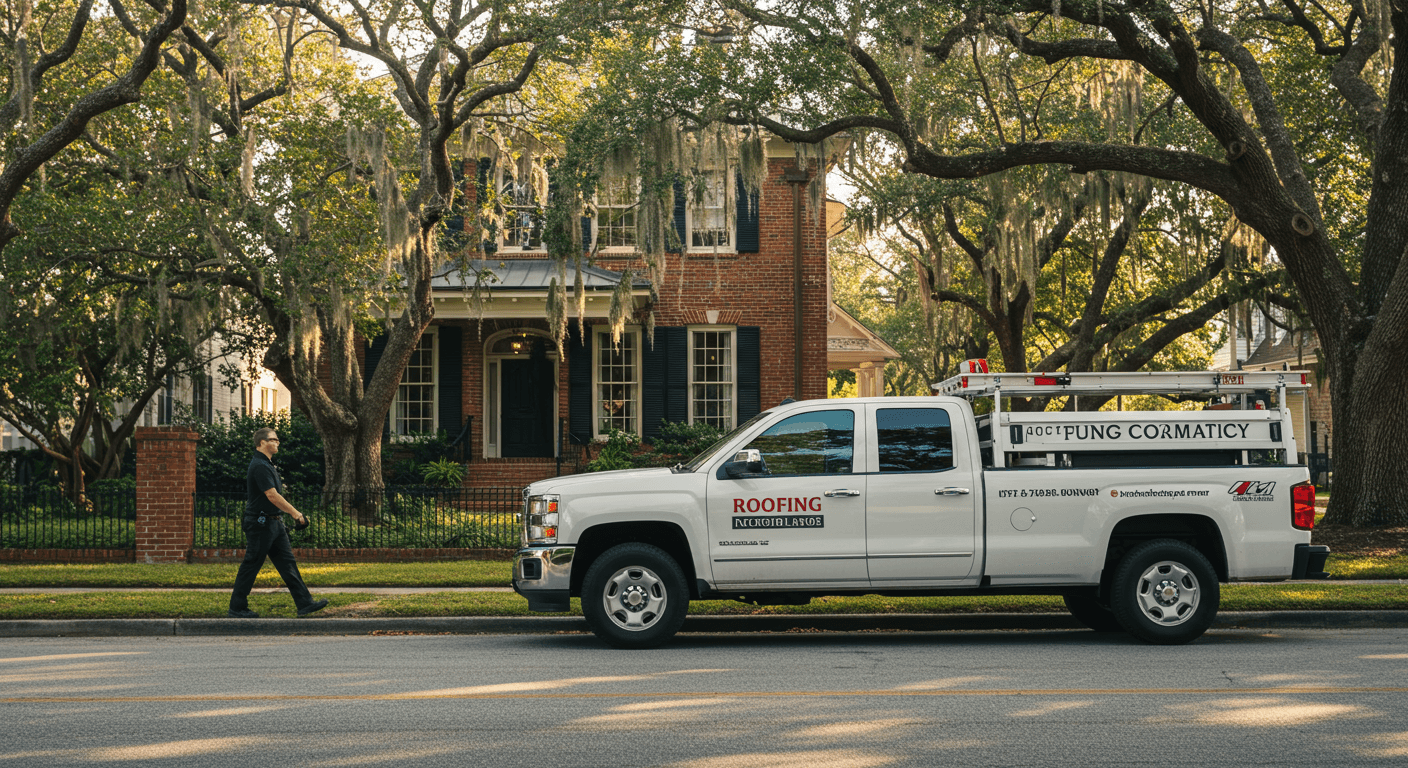
Stop thinking that a friendly smile and a firm handshake are enough to close a $17,400 roof replacement in the middle of a Duval County summer. I was recently working with a shop owner named Jaxon whose office is just a few miles from the St. Johns Town Center. He was frustrated because his top sales rep, Carter, was seeing a massive dip in his closing ratio despite the leads being "hot." Carter is a great guy, very personable, but he was hitting a wall with homeowners in the Riverside and Avondale areas. These are savvy, skeptical buyers who have been burned by "storm chasers" or fly-by-night operations that disappear the moment the first hurricane of the season forms in the Atlantic.
The problem wasn't Carter's personality. The problem was a fundamental lack of a trust-building system that addressed the specific anxieties of a Jacksonville homeowner. In a market where every other truck on I-295 has a roofing logo on it, "trust" isn't a soft skill. It is a financial metric that dictates whether you walk away with a signed contract or a "let me think about it" that eventually turns into a dead lead. If you want to move the needle on your revenue per lead, you have to stop selling shingles and start selling the certainty that you won't be another headache for the property owner.
Companies without systematic trust-building strategies lose nearly a quarter of potential revenue to competitors.
At a Glance
Trust is Evidence-Based: Never make a claim about a roof's condition without a timestamped photo or video to back it up.
Local Knowledge Wins: Referencing specific local challenges, like the high salt-content air in Atlantic Beach, positions you as a local expert rather than a generalist.
Standardize the Experience: Use a lead system where you can preview the job specifics before you arrive so you aren't walking in blind.
Transparency Over Pitching: Explain the "why" behind every line item in your estimate to eliminate the fear of hidden costs.
The "Skepticism Tax" in the Jacksonville Market
Jacksonville is a unique beast for roofing contractors. We have the salt air issues near Neptune Beach, the high humidity that breeds algae in the suburbs, and a regulatory environment that changed drastically with the recent Florida insurance reforms. Homeowners here aren't just worried about a leak. They are worried about their insurance premiums skyrocketing or their policy being canceled altogether because of an aging roof.
When Carter would walk into a home, he was focused on the technical aspects of the job. He would talk about the underlayment, the drip edge, and the wind rating of the shingles. While those things matter, they don't build trust if the homeowner feels like they are being "pitched." I watched Carter during a ride-along on a Tuesday afternoon. He was professional, but he was talking at the homeowner instead of with them.
The homeowner, a woman named Brielle who lived in a beautiful brick home near San Marco, was visibly tense. She had already seen three other contractors that week. To her, Carter was just "Roofer Number Four." According to the National Roofing Contractors Association (NRCA), establishing professional credibility early in the sales process is the single biggest factor in overcoming price objections. If you don't differentiate your approach within the first 8.5 minutes, you're just another commodity.
The Visual Evidence Pivot: Stop Telling, Start Showing
One of the biggest trust-killers I see in Jacksonville is the "mystery estimate." A contractor walks the roof, comes down, and hands over a piece of paper with a number. In Brielle's mind, that number was arbitrary. To fix this, I had Jaxon's team overhaul their inspection process to focus on "Tactical Transparency."
Instead of Carter just telling Brielle she had granular loss or "potential" hail damage, we moved to a high-definition visual presentation. We didn't use generic stock photos. We used a tablet to show her the exact photos of her chimney flashing, the specific spots where the sealant was cracking, and the rusted vents that were original to the 18-year-old home.
When you show a homeowner the specific failure points on their own roof, the conversation shifts from "How much does this cost?" to "How soon can we fix this?" This transition is vital for increasing your close rate. I've seen shops optimize their lead flow by focusing only on homeowners who have already seen a preview of the work needed, which cuts down on the education time required at the kitchen table.
The Psychology of the "Micro-Commitment"
Trust isn't built in one giant leap. It's built through a series of small, consistent "wins." During my training sessions with Jaxon's crew, we focused on the concept of micro-commitments. This is a sales psychology technique where you get the homeowner to agree to small, undeniable truths before you ever ask for the big signature.
For example, Carter started using a new script during the initial walkthrough. Instead of saying, "You need a new roof," he would say, "Brielle, if I can show you exactly where the water is bypassing your current flashing and why your insurance company might flag this during your next renewal, would you find that helpful?"
Of course, the answer is always yes. That's the first win.
The second win comes when you show them the evidence. The third win comes when you explain the local permitting process. Jacksonville's building department has specific requirements for high-velocity hurricane zones (HVHZ), even if we aren't technically in the same zone as Miami. Explaining how your company handles the Duval County permit pull and the subsequent inspections builds a layer of professional trust that a "trunk-slammer" simply can't match.
The Expert Trap
Many experienced roofing owners fail to build trust because they suffer from the "Curse of Knowledge." They use industry jargon like "ice and water shield" or "starter strips" without explaining the benefit. In Jacksonville, homeowners care about two things: staying dry and staying insured. If your sales talk doesn't translate technical specs into those two benefits, you are losing trust through confusion.
The Pre-Appointment Authority Build
Trust should start before your truck even pulls into the driveway. In the 12.4 years I've been coaching sales teams, the most successful ones are those that "pre-frame" the appointment. Jaxon started sending a "What to Expect" text message to every lead 24 hours before the visit.
This message included a photo of Carter, a brief bio, and a link to a video explaining their 17-point inspection process. It also mentioned that they would be using a specialized tool to preview the project details beforehand to ensure they didn't waste the homeowner's time.
This simple step reduced Jaxon's no-show rate by 14.7% and increased the initial trust level significantly. When Carter arrived, he wasn't a stranger. He was the "expert from the video." As Roofing Contractor Magazine often highlights, the modern roofing customer does 73% of their research before they ever speak to a salesperson. If you aren't providing that information proactively, you're playing catch-up.
Scripting the Trust: The "Consultative Close"
If you want your reps to close more deals, you have to give them a script that feels like a consultation, not a high-pressure pitch. We developed a specific talk track for Jaxon's team that focused on the homeowner's long-term ROI.
Here is a snippet of the script Carter used with a homeowner in the Mandarin area who was worried about the $19,842 price tag:
"I understand that the investment for a full system replacement is significant. When we look at the Florida weather patterns over the last 9.5 years, we see that a standard 'code-minimum' roof usually starts showing signs of failure at year 12. What we're proposing isn't just a code-minimum roof. We're using a system that includes [specific ventilation upgrades] that can actually lower your attic temperature by up to 14 degrees in the July heat. Based on the average JEA utility bill in this neighborhood, that's a recurring savings that pays for the price difference between us and the cheaper guy within the first 4.2 years. Does it make sense to spend a little more now to save a lot more over the next decade?"
By tying the price to something the homeowner already feels (the high cost of cooling a home in Jacksonville), Carter turned a "cost" into an "investment."
Scaling Trust Across Your Entire Sales Team
It's one thing to have Carter closing deals at a 38% clip, but what about the rest of the team? Jaxon had two newer reps who were struggling to maintain the same level of authority. To fix this, we implemented a "Trust Audit" for every lead.
We looked at the data. We found that leads coming from generic, non-exclusive sources had a trust-deficit from the start. The homeowners were annoyed by the time the rep arrived because six other contractors had already called them. To solve this, Jaxon decided to get started with a lead source that provided exclusive, verified opportunities. This meant his reps were the only ones at the kitchen table, which immediately lowered the homeowner's defensive guard.
When you aren't competing with five other guys in the driveway, you have the breathing room to actually build a relationship. You can take the extra 22 minutes to walk the perimeter, check the gutters, and talk about the homeowner's specific concerns.
Pro Tip
"Create a "Trust Checklist" for every appointment: 1) Send pre-appointment materials 24 hours ahead, 2) Arrive with specific local references (neighborhood names, recent storms, local code requirements), 3) Use visual evidence for every claim, 4) Explain the "why" behind each line item, 5) Address insurance concerns proactively. This systematic approach ensures consistency across your entire team."
Measuring the Impact on the Bottom Line
After six months of implementing these trust-building strategies, the results in Jaxon's shop were undeniable. His average contract value increased by $2,147 because his reps were able to upsell better ventilation and higher-quality shingles without meeting resistance. His team's overall closing rate jumped from 21.4% to 33.8%.
The most important metric, however, was the referral rate. When a homeowner trusts you, they become your best marketing tool. Jaxon started seeing a steady stream of leads from neighborhoods like Ortega and Queen's Harbour, where trust and reputation are everything.
Building trust isn't about being a "nice guy." It's about being the most prepared, most transparent, and most professional person the homeowner meets. In the Jacksonville roofing market, that is the only way to ensure your business thrives long-term.