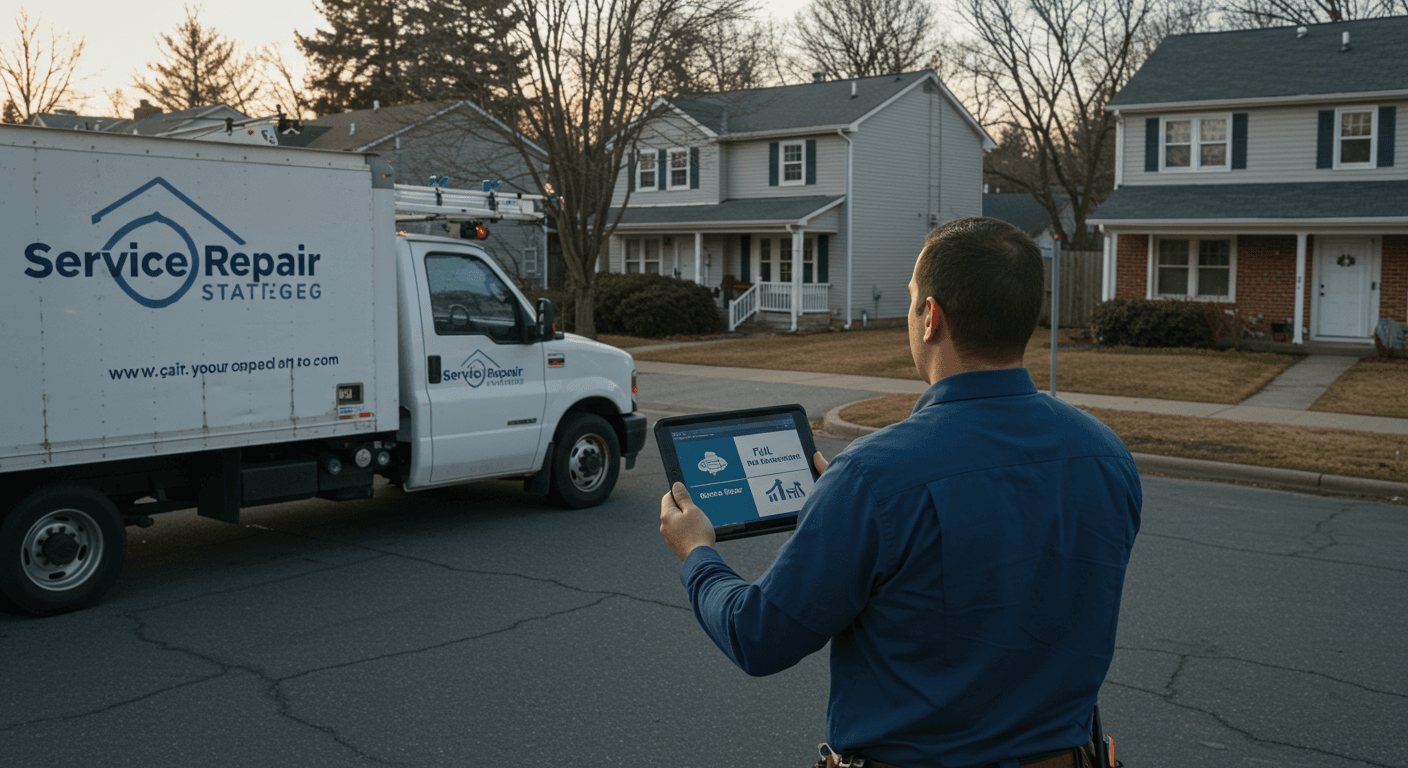
Everything clicked for me during a late-night CRM audit with a shop owner named Devin. We were studying his lost-opportunity report, and the pattern was hard to ignore. His best closer, someone who could land a $28,400 slate install with a skeptical buyer, had burned almost sixteen hours that week driving to visual inspections for minor flashing leaks and missing shingles. While he was writing $450 estimates in driveways, two $19,000 full-replacement inquiries had cooled because nobody returned the call for forty-eight hours.
Call it lead indigestion. Devin treated every ping on his phone like the same size prize, but roofing does not work that way. When a repair lead gets the same routing as a replacement-sized job, you train burnout into your closers and quietly starve the work that actually carries the shop. We fixed the triage layer first so overhead would stop eating what little margin the small tickets left behind.
High-Margin Lead Sorting
Run a short triage script on every inbound call so roof age, leak history, and interior signs decide whether a senior estimator even leaves the office.
Route patch-and-stop work to a dedicated service tech so your primary closers stay available for tear-offs, re-decks, and full system upgrades.
Publish a minimum job value that includes drive time, labor burden, and typical scope creep so micro-jobs cannot pretend they are profitable.
Use photo or video pre-qualification when possible so trucks roll only when the story on the roof matches the revenue you need this week.
The Hidden Cost of the "Every Lead is a Good Lead" Fallacy
Scaling revenue is not the same as saying yes to every ring.
Growth-stage owners often want to grab every scrap of revenue on the table. The problem is that a repair ticket and a replacement project pull on different crews, pricing models, and risk profiles. Official outlook data from the Bureau of Labor Statistics on roofers keeps reminding us skilled labor is tight, which makes misallocated field time an expensive mistake, not a humble hustle.
Devin's company still printed a healthy 19.4% net margin on paper, yet repair-only work fell to about 4.2% after fuel, windshield time, and the classic while-you-are-up-there add-ons. I told him he was paying a race-car driver to run delivery shifts. We split maintenance-style work from milestone replacements: older systems with widespread wear became replacement conversations, while isolated damage on newer roofs stayed in the repair lane. Blend the two and you usually over-pitch the small job while the big one waits in silence.
Small tickets often look fine in the accounting software until you load real drive time, setup, and scope drift. That is when the "busy" week stops paying for itself.
Same queue, different economics
If every lead hits the same dispatcher script, your best reps will always chase what screams loudest, not what pays best. Separate the lanes on paper before you expect the behavior to change in the trucks.
Universal Response vs. Tiered Triage
| Factor | Run Every Lead | Tiered Triage |
|---|---|---|
| Who owns the appointment | Senior closers cover drips, missing tabs, and full tear-offs | Service tech on repairs; senior reps on replacement-grade scope |
| Response time on large jobs | Often 24-48 hours when the board is flooded | Under two hours for high-value replacement opportunities |
| Morale and average ticket | Higher burnout with flatter ticket sizes | More focused calendars; average ticket up sharply in triaged shops |
| Close rate on major projects | Roughly low twenties when everything competes for the same calendar | Roughly high thirties when closers guard their slots |
Who owns the appointment
Response time on large jobs
Morale and average ticket
Close rate on major projects
Building the Triage Script That Moved Devin's Close Rate
Three discovery questions beat a fast address grab.
We rebuilt intake with his office manager using a simple discovery filter. Instead of stopping at name, phone, and street, the team now asks three non-negotiable questions before anyone dispatches.
Action Plan
The Discovery Filter
Use this sequence on inbound calls so you classify the job before you promise a person, a truck, or a same-day slot.
How many years has it been since the last full roof replacement?
Are you seeing interior ceiling spots, or is this strictly exterior shingle damage?
Are you looking for a long-term fix, or a temporary patch to get through the season?
The tone stays consultative, not pushy. That is plain sales psychology supported by systems: listen for age, symptoms, and intent. When a homeowner mentions a twenty-two-year-old roof with staining in multiple rooms, you do not default to a patch tech. You book a replacement specialist with photos, warranty language, and financing ready.
Within two months Devin's senior rep was running nine leads a week instead of twenty-two, yet contract value per lead climbed from $1,842 to $5,920. Less windshield time, fewer low-probability estimates, and a calendar that finally matched the work he wanted to win.
Same closer, fewer runs, higher-quality conversations once repairs stopped hijacking the calendar.
Safety, Setup Time, and the Service Tech Model
Small jobs still need harnesses, ladders, and supervision.
Devin worried about saying no to quick cash calls. Fair concern, yet small repairs carry outsized risk. Following OSHA guidance on stopping falls matters whether the ticket is $500 or $20,000, and setup time often looks identical. A patch does not get a pass on harnessing, edge protection, or housekeeping just because the invoice is smaller.
We added a dedicated service tech: not a traditional closer, but a capable field operator with a lighter van, a twenty-eight-foot ladder, and basic shingle stock. He owned the scraps. If he reached the ridge and saw a total loss, he photographed everything, stabilized the leak, and handed the file to a senior rep for the replacement path. Revenue from small work kept moving without clogging the pipeline for full-system jobs.
That handoff mindset is part of why we built LeadZik: contractors deserve to know the shape of a job before fuel hits the tank. Pre-qualification belongs in the workflow, not as an afterthought once the truck is already idling curbside.
The "Photo-First" Pre-Qual
"Before you dispatch, ask the homeowner to text two or three close-ups of the damage plus a wide shot of the roofline. You can often spot a tired three-tab field that needs replacement while you are still at your desk, not after an hour on the road."
The Numbers After the Pivot
Triage turned opinion into something we could read on a dashboard.
By quarter end the spreadsheet matched what we felt in the field: tighter focus, faster wins on large jobs, and happier homeowners in both lanes because each group talked to the right specialist.
- Average ticket: up 31.2% once closers stopped averaging in low-dollar patches.
- Lead-to-contract time: six days faster because replacement leads did not sit behind repair routes.
- Referrals: up 14% when quick repairs stayed quick and big jobs got senior attention.
When you quit trying to be everything to everyone, you become the obvious choice for the work that actually funds payroll, marketing, and rainy-day reserves. Devin stopped chasing every valley leak as if it were equal to a full system overhaul, and the numbers followed.