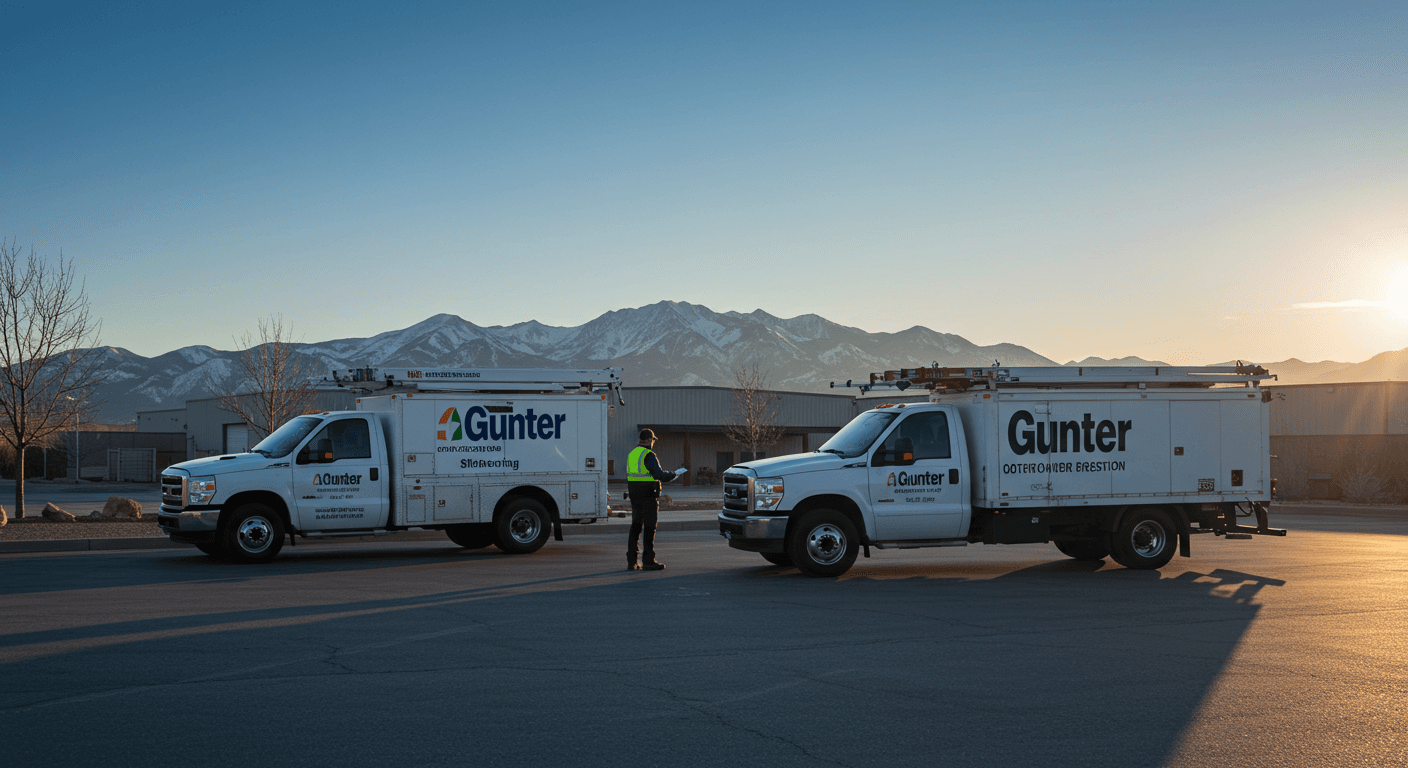
Vance leaned against a box truck he had just folded into his fleet, still staring at a competitor wrap he had not finished removing. He had picked up three Wasatch Front routes, but integration had become a quiet war between two CRMs and three conflicting methods for sizing downspouts when spring melt and summer storms swing hard in the same season. The question was not how loud the growth story sounded on paper. It was whether those routes could still deliver the 18.2% net margin he had modeled during diligence once standards actually merged.
Buying another gutter shop often gets framed as a land grab for share. The harder work is reconciling how each crew estimates runoff, documents fascia prep, and closes warranty loops. In the Mountain region, where volume swings between thaw surges and monsoon bursts, a sloppy handoff can spike service volume right when you are trying to prove the deal worked. The fork that matters is simple on the surface: absorb a rival versus merge outward with a complementary exterior partner. Underneath, it is an ROI question about equity, focus, and whether your ops look repeatable to the next buyer.
Across Mountain portfolios we reviewed, shops that unified estimating books, CRM hygiene, and runoff math inside the first two quarters carried meaningfully higher valuation marks than owners who let parallel processes linger.
Before You Sign
Density matters: tucking four more homes onto streets you already serve trims fuel and drive time in tight labor markets like Boise or Denver.
Technical debt transfers: undersized systems sized without a shared runoff standard become warranty noise after closing.
Merger math trades specialization for ticket blend: cross-selling lifts average ticket but can blur the drainage rigor buyers reward.
Clean books are not enough: audit installed hardware, ice-dam history, and ladder safety records as seriously as SDE.
The absorption buyout
Instant density, inherited habits, and the runoff standards you wish you could ignore.
When you buy a direct competitor, you are mostly buying route intelligence, a dialed local number, and a backlog that proves demand. In Mountain metros where skilled installers are scarce, the talent embedded in those crews is often the real asset. Density follows immediately. If your dispatch map already covers a neighborhood, folding in four more addresses on the same grid typically trims travel overhead by roughly 11.6%, which is meaningful when diesel and labor minutes both sting.
The trap is what rides along quietly. If the seller never aligned installs with a shared stormwater runoff sizing discipline, you may inherit five-inch runs that look fine until the next heavy snowmelt overwhelms them. That is not a branding issue. It is balance-sheet risk wearing a gutter profile.
Action Plan
Four diligence moves before the LOI hardens
Treat these like mechanical checks on a commercial roof asset: boring on the surface, expensive when skipped.
Audit the backlog for jobs priced thin just to inflate trailing revenue. Adjust EBITDA before you romanticize the multiple.
Inspect fleet health for mountain duty cycles. Transmission work on two rigs can erase the arbitrage you thought you bought.
Pressure-test the customer file. Builder-driven repeat work is worth more than a spreadsheet of casual bid shoppers sourced from shared lists.
Publish one fascia-prep and guard standard on day zero. Mixed crews with mixed detail erode the brand you paid to consolidate.
The strategic merger
Roofing or siding partners can lift ticket size, but drainage nuance can get crowded out.
We typically see this inside the first ninety days if estimating standards, CRM fields, and warranty routing never truly merge.
Pairing with a complementary exterior trade is a different calculus. The prize is a wider envelope on each job and project managers who already control the roof line or cladding scope. Builders increasingly want coherent water management instead of a parade of single-trade vendors, a shift echoed in NAHB stormwater and green infrastructure commentary. You also pick up revenue diversification. When gutter backlog softens in late fall, roofing emergency work might still hum.
The shadow side is focus drift. I have watched specialty gutter teams lose their edge inside general exterior shops because pitch math and overflow planning stop getting airtime next to shingle counts. Cross-selling lifts tickets until it dulls the technical reputation that justified premium pricing in the first place.
Average LTV improvement when gutter firms pair with roofing or siding partners that sell full-envelope protection instead of siloed repairs.
Comparing financial outcomes
How each path reads to a buyer who wants clean narrative and defendable margin.
If your horizon ends at a private-equity exit, buyers chase tidy stories. Rolling a rival under your brand is often faster to sanitize because you are replacing naming, pricing logic, and warranty language in one direction. A merger can juice near-term cash through cross-sales, yet it also builds a more complex entity. Many acquirers still lean toward a specialist printing a 24% net margin over a generalist proud of a 16% blend, even when the generalist feels busier.
Exit lens: absorption versus merger
| Factor | Strategic merger | Absorption buyout |
|---|---|---|
| Brand cleanup speed | Slower, dual brands to unwind | Usually faster |
| Cross-sell upside | Stronger immediate ticket blend | Modest unless you bolt services on later |
| Buyer narrative complexity | Harder to explain merged cost centers | Simpler specialist story |
| Operational standardization load | Higher coordination across trades | High, but one technical religion |
Brand cleanup speed
Cross-sell upside
Buyer narrative complexity
Operational standardization load
Neither path wins every season. The highlighted column favors cleaner PE-style stories, not universal truth.
When you need predictable intake while crews absorb new routes, tooling matters. Teams I advise often wire territory locking, scoring, and CRM handoffs so dispatch and sales see the same qualified demand picture during messy integrations.
The 90-day rule
"Keep the acquired trucks looking familiar for the first ninety days while you retrain crews on your fascia-prep and overflow standards. Swapping decals before quality aligns is a fast way to damage two reputations at once."
Mountain due diligence
Liabilities hide in wood and winter detail, not only in trailing EBITDA.
In Salt Lake style markets, I have seen acquirers discover that big chunks of the installed base were hung on soft fascia without proper drip-edge integration. Warranty triage burned the first year of modeled profit because nobody photographed the substrate during diligence.
Audit the installed base like you audit the books
Ice-dam history, heat-tape workmanship, and OSHA ladder logs move insurance renewals faster than most owners admit. Treat each as line items in your risk model, not footnotes.
- 1.Ice dam and heat-tape records: verify conductor routing and manufacturer specs map to local snow loads.
- 2.Ladder and harness documentation: premium spikes hit fast when the acquired shop carries unresolved incidents.
- 3.Lead sourcing ethics: we built LeadZik after watching contractors inherit revenue that depended on recycled, multi-sold inquiries. That revenue is brittle when exclusivity finally matters to your brand.