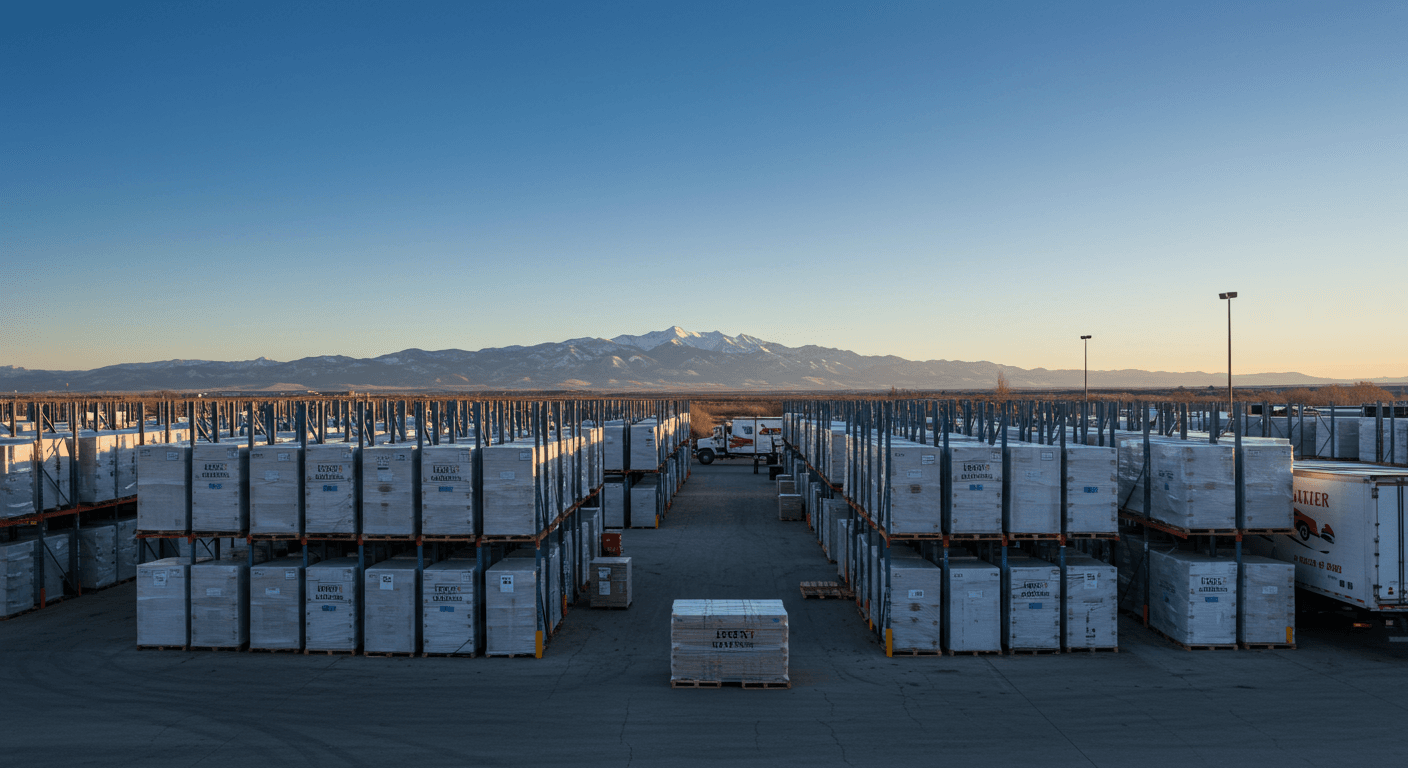
Allocating $64,820 to a bulk shingle buy to capture a 6.2% manufacturer rebate, versus staying on a lean just-in-time delivery rhythm, is the fork where Mountain region roofers either keep 2025 profit or bury it behind a fence. The math is not about how many pallets fit on gravel. It is liquidity, and the 13.8% carrying cost that gets ignored when a volume discount looks loud on paper. Cash on a pallet in Salt Lake City or Boise is not working in marketing, retention, or the next storm cycle.
A deep yard feels like insurance against supplier delays, but the numbers usually disagree. For a mid-sized roofing company near $4.3M in annual revenue, the gap between a disciplined inventory system and a buy-it-when-we-need-it yard that still hoards extras can land near $92,000 in net profit over a year. That is real equipment money, or payroll breathing room when a hard winter compresses the calendar.
Table of Contents
Bulk stocking versus just-in-time delivery
| Factor | Bulk stocking | Just-in-time delivery |
|---|---|---|
| Capital tied up | High ($50k to $150k+) | Low ($5k to $15k) |
| Carrying costs (annual) | 12% to 15% | 2% to 4% |
| Waste and shrinkage risk | Higher (near 8% avg) | Lower (near 2% avg) |
| Supply resilience | Strong on-hand buffer | Moderate, supplier dependent |
Capital tied up
Carrying costs (annual)
Waste and shrinkage risk
Supply resilience
Carrying cost is the quiet line that turns a rebate into a donation when snow sits on the schedule for three weeks.
Inventory choices that defend margin
Model carrying cost with rent, insurance, yard labor, and depreciation divided by average inventory. Most teams find the annual drag is about ten points higher than the napkin math.
Standardize three or four shingle colors for your core installs so odd lots from custom bids do not become paid-in-full paperweights.
Audit the yard monthly. Unlogged pulls and sloppy returns often stack near five points of shrinkage before anyone calls it theft.
Match buys to demand. When backlog softens, staged orders should soften at the same time so cash is not parked through an off-season.
The true cost of capital in the high desert and Rockies
Why a yard full of bundles behaves like an interest-free loan to your supplier.
Many owners scan the warehouse and see assets. I see slow money. Every square that ages past forty-five days is working capital you lent out with no note attached. In the Mountain region, where the season can slam shut on snow lines and sudden freezes, $78,400 tied up in asphalt during a three-week weather stall is a liquidity pinch, not a comfort blanket.
Carrying cost is the quiet line that eats roofing margin: rent for the footprint, contents coverage, the labor hours to shuffle and re-stack, and the damage rate from UV at altitude or moisture if covers fail. The SBA Grow Your Business guide frames inventory discipline as a survival lever for service firms that are trying to expand without starving payroll. That language is dry on purpose. It matches what I see when cash gets stranded between supplier promos and actual installs.
I worked with a Denver shop that chased a forty-square deal on Midnight Black because the price looked heroic. Six months later the bundles sat under newer Weathered Wood pallets, and when a black roof finally sold, nobody could find the old lot fast enough. They bought fresh stock, and the original buy turned into dead money until it got burned off on small repairs. That is a full write-down on intent, not on paper bundles.
When shrinkage, damage, and unreturned field stock never hit the job file, net margin looks like a crew problem instead of a purchasing problem.
Carrying costs and the Mountain weather window
Utah, Colorado, Idaho, and Montana compress production into intense summer sprints.
Geography here rewards crews that can run hard when the ridge is dry, then go quiet when passes ice over. If you drag heavy inventory into shoulder season, you are paying to store squares that might not move for four months. I have seen contractors pay $2,400 a month for climate-controlled space to hold $50,000 in shingles. Four months of rent alone is $9,600, which is nearly a fifth of the material value before a nail goes in.
The profitable shops I advise lean away from warehouse-first thinking and toward staged delivery. They negotiate with regional suppliers to hold the float. Per-square pricing might tick up, but you delete a rent stack and the labor hours to double-handle everything twice. That trade is boring, and it shows up in the bank statement where owners actually look.
The ninety-day dead stock rule
"If a color or a ventilation part has sat in your shop past ninety days, stop calling it inventory. Clear it at cost to a repair-only crew, bundle it as a controlled upgrade on a high-margin job, or cut a one-time promo. Dead bundles are liabilities with storage rent."
Waste management: the silent margin leak
What leaves the warehouse is only half the story. The other half is what never comes back.
Waste factor is often treated like a flat 10% or 15% line on a takeoff. The harder question is where the bundles go after the cut. When crews over-order by high teens and the leftovers stay on pickups, you created a second warehouse with no count. Those three bundles and two rolls of underlayment rarely return clean. They weather, get stepped on, and quietly hit the dumpster after the next cleanup day.
Off-season bulk without a burn plan
If you cannot name the next five jobs that will consume a promo buy, assume the rebate is a loan. Mountain weather will call that note faster than your sales board updates.
A Salt Lake shop tested a simple return-for-credit incentive. Every full, dry bundle a lead brought back and checked in earned a small credit toward a quarterly tool allowance. In six months they recovered $12,740 in material that used to drift out the gate. That is the shift from hoping people care to paying them to care. The Harvard Business Review small business desk talks about the same pattern in plain language: hustle feels fast until systems protect margin without nagging.
Tech integration for ROI
Measurement beats memory once you move past a few hundred squares in play.
Whiteboards work until they do not. Basic QR check-in on racks and return bins is enough to cut unexplained loss for many shops I visit, without a six-figure ERP science project. When counts are believable, the next win is tying stock to the sales board. If you truly have two hundred squares of a specific architectural line on hand, your reps should be biased toward jobs that consume it.
Pipeline alignment also depends on how demand shows up. If intake is fuzzy, sales chases color lines you do not carry while the rack ages. Clearer qualification up front keeps promises aligned with what is staged for Monday. When job context shows up earlier, estimators stop chasing colors you cannot cover. LeadZik lays out scoring, territory control, and install alerts for teams that want intake to match what is already on the rack.
Case study: Ethan in Boise
Three operational shifts, fourteen months, margin without adding warehouse headcount.
Ethan ran a respectable Boise shop near $2.8M. His yard looked like a museum of partial ice and water rolls and mystery flashing bundles. He thought he had $45,000 tied up. A physical audit landed at $62,340, with 22% damaged or obsolete. We sold the odd colors at a haircut to a smaller repair crew, pushed about 85% of installs to just-in-time delivery, and built job kits so only the planned quantity hit the driveway.
Net margin moved from 11.4% to 16.7% in fourteen months without heroic revenue growth. He stopped funding slow inventory and put the dollars back into production rhythm. If you want the wider story on why LeadZik exists for operators who are tired of shared demand lists, read how the marketplace was built. It is the same instinct as Ethan's audit: trust, but verify the asset before you build a year around it.
Action Plan
Four steps to an inventory ROI plan you can run this quarter
A tight sequence for owners who want cash back without turning the yard into a spreadsheet museum.
Run a physical audit with dollar tags on every bundle, roll, and accessory. If it aged past six months, mark it red before you debate color popularity.
Calculate holding cost as rent plus prorated yard labor plus insurance, divided by average inventory value. That percentage is the annual tax on slow stock.
Adopt a three-color standard for common Mountain palettes (greys, browns, blacks) and special-order the odd requests instead of stocking them by default.
Align marketing and sales with what is overstocked. If metal accessories are heavy, shift messaging and outbound targets toward the tickets that burn that pile down.
Inventory as a scalability lever
High velocity beats high piles when you are trying to grow without choking cash.
When the yard behaves like fulfillment instead of a security blanket, cash gets predictable. Crews stop treating every bundle as disposable because the count is visible. Profit stays in the operating account instead of oxidizing behind a tarp. Roofing will never trend as hard as a glossy install reel, but inventory is the plumbing. If the fittings leak, it does not matter how much water you pour in the top.
Treat every square on the rack like a dated invoice. Track it, move it, or clear it. That discipline is what keeps Mountain shops funded for the next clear week when three crews are ready to run.