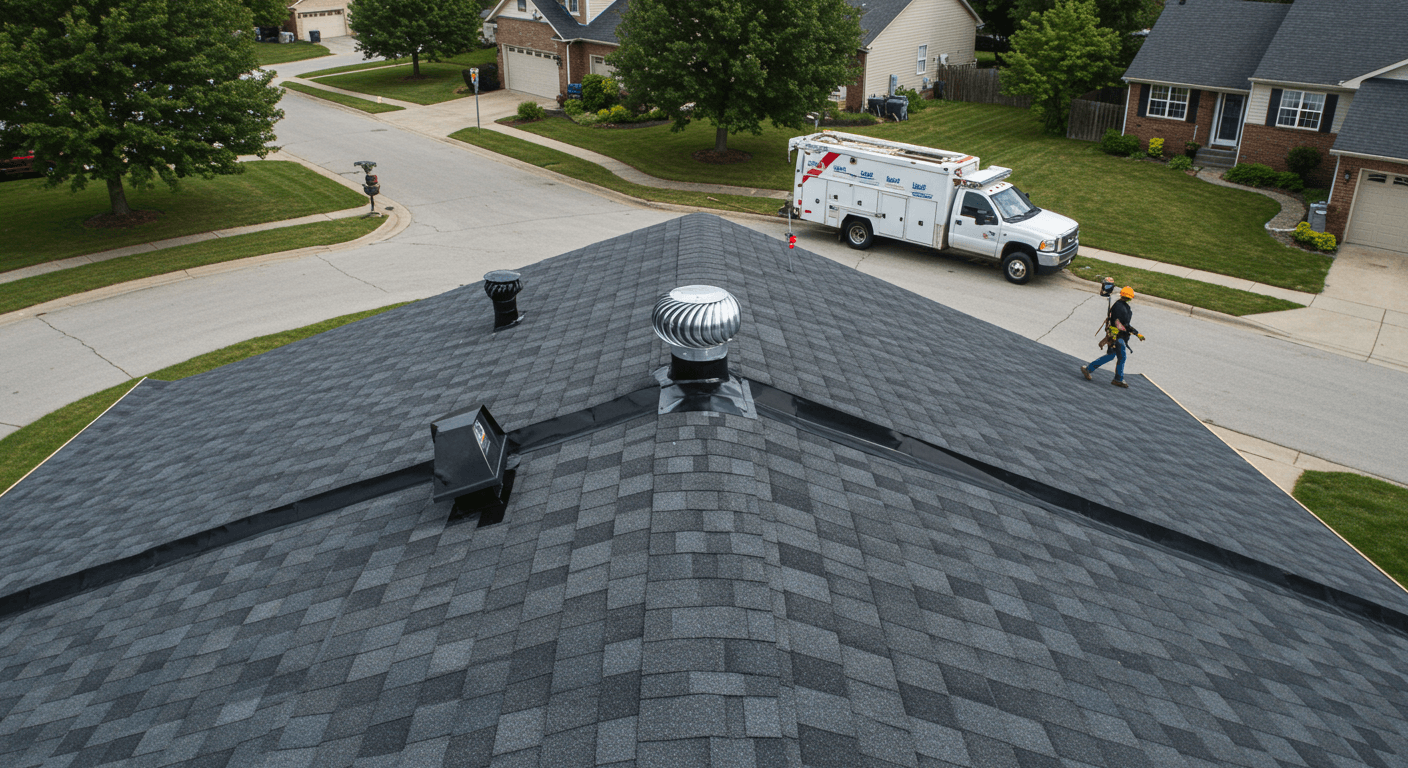
About 14.2% of nationwide roofing warranty traffic is not a shingle defect at all. It is systemic moisture entrapment from weak airflow, which shows up as curling, blistering, or stains that look like a leak. Picture two mid-size shops with the same supplier pricing: one treats the attic like someone else's problem, and the other bakes a ventilation read into every contract. The first is often burning roughly $1,342 per repeat visit in labor and mobilization. The second lifts average sold jobs about 11.4% on day one because the proposal reads like a full assembly, not a commodity swap.
Table of Contents
Airflow as margin defense
Track how much unbilled time disappears into moisture-related return trips when intake gets waved off at signing.
Run a repeatable attic story (photos + NFA math behind the scenes) so premium packages close on clarity, not hype.
Document intake, exhaust, and blocked soffits before the job sells so spring heat spikes do not spike your callback board.
Tie workmanship language to a balanced system so "shingle-only" bids do not become your liability later.
I have walked too many attics where the crew is chasing a "leak" that is condensation because the estimator did not want to upset a price-sensitive homeowner with intake work. That quiet choice is what bleeds margin. In shops moving toward eight figures, the edge is rarely the laminate line on the sample board. It is the ability to explain why airflow is financial protection for the customer, not an upsell lecture.
That number is not theoretical rework. It is estimator time, crew mobilization, and office hours that never hit the original job file.
The true cost of the "just a roof" mentality
If ventilation stays optional, callbacks stay predictable. That is an operations problem before it is a sales problem.
Running installs without a ventilation standard is like running routes without fuel data on your vans. Jobs still finish, but friction shows up in the rework queue. I once worked with an owner, Adrian, who was sure blistering at year four meant manufacturer failure. On a tight audit of 47 recent jobs, 38 still had blocked soffit intake after tear-off because nobody owned the fix during sales. Each investigation pulled a foreman off forward work. We clocked roughly $412 in opportunity cost per trip before any material showed up.
Government growth guidance often ends up sounding corporate, but the point still lands: plug operational leaks before you chase more revenue, or you only scale the chaos. The SBA Grow Your Business guide frames that same idea for owners who are adding crews or territories. In roofing terms, the leak in the bucket is the callback. It refunds profit from the original ticket and steals the calendar slot you needed for a new sold job.
When you move the talk track from "new shingles" to "controlled attic climate," you stop competing on who can whisper the lowest square price. You are addressing a failure mode most low bidders will not even photograph.
Market shift toward performance-based roofing
Homeowners hear about efficiency and indoor air in passing. They still need a contractor who can translate attic science into a clear plan.
National demand is drifting away from color-only upgrades. People may not know NFA, but they know upstairs rooms that never cool and ice patterns that worry them after a storm. That gap is where a disciplined estimator wins.
In a recent slice of 1,200 projects across the Midwest and Southeast, shops that ran a balanced airflow audit on every proposal closed premium material packages roughly 22.7% more often. The winners were not smoother talkers. They were the only crews showing homeowners why the assembly would still be dry in year twelve.
How the first conversation changes outcomes
| Topic | Price-first bid | System-first diagnostic |
|---|---|---|
| What the homeowner remembers | Square price and color | Attic health, drying, and long-term durability |
| Ventilation on the proposal | Left vague to keep the total low | Intake and exhaust mapped with photos |
| Callback risk (moisture pathway) | High within the first few seasons | Far lower non-material warranty chatter when NFA is honest |
| Business footprint | Thin margin, high chaos | Higher sold ticket, lower repeat-trip waste |
What the homeowner remembers
Ventilation on the proposal
Callback risk (moisture pathway)
Business footprint
Leading with numbers flips the argument. Instead of haggling over a few hundred dollars, you are protecting a five-figure asset. That posture lines up with what Harvard Business Review's small-business coverage repeats for owner-led shops: show up as the strategist, not only the labor quote.
Building the ventilation script
Too much physics kills the room. The right analogy turns airflow into something a homeowner can picture in ten seconds.
I call it the toaster effect. A roof with no real airflow is a lid on a hot box. Heat stacks, sheathing cooks, and shingles age from the inside before hail ever touches them. In the attic, train reps to scan for three fast tells: rust staining on nails, fuzzy growth on decking, and insulation jammed tight over soffit vents.
- •Rust streaks on fasteners usually mean chronic humidity, not a flashing slip.
- •Spotty decking stains often track back to winter moisture cycles that never dry.
- •Insulation packed against the eave wall hides whether intake is actually breathing.
A photo of their own rusted nail row beats any glossy brochure. At that moment the script can be blunt: new shingles without airflow is a short warranty on aesthetics. I would rather lose a job than inherit a moisture fight at year six. That honesty closes higher tickets because the homeowner feels the risk you just named.
Field teams need those diagnostics in the file immediately, not on a sticky note that never makes it to the estimator. That is where a lightweight mobile workflow helps. The LeadZik mobile app is one option teams use to keep lead notes and attic photos attached to the opportunity while memory is fresh, which matters when intake work is the difference between profit and a free return trip.
The 1:300 checkpoint
"If total ventilation does not meet the 1:300 guideline (1 sq. ft. of NFA vent area per 300 sq. ft. of attic floor), treat the upgrade as baseline scope instead of an optional line. It is liability insulation for your workmanship story."
Operational implementation
Make the attic read a checklist, not a mood. Consistency is how you scale this without hiring a second you.
Action Plan
Five-beat audit that fits a normal sales day
This is the same cadence I push when a shop wants margin lift without turning every estimate into a seminar. Keep intake honest, keep photos boring, and keep NFA math in the background until reveal time.
Desk intake: Ask about hot second-floor rooms, musty smell after rain, and cooling bills that never make sense.
Attic probe: Log decking moisture clues, nail corrosion, and whether insulation clears the soffit path.
NFA math: Size intake and exhaust net free area, then compare against what is actually open today.
Reveal: Walk the homeowner through photos that show damage they cannot see from the driveway.
Proposal language: Present the roof as a system and tie workmanship coverage to the balanced assembly.
Once that loop is habitual, you stop feeding premium sales talent with vague, one-line opportunities. You want jobs where attic work is real, not buried. That is why some owners pair this process with exclusive roofing leads on LeadZik, where you can read enough context up front to send estimators to homes likely to need intake fixes, not mystery one-line bids.
Margin math: why quality wins
Spreadsheet fear keeps crews hooked on cheap tickets. Run the callback line honestly and the ventilation conversation stops feeling optional.
Assume 100 roofs per year at $12,500 with a 10% net margin. That is $125,000 to the good before life happens. Add a 10% rework rate from weak ventilation discipline at about $1,100 a pop, and you are down $11,000 before you adjust anything else.
Now add the ventilation package: call it $950 average lift on intake, baffles, and exhaust balance. Closing rate may wobble briefly, but referrals stiffen because crews stop fighting the same moisture ghosts. Push callbacks down near 2% and the spreadsheet changes character: fewer roofs, higher quality revenue, and more net dollars even if gross count dips. That is the operational path to roughly 13.6% margin lift teams talk about once intake stops being negotiable.
The intake trap
Adding ridge or roof exhaust without clearing intake creates negative pressure paths that can pull weather into the attic. That is how you manufacture the callbacks you were trying to prevent.
Common Questions
Final thoughts: the operational ripple
Fixing ventilation is not a feel-good add-on. It is how you keep project managers off the emergency channel and crews doing clean new work instead of angry tear-backs. Dragging callbacks from 9.4% down toward 2% is not vanity; it is what a buyer looks at when rework screams chaos.
Pull your last five warranty calls. If the attic story is there, change how the estimate starts. Lead with the system, protect the margin, and deliver a roof that can actually live as long as the marketing claim.