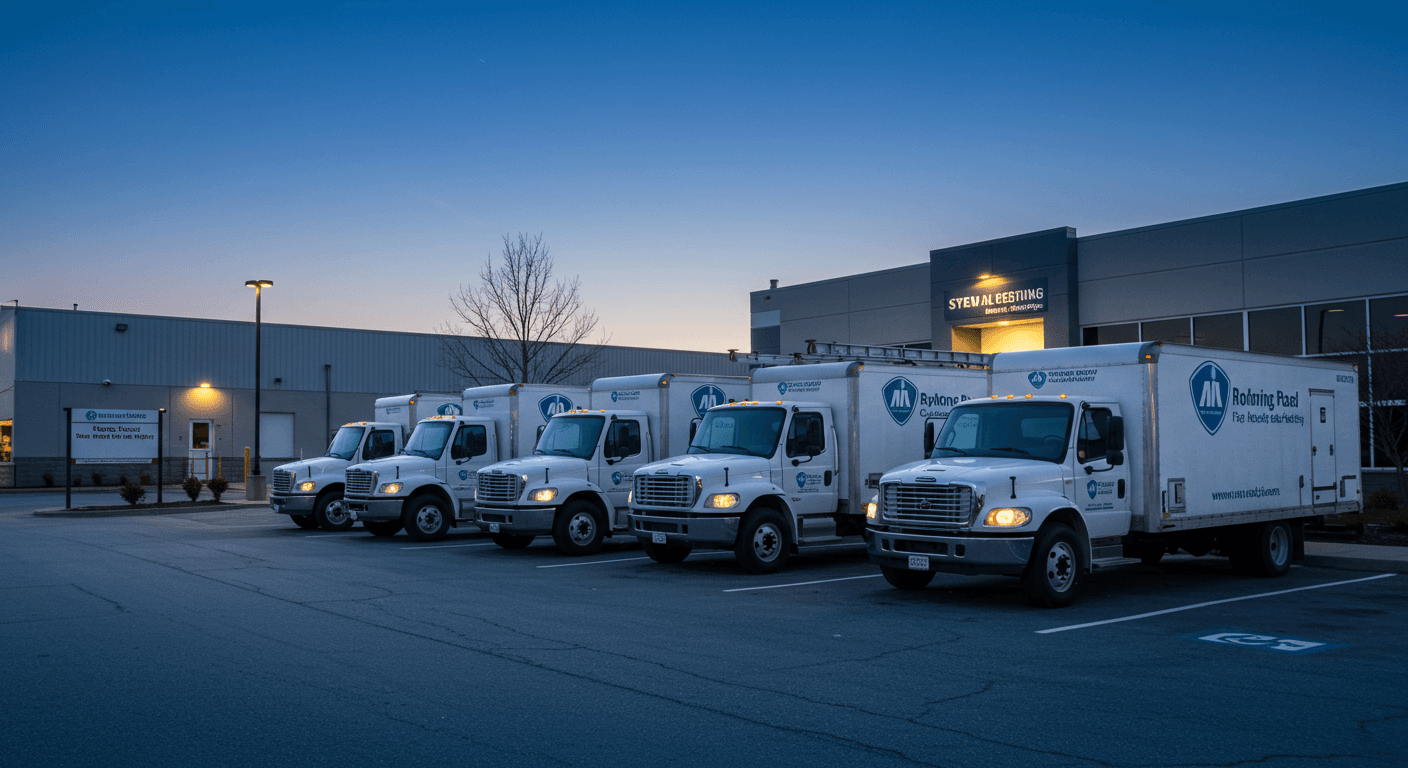
About 73.6% of roofing contractors who attempt to open a second location find themselves with a massive headache and a shrinking bank account within 24 months. When I first dug into this data from a private survey of 184 mid-sized contractors, I had to double-check the math. Most owners assume that more locations automatically mean more profit, but the reality is often the opposite. I was in a client's office in Phoenix last October, and he was staring at a spreadsheet showing that his new Denver branch was cannibalizing the profits from his flagship location just to stay afloat.
He thought he could just "copy-paste" his success. He sent his best salesperson to Colorado, bought three new trucks, and waited for the phone to ring. It didn't. Instead of scaling his success, he scaled his inefficiencies. We spent the next 6.4 months rebuilding his backend so the business could actually breathe without him standing on the job site. If you are looking to build a national footprint or just conquer the next county over, you have to stop thinking like a roofer and start thinking like a systems engineer.
Expansion Essentials
Why the 'Hero Founder' model kills multi-location growth within 14 months
The specific 4.2:1 LTV-to-CAC ratio required to fund a satellite office
Centralizing lead flow to prevent localized sales droughts
How to maintain 22.4% net margins while adding management overhead
The Myth of the "Copy-Paste" Expansion
The biggest lie in this industry is that if you can run a $3.2 million shop in your hometown, you can do it anywhere. Every market has its own "gravity." Labor rates in Raleigh aren't the same as in Dallas. Disposal fees fluctuate. Most importantly, your local reputation doesn't travel as far as you think.
I've seen owners drop $145,000 on a new lease and equipment only to realize they have zero brand equity 50 miles away. You aren't just opening an office; you are launching a startup with a known product. This requires a specific financial cushion. According to data from the National Roofing Contractors Association (NRCA), operational costs can spike by 18.4% during the first year of a new branch due to "hidden" inefficiencies.
Average decrease in net profit during the first 12 months of opening a second location without centralized systems.
Centralizing the "Brain" While Distributing the "Muscle"
If you want to scale nationwide, your local offices should be focused on one thing: production. Everything else—billing, lead intake, marketing, and HR—should be centralized. Last year, I worked with a firm that grew from $9.2 million to $26.7 million in 19 months. Their secret wasn't better shingles; it was a "Command Center" model.
They didn't hire a receptionist for every office. They had one professional team at HQ handling every inbound call. They didn't let local managers "figure out" marketing. They used a centralized data-driven approach to ensure every branch had a predictable pipeline. When you're ready to scale your operations, having a reliable source of verified leads becomes critical. See how our exclusive lead verification process works to understand the difference between quality and quantity.
Expansion Strategy Comparison
| Factor | Localized Chaos | The Command Center |
|---|---|---|
| Hiring & Admin | Decentralized hiring | Centralized HR/Admin |
| Lead Acquisition | Local lead vendors | Automated lead flow |
| Reporting & Analytics | Manual reporting | Real-time KPI dashboards |
| Operational Dependency | Founder-dependent | System-dependent |
Hiring & Admin
Lead Acquisition
Reporting & Analytics
Operational Dependency
The Math of the Satellite Office
Before you sign a lease, you need to know your "Break-Even Velocity." I tell my clients they shouldn't even look at a new territory unless they can prove a path to $215,000 in monthly revenue within the first 5 months.
Your Customer Acquisition Cost (CAC) will almost always be higher in a new market because you lack referrals. You might be used to a $450 CAC at home, but expect $850+ in a new city until your trucks are seen everywhere. You need a lead system that doesn't rely on you "knowing a guy" in the local building department.
Pro Tip
"Never open a physical office until you have run a 90-day digital 'test' in that market. If you can't generate a 4x ROI on lead spend while working out of a truck, a fancy office won't save you."
Building the "Plug-and-Play" Sales Machine
One of the most painful moments I witnessed was a contractor in Atlanta losing his top salesperson because he "promoted" him to Manager of a new Nashville branch. The salesperson hated the admin work, the sales in Atlanta dropped, and the Nashville branch never took off.
You cannot scale on the backs of individual superstars. You need a process so tight that a "B-grade" rep can follow it and get "A-grade" results. This means:
- A scripted discovery call.
- A standardized photo-documentation process for inspections.
- An automated follow-up sequence that triggers the moment the estimate is sent.
If you are spending $500+ per month on lead services and want to compare options for your expansion, explore our platform features to see how we differ from traditional lead vendors by providing exclusive, locked previews of every job.
Action Plan
The 5-Step Market Entry Sequence
A systematic approach to entering new markets without destroying your profit margins.
Data Phase: Analyze storm history and permit data for the last 3.5 years.
Shadow Phase: Run localized ads and lead buys for 60 days to test CAC.
The Core Four: Hire one manager, two reps, and a production lead.
Systems Sync: Integrate local branch into the centralized CRM and VOIP.
Scale Phase: Increase lead spend only after closing ratio hits 22%.
Want to skip the manual work and get exclusive, verified leads instead?
Get $150 in Free CreditsCommon Pitfalls in Nationwide Scaling
I once saw a company try to expand into four states at once. They had the capital, but they didn't have the culture. By the time they hit the sixth month, the "Texas way" of doing things was completely different from the "Ohio way," and the brand was a mess.
The 'Distance Decay' Effect
Your culture dilutes by roughly 25% for every 100 miles you are away from the home office. Without weekly video huddles and standardized training, your brand promise will crumble.
Scaling is about discipline, not just ambition. It's about making sure your $11,400 roof in Seattle looks and feels exactly like your $11,400 roof in Miami. According to research from the Small Business Administration, businesses that maintain consistent quality standards across locations see 34% higher customer retention rates. Ready to put these strategies into practice? The next step is ensuring your lead pipeline is optimized for new markets. Claim your $150 in free lead credits and start previewing verified job opportunities before you commit your team.