Have you ever audited your own brand through the eyes of a frustrated property manager in the Inland Empire who just watched six identical white trucks with generic "Roofing & Construction" magnets drive past their job site this morning?
It is a sobering thought. I was sitting in a cluttered side office in Fresno last October with a contractor named Vance. He had been in the trade for 16 years, possessed a spotless CSLB record, and ran a crew that could tear off and dry in faster than anyone in the Central Valley. Yet, he was losing nearly 38% of his bids to trunk-slammers who were undercutting him by $2,500 or more. Vance was exhausted. He felt like he was selling a commodity, like milk or gasoline, where the only thing that mattered was the lowest number at the bottom of the proposal.
The problem wasn't Vance's workmanship. It was his invisibility. In a state with over 50,000 active roofing licenses, simply being good at roofing is the baseline, not a competitive advantage. If your brand doesn't immediately signal a specific, high-value solution to a specific problem, you are trapped in a race to the bottom. We spent the next four months rebuilding his market positioning, moving him from a generalist roofer to a Title 24 energy compliance specialist. By the time we were done, his average contract value jumped by $4,120, and his close rate with high-end commercial clients climbed from 14% to nearly 29%.
Bottom Line
Move from generalist positioning to a named specialty so you can hold margins roughly 15% to 22% above what generic competitors quote in the same market.
Treat California code, especially Title 24 cool-roof expectations, as a proof-heavy marketing pillar instead of paperwork your estimator apologizes for.
Reduce customer acquisition cost by about 18.4% when hyper-local branding, field presentation, and visual authority stay aligned for several consecutive months.
Train sales around process, diagnostics, and documentation first so the proposal reads like a plan, and price lands after value is already established.
The myth of the “best price” in the California market
Most buyers are not hunting for recklessness dressed up as savings. They are hunting for the bidder who makes risk disappear.
Most contractors believe that the California homeowner or building owner is purely price-driven. While the cost of living here is high, the data suggests a different story for capital improvements. According to ConsumerAffairs's roofing industry overview, the roofing industry is a $56B market, and California represents a massive chunk of that volume. In a market this size, buyers aren't only looking for the cheapest option. They are looking for the lowest risk.
When you fail to differentiate, you force the customer to use price as their only metric for risk assessment. If Contractor A and Contractor B look identical, why wouldn't the customer pick the one that costs $1,500 less? Differentiation is the act of removing yourself from that comparison entirely.
I remember looking at Vance's profit and loss statement. His marketing spend was hovering around 11.2% of his gross revenue, but his lead quality was abysmal. He was chasing every leaky shingle call from Modesto to Visalia. My partners at LeadZik actually started their platform because they saw this exact cycle: roofers burning cash on shared, low-intent leads that forced them into immediate price wars. To break the cycle, we had to change what Vance stood for.
What the buyer sees when your brand is thin
| Decision input | Generic contractor | Positioned specialist |
|---|---|---|
| Primary question in their head | Who is cheapest? | Who guarantees compliance and performance? |
| Proof they can verify | Truck magnet and a Yelp average | Title 24 calcs, photos, engineer letters |
| Risk off the table | Unclear inspection path | Documented handoff for inspectors and owners |
| Negotiation style | Discount requests | Scope upgrades that protect the asset |
Primary question in their head
Proof they can verify
Risk off the table
Negotiation style
If two proposals look the same, spreadsheets default to price. Give them a different column to sort on.
Specialty positioning answers the risk question before you ever talk dollars, which shortens stalls and cuts the number of pure price shootouts.
Leveraging California’s regulatory environment
Code is not a tax on your calendar. It is a vocabulary your premium buyers already expect you to speak fluently.
In California, cool roof requirements under Title 24 are often viewed by contractors as a headache. For a brand-focused owner, those requirements are leverage. Position your company as the regional authority on energy-responsive assemblies and you move the conversation from shingles and nails to long-term ROI, insurance comfort, and defensible documentation.
Vance stopped talking about fixing roofs and started talking about reducing HVAC load by roughly a fifth through thermal-reflective assemblies backed by manufacturer specs. That is not wordplay; it is a business model shift. When you align the brand with state-specific challenges such as wildfire resiliency around Class A ratings or structural collaboration on seismic-ready details, you show up as a consultant instead of labor-for-hire.
We've explored similar strategic pivots on the LeadZik blog for contractors reacting to material swings and persistent labor pressure. The play is unchanged: take the burden of California's building standards and convert it into the headline promise on your trucks, your proposals, and your follow-up emails.
Visual authority is more than a logo
Your crew is a moving billboard. In dense suburbs, neighbors decide whether you are premium or chaotic before they read a single sentence on your website.
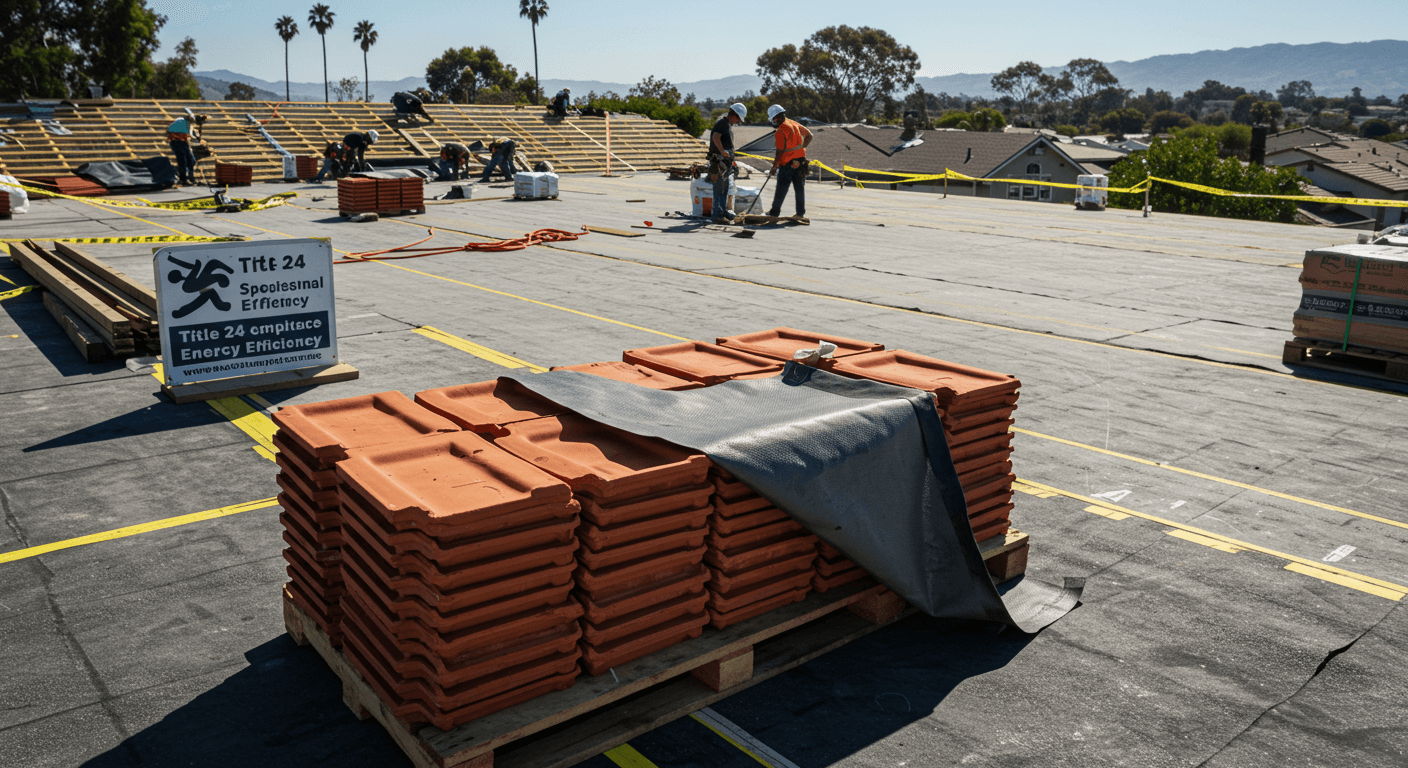
Differentiation is tactile. When your crew rolls into Rancho Cucamonga, do they look like a professional unit or a pickup game? I worked with a mid-sized firm in San Jose that invested $14,600 in professionalizing their physical presence. They didn't only wrap three trucks. They bought branded site protection kits: printed tarps, high-visibility perimeter tape, and yard signs that listed milestone dates so the neighborhood could see a plan, not just debris.
The payoff was a 31% lift in over-the-fence leads from neighbors who wanted that same sense of order. In a high-density California suburb, your job site is your highest-frequency ad. If capital is tight, start by reallocating spend away from junk leads. The LeadZik FAQ on lead pricing and refunds walks through how exclusivity changes the math so you can fund upgrades that make every arrival look like a premium operation.
The three-mile brand saturation tactic
"Stop trying to blanket an entire metro. Pick three high-value ZIP codes and flood them on purpose: tight geofenced ads, door hangers dropped after signed jobs, and site signage that names the cross streets you just protected. When homeowners see your trucks four times inside a week in their own neighborhood, perceived authority jumps and you can protect roughly seven to nine points of margin against out-of-area scrapers."
Action Plan
From invisible to essential
A four-phase rollout that turns positioning into weekly habits your estimators and crews can repeat without you in the room.
Phase 1 — Authority audit (weeks 1-2): Name one California-specific pain you can defend with photos, specs, and inspector testimonials. Solar-ready nailing patterns, historic clay in Santa Barbara, wildfire-hardened assemblies in the foothills — pick a lane and document it.
Phase 2 — Visual alignment (weeks 3-5): Update every touchpoint, especially the field. Trucks, PPE, site kits, and proposals should look like one brand voice. Proposals should feel closer to engineered reports than carbon copies from Home Depot.
Phase 3 — Educational sales loop (weeks 6-8): Banish lead-gen script energy. Teach reps to diagnose first. Pull timely context from outlets like Construction Dive so homeowners see you reading the same industry signals they worry about on material durability and building performance.
Phase 4 — Feedback and referral mining (ongoing): Automate capture after each close. Short videos should repeat your specialty phrase — for example, they made Title 24 compliance feel automatic — so future buyers meet proof before they meet you.
Want to skip the manual work and get exclusive, verified leads instead?
Get $150 in Free CreditsFor live dashboards on labor, materials, and policy pressure, bookmark Construction Dive and weave one fresh data point into every high-value proposal so buyers see you as plugged in, not guessing.
Avoiding the generalist death spiral
Saying no at the brand level does not starve your backlog. It invites better problems worth solving.
The biggest mistake I see in California is the fear of saying no. Owners worry that leaning into metal or TPO means starving the bread-and-butter asphalt pipeline. Reality trends the opposite: when you become the metal specialist for Orange County, you often earn more asphalt referrals because trust compounds faster than noise.
You can still take smaller jobs to keep crews busy; the brand simply needs to keep reaching for the specialized work that prints margin. A Sacramento operator terrified of losing his jack-of-all-trades reputation held a 12% net margin. After he committed to a seamless commercial systems story, margin touched 18.3% in a single season on fewer jobs and roughly $64,200 more net annually.
Skip the race to the bottom
Matching competitor discounts in a high-overhead California model is self-sabotage. Workers’ comp, fuel, and specialty labor already compress net. A five-point haircut can vaporize a quarter or more of what you thought was profit. When buyers push on price, trade for value — extended maintenance, upgraded underlayment, or a documented re-inspection — instead of shredding margin.
Data-driven differentiation
Modern premium brands still win on craftsmanship — they just prove responsiveness with systems, not slogans.
Buyers mentally score you on speed and precision before they score you on shingles. Satellite takeoffs, templated scopes that reference code sections, and transparent scheduling signal that you respect their time. Stack those tools against a competitor still pacing a roof with a tape measure and guesswork margins, and you have already told the story of who protects their asset.
Verified, exclusive lead programs amplify that story because they let you invest consultative hours on people who intend to sign, not on tire kickers eating your calendar. When a lead is truly yours, you can slow the conversation down, teach first, and reinforce premium pricing with documentation instead of panic discounts.
Final thoughts on longevity
California keeps changing the rulebook. Premium contractors sell navigation, not just nails.
Branding is the promise you keep when inspectors, HOAs, and accountants all lean on you at once. In a state that keeps raising the bar on energy, fire, and structural performance, the companies that thrive build reputations as navigators of that complexity.
Vance in Fresno is done sweating the trunk-slammer with an $8,000 bid. His $13,400 proposal carries proof — Title 24 documentation, energy savings context, inspection-ready photos — so he is selling calm in a noisy market. That is the difference between commodity pricing and premium pricing, and it is available to any shop willing to stand for something specific.