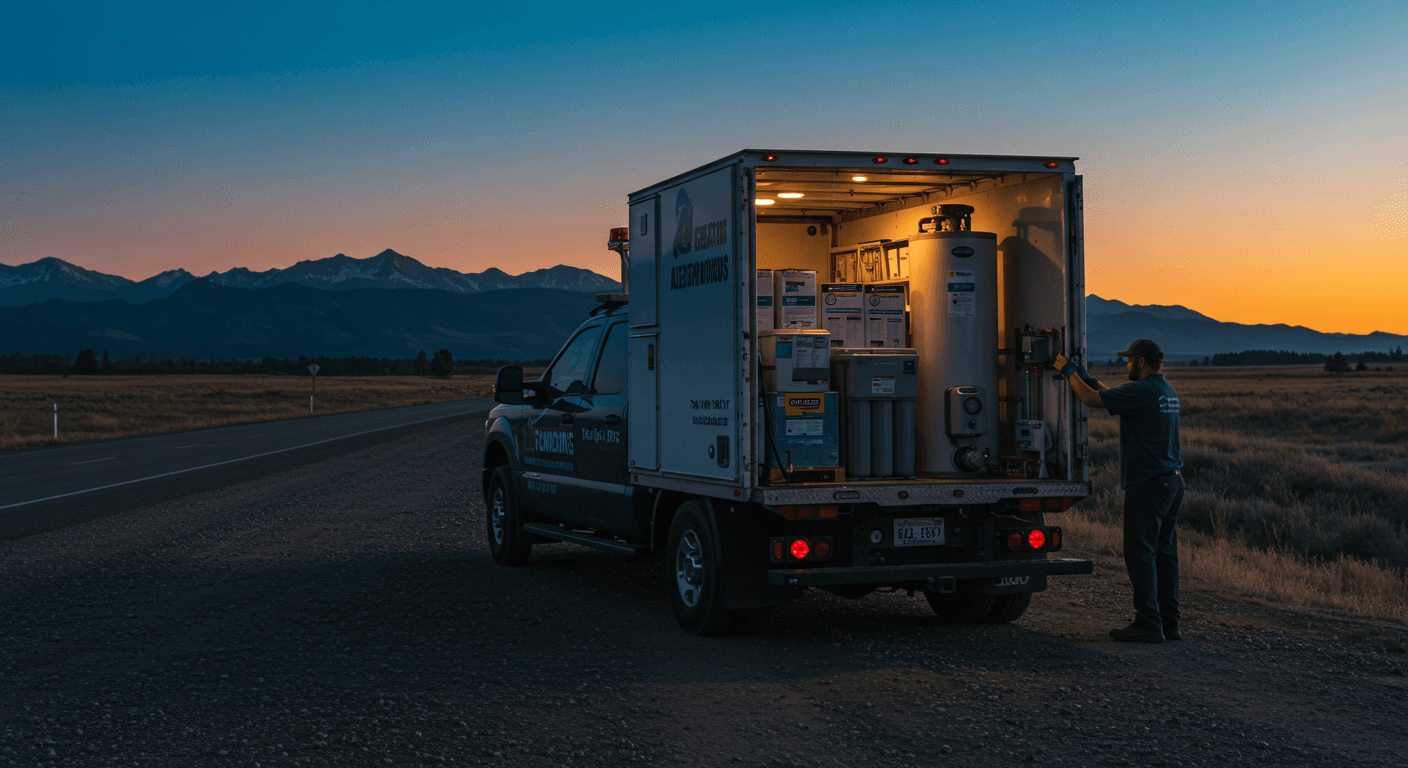
Montana's plumbing market is splitting in two. Shops that still wait for the phone to ring on emergency drain work are losing ground to operators who book water filtration and tankless retrofits at margins that are often 40% or more above a standard repair ticket. In Missoula and Bozeman, that gap shows up fast. A crew can stay busy all week and still miss payroll if every dispatch is a low-dollar call outside town. Fuel to a rural property past Great Falls can eat nearly a fifth of gross profit before anyone touches a fitting. The old playbook of being the fastest shop on the block is not a growth plan anymore. It is a slow leak.
When intake cannot filter job type or homeowner intent, dispatch fills with work that looks busy on the board but thin on the P&L.
The math behind the busy-but-broke syndrome
Full boards in Billings or Kalispell can still hide weak net profit per truck.
Most owners I talk to feel like they are winning because dispatch is packed. Then we open the numbers. A typical emergency leak might bill at $285. After burdened labor, vehicle cost, and the repipe you did not take because the truck was tied up on a small repair, net profit on that ticket can land near $42. National BLS outlook data for plumbers and pipefitters still shows steady demand for the trade. It does not fix Montana geography. If your crew spends 75 minutes of an eight-hour shift driving between low-dollar repairs, you are giving up roughly $8,432 per month in billable capacity per truck. The turnaround starts when you score every dispatch for ROI and stop accepting work that does not build equity.
Turnaround fundamentals for Montana plumbers
Audit dispatch density and cut high-travel, low-margin calls that drag down daily ROI.
Prioritize water quality and filtration where hard water is common, especially in the Gallatin Valley.
Shift marketing spend toward verified homeowners with real project intent, not price-only emergency queries.
Run a rigid seven-point lead qualification process so every job fits your target margin before it hits the board.
Decoding the high-value shift: water quality and code compliance
Repair-only positioning leaves installation revenue on the table in mineral-heavy markets.
One of the biggest mistakes I see in Montana is treating water treatment as a side note. In Bozeman, where high mineral content is normal, a plumber who only chases leaks can leave more than $12,600 in annual household revenue on the table. Moving from a repair shop to a solutions shop changes how you price, how you staff, and how you market.
Code matters on the sales side too. Staying current with the ICC International Plumbing Code is not just about avoiding a red tag. When you explain why a backflow setup or vent layout is required under the current IPC, you stop sounding like a handyman and start sounding like a licensed consultant. That shift supports a premium of about 14.5% over unlicensed competitors in Billings and Missoula.
Emergency repair vs. system installation ROI
| Factor | Emergency drain clean | Whole-home filtration |
|---|---|---|
| Average invoice | $185 | $3,450 |
| Labor hours | 1.5 | 6.0 |
| Material margin | 5% | 38% |
| Net profit % | 12% | 31% |
Average invoice
Labor hours
Material margin
Net profit %
The case of Finn: from near-bankruptcy to $2.1M in Great Falls
Four trucks, shared directory leads, and payroll three weeks out. The pivot was structural, not motivational.
I started working with a contractor named Finn about 19 months ago. He had four trucks in Great Falls and was about three weeks from missing payroll. He bought every lead he could find, mostly from directory sites that sold the same leaky-faucet inquiry to six shops. He won on price, which meant he lost on profit.
We did three things right away. We trimmed his service area by 22 miles to tighten dispatch density. We stopped bidding on generic repair keywords and focused on water softener installation and tankless water heater replacement. We put a strict lead verification process in place so techs were not driving 40 minutes to quote someone who was not the homeowner.
Within 6.5 months, Finn's average ticket moved from $312 to $1,284. He ran fewer calls but cleared about 47% more net profit. By the end of year one on the new model, he had paid down debt and added two service vans. The win was knowing what sat behind the door before anyone left the shop.
The 4:1 rule for Montana service areas
"In spread-out markets, do not send a tech more than 45 minutes for a job with estimated gross profit under $400. If drive time is more than 25% of billable hours on that ticket, fuel and wear usually erase the margin."
Implementing the ROI-driven lead strategy
Acquisition cost changes fast when close rate and ticket size move together.
Turnarounds run on lead quality. If you spend $4,500 a month on low-intent inquiries and close 9%, your customer acquisition cost is about $500. Spend the same on exclusive, verified demand at a 34% close rate and CAC drops to roughly $132. That is more than $360 back on every signed job before you touch operations.
Shops that leave shared pools often see morale lift because estimators are not racing six competitors on price. If you want to map territories and intake to your margin targets, you can talk with our team about how exclusive coverage fits your dispatch map.
Action Plan
The 4-step plumbing profit pivot
How to move a Montana shop from reactive repairs toward proactive, margin-first growth.
Revenue auditing: Review the last 90 days of invoices. Find the top 15% by net profit. They are usually installations or complex diagnostics, not quick snake-and-go work.
Geographic shrinkage: Map every call. If you see islands far from your core in Helena or Kalispell, stop accepting them. Windshield time is a quiet margin killer.
Skill-based marketing: Train or hire for high-margin work like high-efficiency boiler service or commercial code compliance. Market those skills instead of generic plumbing.
Lead source filtration: Stop paying for unlocked records with no job context. Use platforms with locked previews so you only buy work that fits your profit model.
Warranty exposure when you take any work
A struggling shop often accepts thin-margin jobs to keep payroll moving. In Montana winters, a rushed pipe or cheap water heater can fail on a sub-zero night. One major warranty claim can erase a month of profit. High-quality installs with premium components push callback rates toward 2.4% or below. Anything higher usually means rushed labor or weak materials chasing a number that will not hold.
Common Questions
The path forward
Stability in the Treasure State comes from job fit, not from running more hours.
Turning around a Montana plumbing company is not about working longer. It is about working the right houses. When you stop competing for $99 drain specials and position as the shop for high-efficiency systems and water quality, the math starts to cooperate. Most owners see the bank account shift in about 4.5 to 7 months. That runway is what gets you through the slow season without panic hiring or panic discounting.