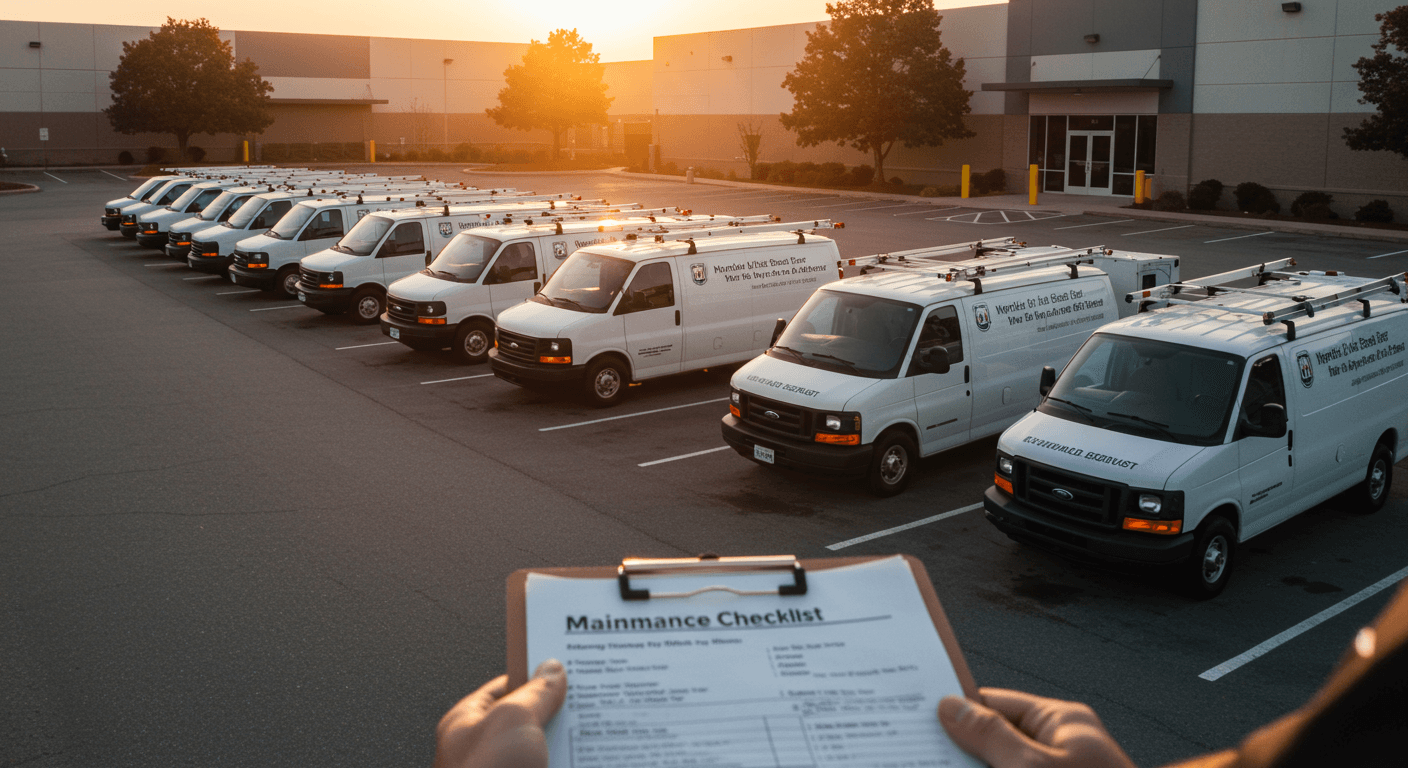
When your revenue map follows the weather, you get a feast-or-famine cycle that quietly shreds enterprise value. A structured maintenance membership is the shock absorber: it smooths overhead, gives techs predictable work, and builds the trust that wins replacements without a bidding war.
Plenty of shops will spend $240 or more on Google Local Services Ads to book one diagnostic when humidity spikes, then ignore the $14.62-a-month annuity that could have produced the same replacement lead for almost no acquisition cost. One path buys a single job. The other builds an asset you could sell. When you move energy off the emergency chase and onto the service agreement, your team stops behaving like parts swappers and starts behaving like advisors homeowners already believe before the blower motor quits. Below is the ROI math behind that shift, including why the industry joke about losing money on a $99 tune-up is often backwards.
Do not confuse busy with stable
A packed emergency board can hide a broken model. If cash spikes in August and your office holds its breath in April, you still have a demand problem, just one the weather masked for a few weeks.
The myth of the service agreement loss leader
The expensive lead is usually the one you fought five competitors to win on a no-cool call.
In coaching, I still hear this: why send a strong lead tech on a $79 tune-up when they could be on a $1,200 after-hours repair? It sounds rational. It is not. When you live on emergencies, you buy demand at the top of the market. You are stacked against every shop in town, and the homeowner often picks whoever can get there first, not whoever will steward the system for ten years.
A maintenance agreement is not a one-off sale. It is a deposit on a replacement years out. The DOE guidance on heat pump systems is clear that steady maintenance protects efficiency and equipment life, especially as more homes move toward high-efficiency electric options. If your team performs that work, you own the relationship before the major failure.
Run the numbers on a tune-up that costs $110 in loaded labor and overhead while you bill $79. That $31 is not a leak. It is CAC on a customer who is roughly 4.3 times more likely to buy their next system from you. When replacement leads commonly cost $280 to $450 in paid channels, that $31 is some of the cheapest marketing you will ever buy.
The membership revenue framework
Model customer lifetime value so an $85-ish acquisition cost for a new maintenance member still clears after two visits and office time.
Expect replacement close rates to lift when trust is built on recurring visits, not a single adrenaline-filled no-heat call.
Use prepaid maintenance to fill shoulder-season calendars so you are not cycling layoffs and losing senior techs every winter.
Reallocate spend from hyper-competitive emergency keywords toward local, plan-first offers that compound brand recognition.
ROI math: $19 a month against five-figure replacements
A Midwest shop let me peel back 412 active members. The RMR was only the opening line.
They carried 412 maintenance members at about $18.50 per month. That is $7,622 in recurring monthly revenue, enough to cover real fixed costs, but the funnel below the line mattered more. Nineteen percent of those members needed a repair found during their twice-a-year visits, with an average ticket near $342. That repair revenue did not get shopped because the homeowner already trusted the tech in the utility room.
During inspections, the team flagged eleven systems in the red zone: high repair exposure, weak efficiency, age. Because monitoring was routine, those conversations felt like planning, not panic.
Emergency chase vs. membership farming
| Metric | Emergency repair path | Membership path |
|---|---|---|
| Average lead cost | $310.00 | $28.50 (allocated) |
| Close rate on major tickets | 26.4% | 54.8% |
| Profit margin | 14.2% | 21.7% |
| Customer loyalty | Low (price sensitive) | High (trust based) |
Average lead cost
Close rate on major tickets
Profit margin
Customer loyalty
Illustrative benchmarks from the member shop referenced above; your market will move the decimals, not the pattern.
They closed eight of the eleven replacement opportunities because trust was already banked. Those eight installs produced $94,736. Layer in the RMR and the visit-found repairs, and each member averaged about $314.50 a year in gross revenue. Compare that to a one-off no-cool caller who pays the invoice and vanishes, and the long-game winner is obvious.
RMR plus visit-found service work plus prorated replacement revenue turned the plan into a compounding line item, not a coupon.
Turning technicians into profit advisors
The block is rarely skill. It is the word sales and what it does to a craft-focused tech.
Xavier, a lead technician I worked with, could diagnose anything. He hated pitching memberships because it felt pushy. We reframed it: skipping the plan is how a homeowner stays exposed to full-freight breakdowns you could have softened. The job is education with numbers, not pressure.
During an outdoor coil cleaning he moved to a simple either-or: handle the capacitor today at retail, or join the preventative plan so the part discount applies and the next surprise is smaller. It was a value comparison, not a monologue.
“Mrs. Henderson, while I cleared debris from the condenser I noticed the capacitor leaking. It is still running, but it is on borrowed time. We can swap it today for $215, or on our preventative plan the part lands under your 15% discount and we catch this before it taxes the compressor. Do you want the repair only today, or should we set the plan so this is not another full-price surprise?”
In about four and a half months his membership attach rate climbed from 5% to 28.2%. The shop picked up RMR. Xavier picked up small performance spiffs. His April rainy-week calendar stayed fuller because planned work was already on the board.
Workflow, obligations, and the slow weeks
Two thousand members means four thousand visits a year. Sloppy scheduling turns a moat into a complaint box.
Scaling memberships is as much operations as sales. Miss your visit promise and you burn the same trust you worked to earn. In peak cooling season, planned maintenance can slip while urgent calls eat the board. That is normal, but it needs a recovery rhythm.
When the membership pipeline is current yet big-ticket installs stall, you need a clean way to add verified demand without guessing. Several owners I know use LeadZik mobile alerts to claim scoped work from the field so installers stay productive when the plan file is not producing an immediate changeout. Memberships hold the floor; selective outside demand keeps growth from flatlining.
Action Plan
Keep the membership machine on schedule
A simple operating cadence prevents the backlog that turns members into critics.
Segment members by month and equipment age so dispatch sees who is due before marketing runs another discount.
Protect two half-days a week in peak season for plan visits so the obligation does not get perpetually bumped.
Review red-zone lists in the Monday meeting so sales and install teams agree on who needs a replacement conversation this quarter.
Track attach, renewal, and visit completion on one dashboard so the owner spots slippage before reviews explode.
Sell the plan in the attic, not at the kitchen table
"The best moment is early in the visit when you show evidence: a photo of a dirty blower wheel or a rusted pan. Tie the membership to preventing that problem from becoming an emergency, not to shaving ten dollars off a repair total they are already staring at on the counter."
Long-term enterprise value buyers actually pay for
Acquirers discount vanity. They pay for recurring revenue and a dated list of maintained systems.
If you intend to sell someday, the story matters less than the data. A $2M shop with zero members might trade around three times EBITDA. The same revenue with fifteen hundred active members can stretch toward five or six times because the cash flows are easier to forecast.
Buyers are modeling how many of those homes will need an ENERGY STAR certified heating and cooling system inside three to seven years. They want a lead source that does not reset every time an ad platform changes the rules. You also keep your best people through shoulder season, which saves rehire and retrain dollars most spreadsheets never capture.
Common Questions
Build the private lead machine, then add fuel when you need it
Agreements are the floor. Outside demand is the accelerator when you choose to press it.
Your member file is a proprietary pipeline: dated equipment, visit notes, and a reason to be in the home twice a year. Treat maintenance like the engine for replacement revenue, not a paperwork chore.
When you deliberately pursue growth sprints, you can still source exclusive HVAC jobs with upfront detail on LeadZik so dispatch is not guessing at scope. Use that lever when you want speed; use memberships when you want control. Master the plan economics and you stop feeling like a contractor who only thrives when the forecast cooperates.