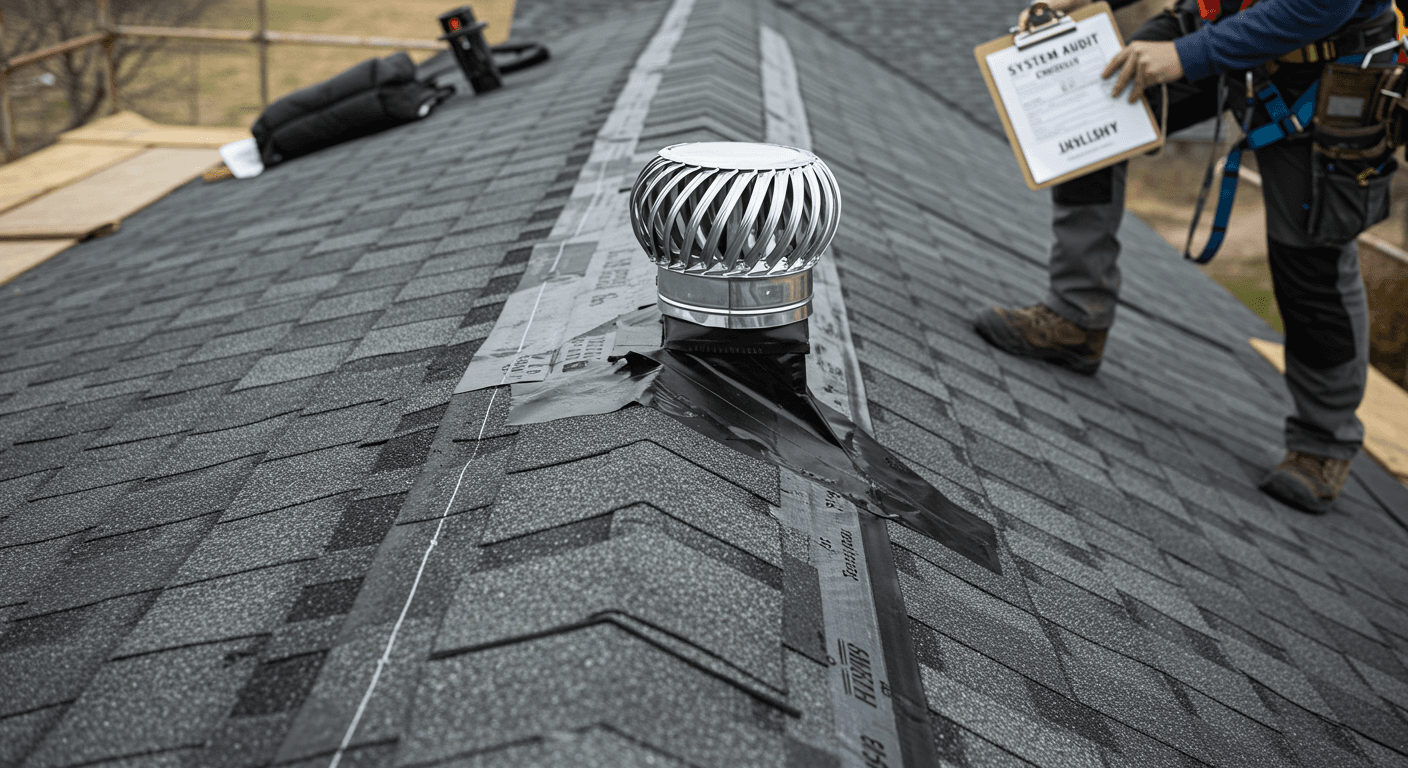
About $2,147 in gross margin often evaporates on a typical residential replacement because the rep never makes ventilation and deck protection feel mandatory. Multiply that across a fifty-job season and you are not looking at a rounding error. Most owners respond by demanding harder upsells, which trains the team to sound desperate, slows trust, and shows up in close rate.
The alternative is a Component Lifecycle Framework: you move the conversation off the shingle as a commodity and onto attic health, drying potential, and how heat moves through the assembly. By the time you reach underlayment in the proposal, the homeowner is not weighing a list of add-ons. They are buying a documented system that matches how their house actually behaves. Done well, it supports a premium price, fewer warranty headaches, and a calmer sales floor. Field data from teams running a true audit-first visit shows callback pressure down roughly 14.2% across the first three years when upgrades are framed as assembly integrity, not commission bumps.
Table of Contents
Where the margin quietly disappears
Upsell pressure is a symptom. Missing system language is the disease.
When ventilation and ice barriers live at the end of the presentation as optional line items, homeowners hear optional risk. They do not see the same roof you see from the ladder. The fix is not louder closing. It is a front-loaded audit that earns the right to recommend upgrades because you already showed the failure mode in photos.
If the pitch feels like a pitch
When leadership only measures upgrade dollars, reps protect themselves with pressure tactics. That erodes reviews and referral velocity faster than any supplier delay. Tie compensation to documented findings, not to how many boxes get checked on page six.
The commodity trap and what it does to referrals
Shingle-only bids invite shingle-only comparisons.
If the scope is mostly laminate and standard accessories, you are lining up next to every competitor who can shave five hundred dollars without changing the homeowner's mental model. In busy Sun Belt suburbs or humid coastal markets, someone always shows up with a thinner story and a lower number. The homeowner is not stupid. They are under-informed, and a late-stage upsell feels like a trap.
Standard packages also age poorly. I have walked twelve-year-old roofs that look fine from the curb while the underside tells a different story, wet nail lines, matted insulation, and intake that was never balanced with exhaust. The SBA Grow Your Business Guide keeps saying the same thing in plain language: if you want to scale a service company, you have to graduate from low-margin commodity work toward solutions people can repeat and refer. For roofing, that means selling a sealed, breathing assembly, not a bundle count.
What system-first selling changes
Average sold job value often lifts $1,850 to $3,200 when attic and deck photos justify the membrane and airflow plan.
Moisture-related warranty tension drops when intake and exhaust are documented instead of assumed.
Your brand reads as technical leadership, which is the referral story homeowners repeat at work.
Neighborhood roofs stay cleaner longer when heat and humidity are managed, which feeds word of mouth.
Underlayment, ventilation, and the ROI that holds up in review
Labor is mostly fixed. Risk is what moves price.
Picture a thirty-two-square replacement. Moving from a basic synthetic to a full-deck self-adhered membrane might add roughly $840 in material before waste. Labor hours do not double. What changes is your ability to warranty interior peace of mind. Shops that package that honestly often hold an extra $2,300 or more on the same footprint because the buyer is purchasing certainty, not a roll count.
Ventilation follows the same curve. A targeted fan or upgraded exhaust path might add $450 when you include electrical coordination, but it can return $1,100 on the ticket while protecting manufacturer language on heat buildup. If you skip that conversation, you are not really selling a warrantied system. You are selling shingles and hoping the attic cooperates.
This is the delta I see when teams stop saving technical work for the end of the slide deck and start leading with measured findings.
Three bidding tiers that still respect the buyer
Give them names that teach, not names that shame.
I have reps carry a one-page System Comparison sheet. The columns are Code Minimum, Enhanced Protection, and Lifetime Performance. Code Minimum is not there to win. It is there to anchor reality. When you explain that it is the lowest assembly that still keeps rain out of the living room, most homeowners self-select into Enhanced or Lifetime because they want to feel smart, not cornered.
| Feature | Code Minimum | Enhanced Protection | Lifetime Performance |
|---|---|---|---|
| Underlayment | Standard synthetic | Synthetic plus ice and water in valleys | Full-deck self-adhered |
| Ventilation | Passive ridge vents | Passive plus intake augmentation | Solar-assisted exhaust with monitoring |
| Edge metal | Basic drip edge | Drip matched to overhang detail | Heavy gauge plus gutter apron |
| Contractor margin | 22% | 31% | 39% |
Let the material do the talking
"Bring a twelve-inch square of standard fifteen-pound felt and a twelve-inch square of premium self-adhered underlayment. Ask the homeowner to try tearing both. The contrast is physical, fast, and oddly quiet. You barely need a script."
The system audit on a real kitchen table
Phoenix, Wesley, and the attic health assessment
Wesley was a strong closer on paper, but he froze any time ventilation came up. We threw out the fan pitch and gave him an attic health assessment: measure, photograph, explain. Same product, different moral frame.
Wesley: Before we pick shingles, I need to look at how this attic moves heat and moisture. If the attic runs hot, new shingles can cook from underneath in a few seasons. Do you mind if I take sixty seconds at the hatch?
He came back down with rusted fasteners and compressed insulation, not opinions. The fan stopped sounding like an upsell and started sounding like the obvious fix to a problem he just proved. That is the same problem-solution discipline you see echoed in Harvard Business Review Small Business coverage on leadership in small service firms: anchor the sale on diagnosis, not on transaction pressure.
If your calendar is packed with people who only want the thinnest column on the comparison sheet, the constraint might be upstream. Pairing this talk track with verified homeowner intent keeps your reps spending calories on buyers who care about protecting the asset, not chasing a line-item race to the bottom.
Action Plan
Roll this out without blowing up your week
Small guardrails beat big speeches. Start with evidence rules your CRM can enforce.
Require attic intake and exhaust photos on every digital estimate. No photos, no send.
Rename internal talk tracks from upsell language to assembly language so QA listens for the same words you want homeowners to hear.
Review three lost jobs weekly as a team and score whether the audit was skipped, rushed, or never translated into photos.
Average tickets moving from $12,400 to $15,100 is not magic when the attic assessment becomes non-negotiable. If adoption stalls because the phone keeps handing you bargain-first shoppers, whoever owns pipeline quality may need a different intake standard, not another script. For account fit, billing, or territory questions, reach the support team on the contact page.