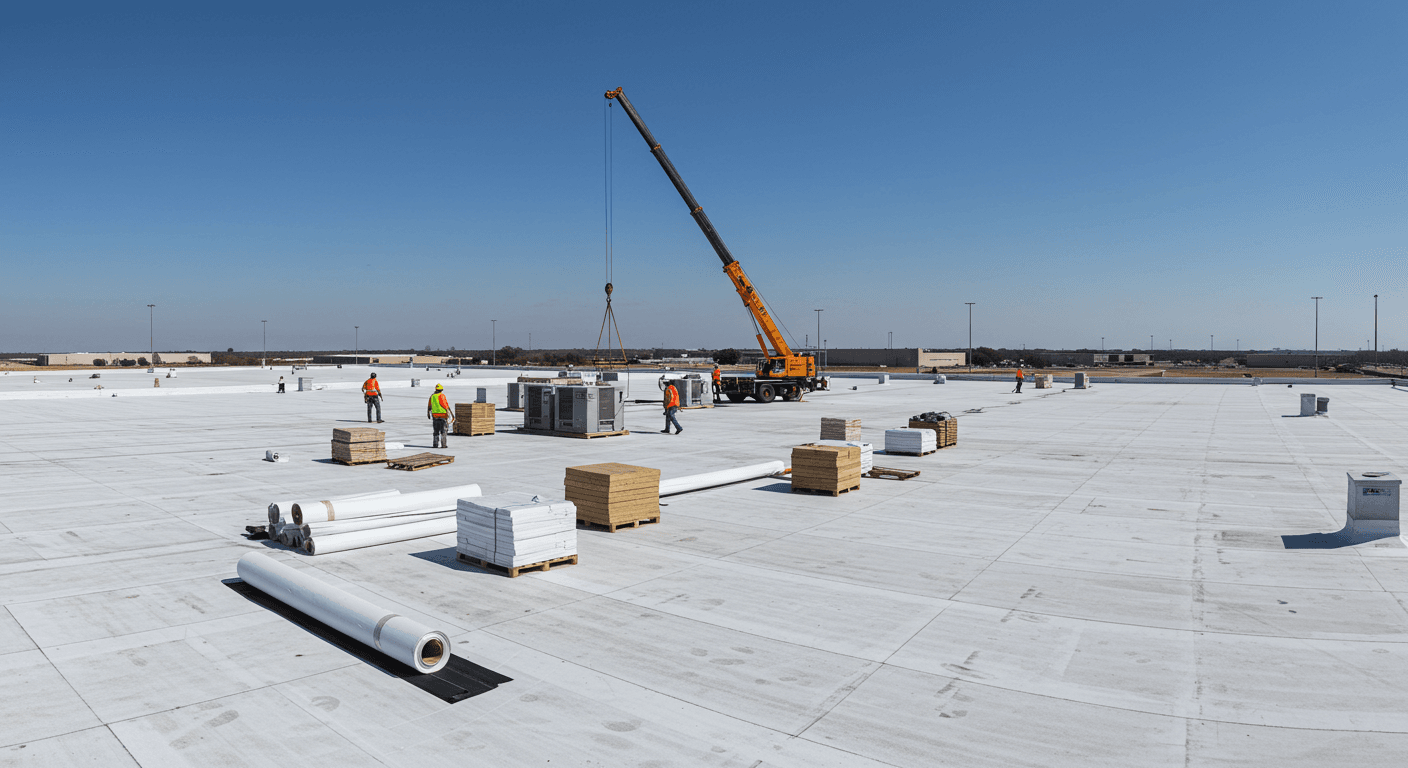
Texas property insurers are tightening the screws on residential claim approvals, forcing a 21.6% margin compression across the DFW and Houston markets. That shift is driving a mass migration toward commercial flat-roofing, yet most shops are finding that their residential workflows are a liability in a TPO world. Can your current cash reserves handle a 72-day payment cycle when you are used to getting paid the day the shingles are nailed down?
Most contractors think scaling into commercial is a sales problem, but in the Texas heat, it is actually an inventory and liability nightmare that can bankrupt a $5M shop in six months. We are watching a clear trend emerge where success is no longer defined by crew speed, but by a shop's ability to manage 45-page contracts and specialized safety protocols that did not exist in the retail space. Are you actually ready to trade high-velocity residential turnover for the slow-burn, high-margin complexity of the commercial sector?
Action Plan
Phase the move from retail to commercial
Phasing the transition from residential retail to commercial operations protects cash flow and crew morale instead of betting everything on one warehouse bid.
Audit current capital liquidity to support a 60-day material float before you chase your first TPO package.
Hire or promote a dedicated project manager for commercial submittals, safety plans, and progress billing.
Secure specialized insurance riders for open-flame work and multi-story liability that residential policies skip.
Pilot a 50-square TPO project before bidding 200+ square industrial builds along the I-35 corridor.
The capital drag of commercial contracts
A $194,500 TPO system does not breathe like a $14,800 residential tear-off. The payment rhythm is the real risk.
Moving from a $14,800 residential tear-off to a $194,500 commercial TPO system is not just a bigger version of the same job. It is a fundamental shift in how your business breathes. In the residential world, you likely get a deposit and a final check within 14 days of completion. In the commercial Texas landscape, especially with new builds along the I-35 corridor, you are often looking at pay-when-paid clauses and 10% retainage that stays in the developer's pocket for months.
I recently worked with a contractor named Vance who operated a successful shop in San Antonio. He had 16 years of experience in steep-slope residential. He won a $432,800 warehouse project and nearly lost his business because he did not account for the 63-day wait for his first progress payment. He had $87,420 tied up in TPO rolls and ISO board while his payroll for a 10-man crew was running $14,500 every Friday.
Commercial scaling fundamentals
Commercial contracts require 3x the liquid capital per square compared to residential retail.
Administrative overhead increases by 18.3% due to submittals and certified payroll requirements.
Safety compliance becomes a profit-protection tool rather than a checklist item.
Sales cycles extend from 48 hours to 6.5 months on average.
To survive this, you need to decouple your commercial bidding from your residential sales team. The one-call close mentality of the kitchen table will get you laughed out of a commercial property manager's office in Austin. Commercial growth requires a technical sales approach where the close is actually a multi-stage approval of your safety plan, your material staging log, and your bonding capacity.
Logistics and the Texas heat factor
Flat roofs in July do not forgive crews that were trained on ladder-access residential work.
Commercial roofing in Texas introduces environmental variables that residential crews are not always equipped for. While a residential crew might push through a 102-degree afternoon in Plano to finish a ridge cap, a commercial TPO install on a 300-square flat roof offers zero shade and massive heat reflection. This is not just about comfort. It is about production speed.
Your operational DNA has to change. You are moving from ladder-access to crane-staging. You are moving from a dumpster in the driveway to coordinated waste haul-offs that require municipal permits. If you have not consulted the OSHA Stop Falls campaign, you are risking more than just a fine. On a commercial site in a city like Fort Worth, an inspector can shut down a $200k job over a single missing perimeter flag, costing you $4,100 a day in idle labor.
Residential roofers who underbid logistics, retainage, and staging costs often absorb this margin hit before they finish their second flat-roof project.
The specialized labor bottleneck
Heat-welded seams and steel-deck fasteners are not shingle skills with a longer lunch break.
You cannot simply move your best shingle crew to a flat-roof project and expect a 19% net margin. The technical requirements for heat-welding seams or managing mechanical fasteners in a steel deck are entirely different. According to the BLS Roofers Occupational Outlook, the specialized skill set for commercial applications often commands a higher wage floor, which can catch residential owners off guard.
If your crews are used to knocking out two houses a week, the slow, methodical pace of a multi-week commercial project can lead to production fatigue. They see a massive field of gray TPO and lose the sense of completion they get from a residential job. I recommend incentivizing commercial crews based on quality milestones, like passing an infrared scan, rather than just square footage.
Residential vs. commercial operational load
| Factor | Residential Retail | Commercial Flat-Roof |
|---|---|---|
| Sales cycle | 2-7 days | 3-9 months |
| Payment terms | Immediate / insurance | Net 30 to Net 90 |
| Equipment needs | Ladders / small trucks | Cranes / telehandlers |
| Admin burden | Low (invoices) | High (submittals / certified payroll) |
Sales cycle
Payment terms
Equipment needs
Admin burden
Protecting your pipeline during the shift
Residential cash flow funds commercial receivables. Do not shut off the engine that keeps payroll alive.
The biggest mistake I see Texas owners make is turning off the residential engine to focus on commercial. You need that residential cash flow to fund the commercial receivables. To do this effectively, you need a lead pipeline that is filtered for high-intent, verified opportunities.
I have seen shops struggle when they buy generic leads that waste their estimators' time on low-margin repairs when they should be focused on $50,000+ commercial bids. If you are trying to keep your crews busy while your estimators are tied up in commercial submittals, verified leads with locked previews can ensure your team is only stepping onto properties that fit your new profit targets.
The Texas retainage strategy
"Always build an administrative padding of at least 8.5% into your commercial bids. This covers the cost of money for the 10% retainage that owners often hold for 90 days after the job is finished."
Before you sign that first big contract, ensure your back office is ready. Ask yourself: Does my bookkeeper understand how to file a lien notice in Texas for commercial property? Do I have a dedicated contact for my material distributor to ensure pricing is locked for 90 days? If the answer is I think so, you are not ready. You can find more about how successful shops structure their intake and lead verification in our FAQ section.