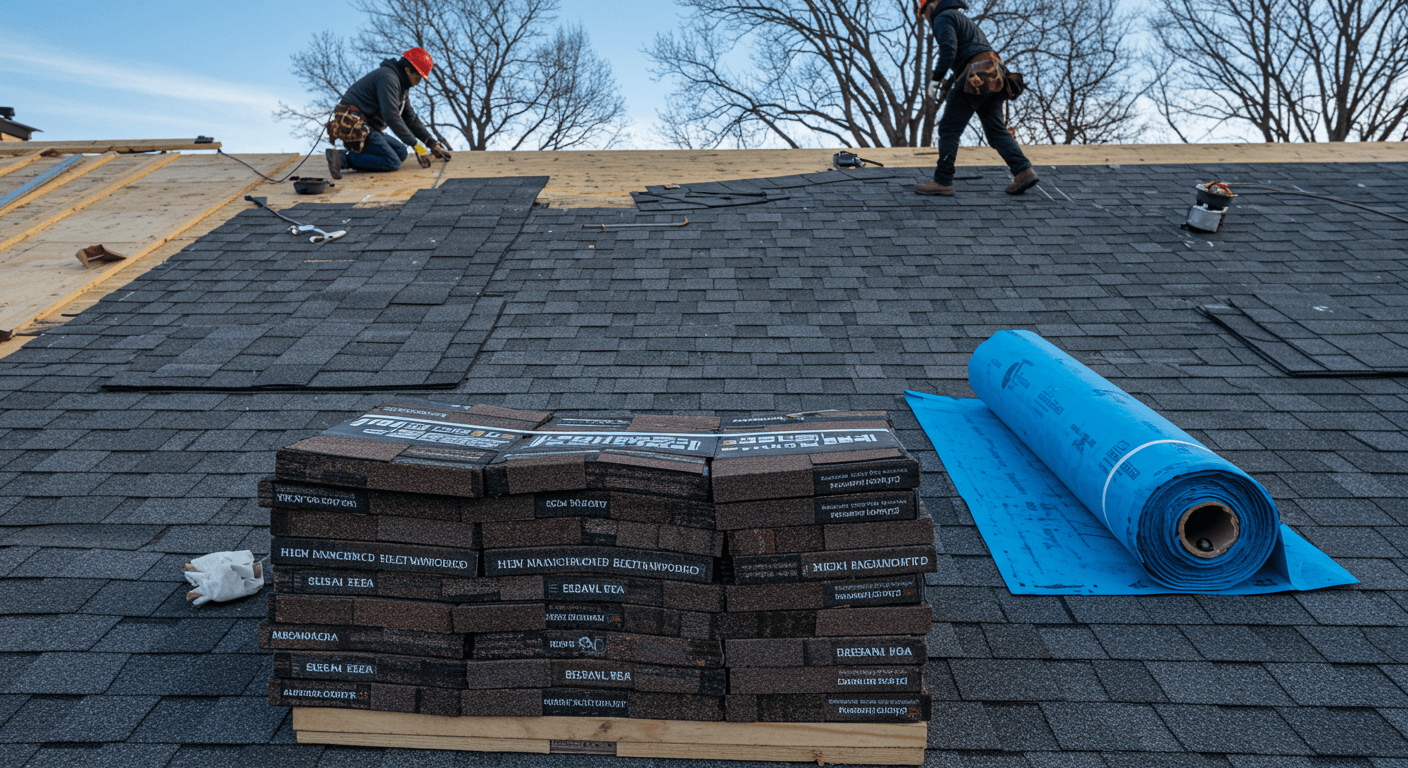
At a Glance
Thermal Cycle Resilience: Transitioning to SBS-modified shingles reduces crack-related callbacks by approximately 18.6% in the Upper Midwest.
Labor Efficiency: Synthetic underlayments save crews an average of 47 minutes per deck preparation compared to traditional organic felt.
Revenue Protection: Upselling impact-rated materials increases average job tickets by $2,340 while lowering long-term warranty liability.
## The High Cost of the "Standard" Shingle Trend
Standing on a steep 10/12 pitch in a quiet Green Bay subdivision, I watched Finn poke at a buckled section of three-tab shingles that looked like they had survived a decade of abuse. In reality, they were only 3.5 years old. Finn owned a mid-sized shop that was doing $2.8 million in annual revenue, but his profit was getting eaten alive by a 14.2% callback rate related to thermal cracking and blow-offs. We spent the next hour looking at his "standard" material list, and it became clear that his procurement strategy was built for a climate that didn't exist in the Fox Valley. He was buying based on the lowest per-square price, ignoring the fact that Wisconsin’s 115-degree temperature swings—from humid July afternoons to sub-zero January nights—require a specific chemical composition in the asphalt.