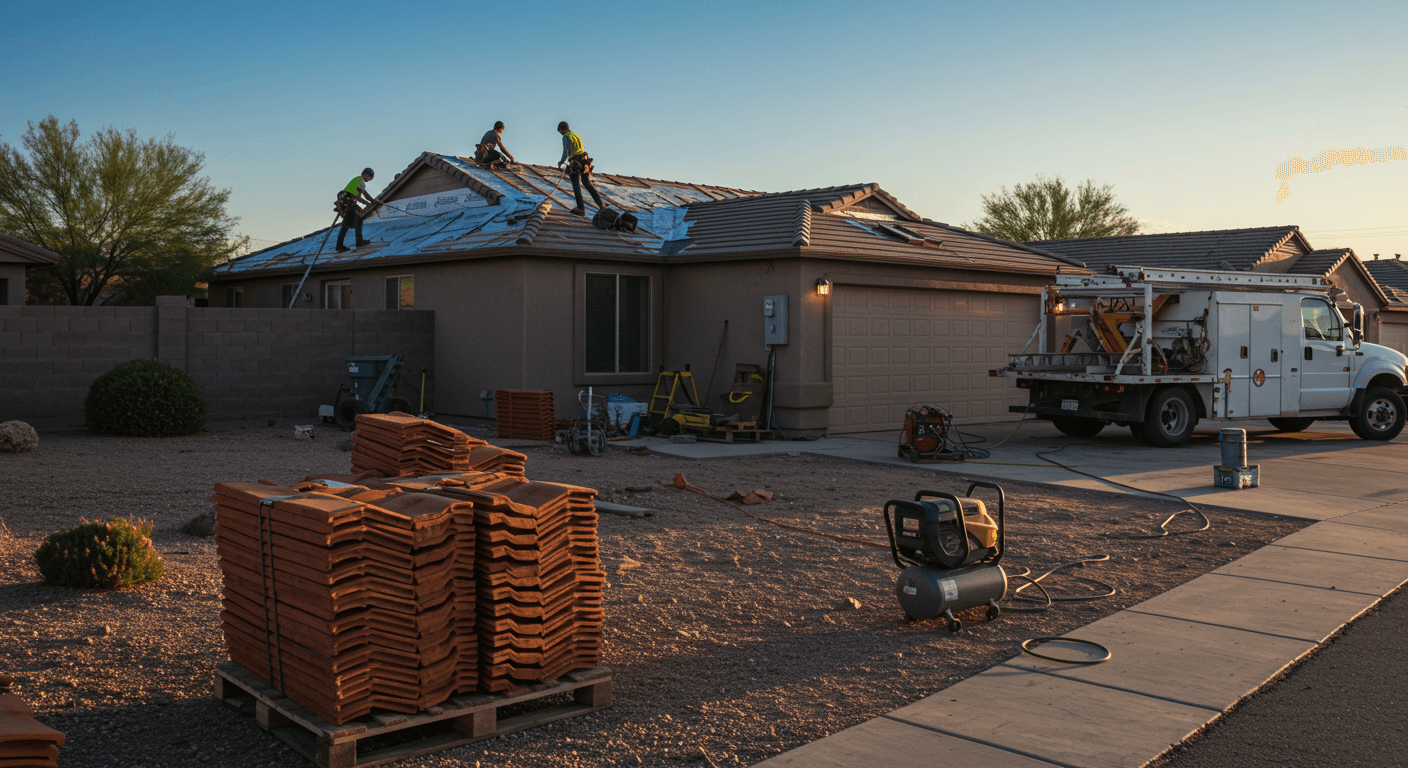
After a flat quarter, Arizona roofing shops face a real fork. You can chase storms and broad replacement keywords, or you can lean into the heat and efficiency problems homeowners already feel in the East Valley. One path burns cash on low-intent clicks. The other tries to pull margin out of work the market will still buy when the sky stays quiet.
Last August I stood in a warehouse off University Drive next to a pallet of returned tile that represented about $14,200 in margin that never happened. Aria runs a mid-sized residential crew in Tempe. For four months she had been racing every trunk-and-ladder bidder on basic asphalt replacements. Labor was up, and marketing was barely clearing 2.1x spend. When we opened her books, the slump was not bad luck. It was a refusal to match how Tempe homeowners actually buy comfort and protection.
Across shops I have advised, broad roofing replacement terms get expensive fast when everyone panics at once. You pay more for conversations that were already price shopping.
The myth of the next big storm
Feast-or-famine weather betting works until the monsoon underperforms and South Tempe never sees the hail you priced into payroll.
Plenty of Phoenix metro owners still run the business like a lottery ticket. When the season is dry, crews idle and overhead does not. The usual advice is to double door knocking or widen digital ads. That can work, but it often feeds the same replacement auction that just got more expensive.
Aria was stuck in that loop. Meanwhile, neighbors were asking about tile resets, foam coatings, and assemblies that actually handle sun load. Everyone else was still arguing over 3-tab versus architectural pricing. The gap was not demand. It was positioning.
The 72-hour supplement window
"After a rough season, cash matters more than pride. Shops that push insurance supplements inside 72 hours of the initial build, instead of waiting until month end, often see meaningfully higher approved line items. Do not let your dollars sit in an adjuster queue while payroll ticks."
From volume chasing to job velocity
More bids are not the cure when your team burns half a day on work you rarely win.
Aria's estimators were averaging about 6.5 hours on bids they only closed 17% of the time. We narrowed the map. Zip codes like 85281 and 85284 cut windshield time enough to put roughly 45 minutes of production back into each day for a single crew. At five people, that is close to four extra crew hours per week without a payroll increase.
Callbacks on steep tile had crept to about 8.4% during the slump. A simple thermal seal checklist before the trucks rolled dropped that under 1.2% within two months. Fewer rework trips meant more sold hours on new work instead of free fixes.
Two ways to climb out of a post-slump hole
| Decision | Volume chase | Precision pivot |
|---|---|---|
| Geography | Broad targeting across Maricopa County | Micro focus on Tempe and nearby Chandler pockets |
| Offer focus | Low bid wins on commodity shingles | High-margin thermal systems and premium resets |
| Lead philosophy | Storm hype and shared lists | Measured spend on qualified, exclusive demand |
| Average margin snapshot | Near 14.2% in Aria's trailing rough patch | Near 26.7% after the pivot quarter |
Geography
Offer focus
Lead philosophy
Average margin snapshot
Numbers reflect one shop's internal P&L categories, not a market guarantee. The pattern is what matters: tighter geography, better scopes, fewer races to the bottom.
What changed first in Tempe
Stop treating every dry week like a reason to buy the same replacement keywords everyone else is panic bidding.
Stack margin with attic ventilation, radiant barrier, and coating work homeowners already associate with summer bills.
Treat travel and callbacks as line items. Shaving both is often faster profit than landing one more cheap roof.
Engineering the revenue turnaround
Marketing efficiency was the elephant. The ads were loud. The intent was vague.
We moved spend toward homeowners already searching for specific relief: attic ventilation upgrades, radiant barrier, assemblies that reduce attic delta. These are add-ons many crews skip while they fight over shingle line items. SBA guidance on growing a service business keeps saying the same thing in plainer language: scale against real pain points, not generic category traffic. In Tempe, the pain point shows up on the power bill.
We reframed her offer as a whole-home cooling story instead of a roof-only quote. Average contract value moved from about $9,840 to $15,620. She was not gouging. She was solving a bigger problem with a coherent scope homeowners could justify.
The cheap lead trap
When cash feels tight, $15 shared leads look tempting. In practice they often convert under 3%, which pushes true acquisition cost higher than fewer premium, exclusive conversations. If you would not split a dinner bill six ways at a closing table, stop doing it digitally.
Suppliers, trucks, and cash you can redeploy
A slow season is a bad time to keep paying peak-era supplier terms and ghost fleet costs.
Volume had slipped from about twenty roofs a month to eleven, yet her underlayment and flashing pricing still looked like the old pace. We sat with her rep, laid out a disciplined material mix tied to one manufacturer, and locked a 4.5% rebate for two quarters. It is not glamorous, but it is cash.
Two overflow trucks were burning about $1,150 a month in maintenance and insurance for occasional use. We sold them, cleared the notes, and freed roughly $2,300 a month. That went straight into testing a tighter lead buy with platform credits instead of feeding trucks that were not earning.
Verified visibility before the truck rolls
Guessing at scope burns estimator morale faster than almost anything else.
The real shift happened when her reps stopped driving blind. They started reviewing verified job previews before committing windshield time. That killed the looky-loo appointments that drained the week. In Tempe's competitive tile mix, knowing slope, material, and story before you arrive matters. Closing rate climbed about 19.6% because the team walked jobs they could actually execute for the quoted margin.
Not a single hail spike. Mostly better scopes, fewer wasted runs, and work priced for Arizona heat instead of a commodity flyer war.
Action Plan
Four-step rebound roadmap for a slow quarter
A practical sequence for roofing owners who need profit back before they need another vanity revenue headline.
Audit the material mix: name your three highest-margin services and pause outbound spend on everything else for thirty days.
Hyper-local targeting: keep outbound inside about five miles of your best recent job until neighbors start calling without ads.
Supplement review: reopen the last six months of insurance files for missed code upgrades, perimeter flashing, and similar line items.
Exclusive intake: exit races on shared homeowner lists and buy fewer conversations you can actually own.
Keeping the shop out of survival mode
Revenue stabilization means nothing if leadership slides back to storm watching.
Once cash steadied, the risk was old habits. Harvard Business Review's small business coverage talks often about moving from firefighting to systems. We built a simple dashboard that tracked profit per crew hour. If a job could not clear about $185 per crew hour, it did not hit the schedule. That felt harsh when the phone was quiet, but it kept every truck day accretive.
By year end Aria had her most profitable year to date. The headline number was $212,450 in additional revenue versus the prior twelve months, but the quieter win was a crew that trusted the board again.