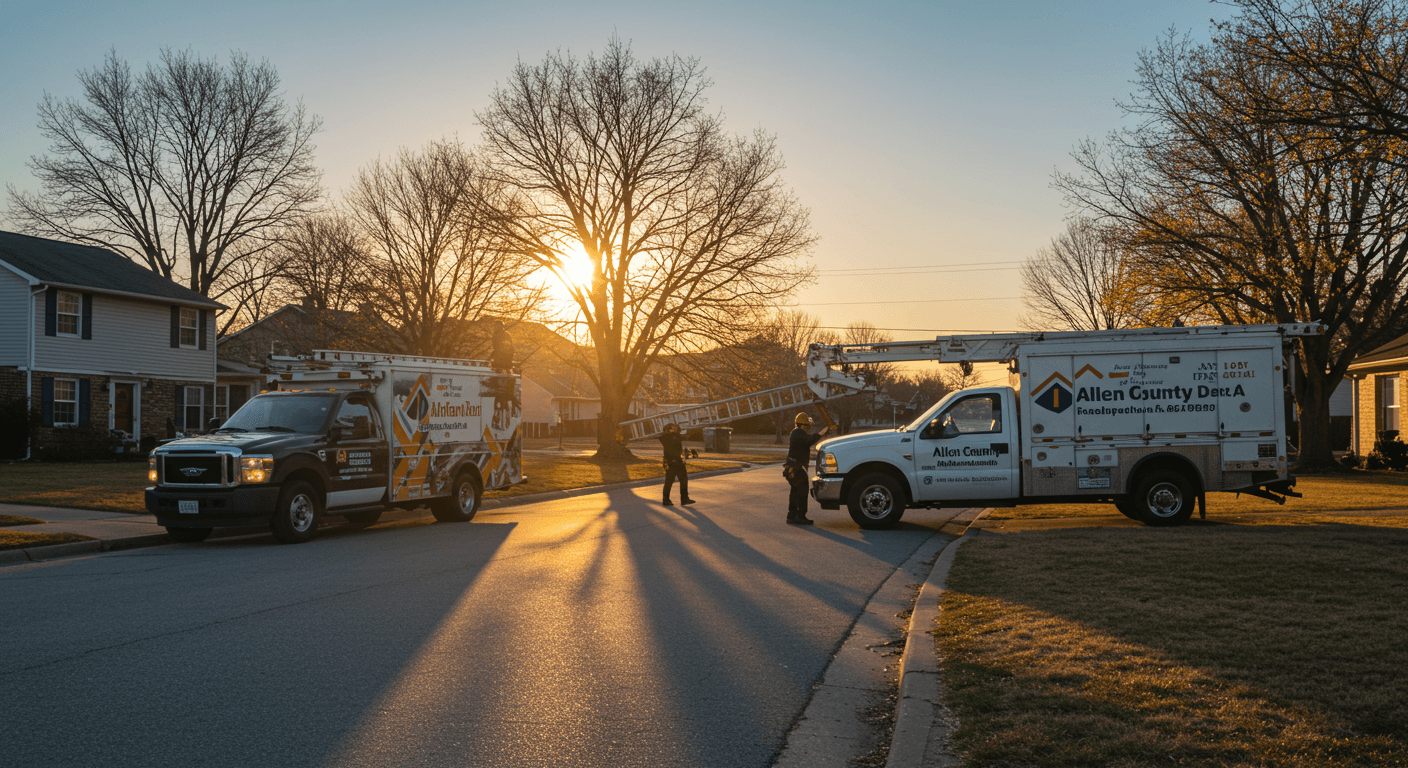
Traditional wisdom suggests that buying into a roofing franchise is the only way to avoid the "boom and bust" cycle prevalent in the Allen County market. Last Tuesday, I sat down with Wesley, a contractor who has been operating under a national brand for 4.2 years. He was looking at a P&L that showed a 7.4% royalty fee coming off his top-line revenue before he even paid for his shingles or his crew. For a shop doing $2.3 million, that is $170,200 gone every year just for the right to use a logo. Wesley thought he was buying a safety net, but he actually bought a ceiling. In a market like Fort Wayne, where local reputation carries more weight than a corporate office in a different time zone, the "franchise advantage" is often a high-priced myth.
At a Glance
Franchise royalties of 6% to 9% effectively increase your break-even point on every job, giving independent roofers a significant profit advantage on each bid.
Modern tech stacks available to solo operators are just as powerful as franchise systems, allowing you to build better systems for a fraction of the cost.
In Fort Wayne's word-of-mouth market, local reputation matters more than national branding, and independent roofers can reinvest royalty savings into community building.
Independent businesses with clean P&Ls and strong local brands often command higher exit values than franchise territories burdened with ongoing royalty obligations.
The 8% Royalty Tax on Local Sweat
Most contractors look at franchise royalties as a marketing expense, but that is a dangerous way to calculate ROI. If you are operating in New Haven or Waynedale, your customers do not care if your truck has a national sunset logo on it. They care if you showed up after that last hail storm rolled through the I-69 corridor.
When you pay a 6% to 9% royalty, you are effectively increasing your break-even point on every single square. If an independent roofer and a franchisee both bid on a $14,450 tear-off in the Northwood Park neighborhood, the independent roofer starts with a $1,156 profit advantage. That is money the independent can put toward higher-quality underlayment or better crew bonuses. I have looked at the founding story of companies that realized early on that over-paying for a brand name often leads to cutting corners on the job site just to keep the lights on.
Systems Can Be Built, Not Just Bought
The most common argument for the franchise model is the "proven system." You get the CRM, the sales scripts, and the branding. However, we are in an era where the tech stack available to a solo operator is just as powerful as anything a national chain provides.
You can piece together a better system for a fraction of the cost. For example, using a platform with advanced lead scoring and CRM integration allows you to automate the follow-up process without giving away a percentage of your equity.
Action Plan
The Independent Systems Blueprint
How to build an independent system that rivals national franchises without the recurring fees.
Localized Brand Identity: Focus on Fort Wayne-specific landmarks and weather patterns in your creative.
Digital Lead Capture: Use automated funnels to ensure no inquiry goes 5 minutes without a response.
Standardized SOPs: Document your install process specifically for Indiana building codes.
Tiered Labor Management: Use local wage data to stay competitive while maintaining margins.
Want to skip the manual work and get exclusive, verified leads instead?
Get $150 in Free CreditsAccording to the Bureau of Labor Statistics (BLS), the mean hourly wage for roofers is approximately $26.85. In Fort Wayne, attracting top talent requires more than a national brand. It requires a local owner who has the margin to pay well. A franchise owner burdened by royalties often struggles to match the pay scales of an efficient independent shop.
The Local Reputation Reality
Fort Wayne is a "word of mouth" town. Whether it is a project over by Foster Park or a commercial job near Purdue Fort Wayne, people talk. A national franchise's marketing budget is often spent on broad-reach ads that do not resonate with the specific needs of a Midwestern homeowner.
When I analyzed Wesley's lead flow, 43% of his best jobs were coming from direct referrals. Yet, he was still paying the franchise royalty on those referrals. He was essentially paying a "success tax" on his own reputation. Independent growth allows you to reinvest that 8.4% back into local sponsorships, like Little League teams or community events at the Allen County War Memorial Coliseum, which builds much deeper roots than a generic national TV spot.
Marketing Control and Lead Quality
Franchisees are often forced into "territory" agreements that look good on a map but fail in practice. If a massive storm hits Huntertown but your franchise agreement limits you to south of Highway 30, you are stuck watching your competitors rack up the wins.
Independent roofers have the agility to pivot. They can choose exactly where they want to work and what kind of leads they want to buy. Instead of being forced into a corporate lead pool where everyone is fighting for the same scrap, smart independents preview verified job opportunities before they ever spend a dime. This surgical approach to lead generation is why I've seen independent shops in Fort Wayne maintain a 22% higher closing rate than their franchised counterparts.
The Long-Term Enterprise Value Trap
The ultimate goal for many owners is an exit. There is a common misconception that a franchise is easier to sell. While it might have a recognizable name, the buyer is also inheriting that same royalty burden and the restrictive franchise agreement.
An independent business with a clean P&L, a strong local brand, and documented systems is often more attractive to a local buyer or a private equity group. You aren't just selling a "territory"; you are selling a 100% owned asset. With the roofing industry currently valued at $56B, there is plenty of room for independent players to carve out a massive piece of the pie without a corporate partner taking a slice of every meal.
The Local Authority Play
"Don't compete with franchises on 'size.' Compete on 'specificity.' Mention specific Fort Wayne neighborhoods and local weather events in your marketing to show you are the local expert."
Breaking the Cycle of Dependency
If you find yourself relying on a franchise name to get in the door, it is time to look at your sales process. In my experience, if your sales team can't close a job without a national logo on their shirt, you have a training problem, not a branding problem.
Wesley eventually realized that his "brand recognition" was only accounting for about 11.6% of his total lead volume, yet he was paying for it with nearly 100% of his growth potential. We shifted his focus to building a localized authority site and securing exclusive leads. Within 7.5 months, his net profit increased by $12,340 per month simply by eliminating the "brand tax" and tightening his local operations.