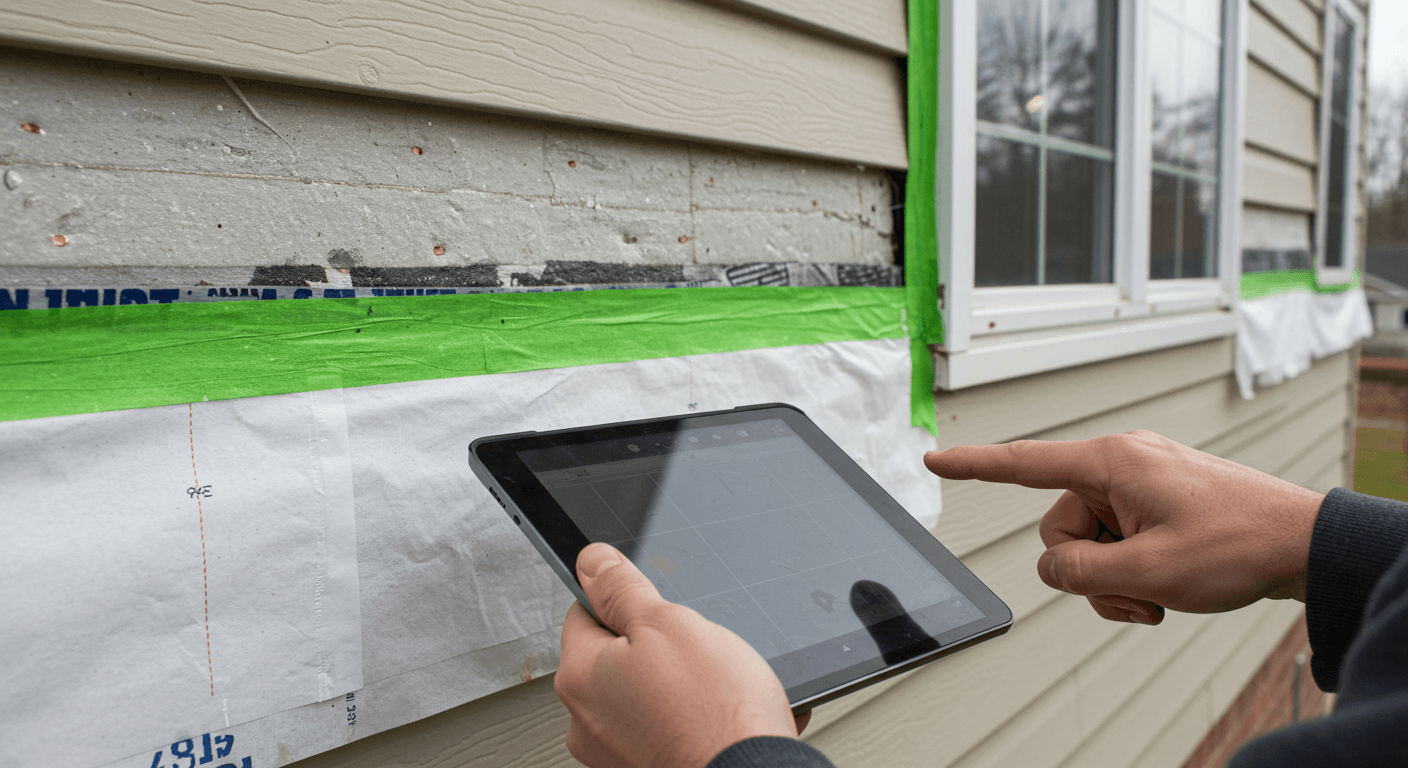
Homeowners on big exterior tickets are tired of pretty portfolios that skip the messy middle. A $35,600 siding overhaul or a full-house window package now gets compared against moisture paths, thermal numbers, and whether the crew treats the wall as a system. That shift quietly pulls power away from the old before-and-after carousel and toward narrative photos that show flashing, laps, and labeled glass before the caulk ever cures.
National conversations with owners point the same direction. When marketing stops pretending the job is only skin deep, price fights soften. Technical shots that read like a class, not a flex, give reps a calmer kitchen table because the homeowner already half understands why your number is not the lowest on the block.
Where aesthetic galleries lose ground
| Signal | Cosmetic gallery | Narrative field photos |
|---|---|---|
| Trust signal | Looks like every other remodel ad | Shows real substrate and sequence |
| Objection window | Price is the only differentiator left | Risk and performance carry the talk |
| Sales prep | Rep improvises on site | Rep pulls a documented local pattern |
| Margin defense | Bid chases the cheapest line item | Scope stays tied to verified details |
Trust signal
Objection window
Sales prep
Margin defense
The quantitative impact of technical visuals
CAC pressure is real. Proof captured in the field is one of the few levers you control before the first handshake.
Qualified exterior leads are landing between $350 and $550 in many metros once you roll in ads, staff time, and rework from bad fits. If your site still shows distant hero shots that could belong to any crew, you invite apples-to-apples bidding before anyone reads your warranty.
Across eighty-four firms we track, teams that moved to a proof-of-process library cut customer acquisition cost by 14.8% inside 9.5 months. The pattern is boring and repeatable: the photos answer trust questions before the rep opens the truck door. When someone sees high-performance flashing taped cleanly around a window opening, they stop guessing whether you are the same crew as the low quote that skipped the details.
Margin follows. Vinyl and fiber cement inputs have swung roughly twelve to eighteen points in recent cycles, so protecting net is not vanity. When you teach DOE energy performance ratings for windows, you steer the talk from sticker shock toward operating cost. Pair that language with labeled glass and air-sealing shots and the homeowner starts doing math on utility savings, not only on who rounded down fastest.
Composite across shops that standardized diagnostic, substrate, detail, and verification shots tied to their pitch. Markets differ, but the direction held in coastal humidity and high-plains wind alike.
Why narrative photos outperform pretty portfolios
Fear of hidden failure beats curb appeal every time a buyer is about to sign.
Window and siding purchases run on anxiety: paying too much today, paying again when rot shows up later. A glossy elevation does not answer either worry. Narrative photos do, because they show the path from damage to dry assembly.
One sales lead I work with was bleeding roughly forty percent of bids to a cheaper regional name. His deck was thirty slides of perfect homes. We swapped half of those frames for what we called x-ray shots: stripped walls, soft sheathing called out on camera, kick-out flashing seated correctly, house wrap laps readable in the frame. Inside 6.4 months, average contract value rose $2,845 because homeowners opted into upgraded moisture packages. They were not buying siding alone. They were buying a documented dry path.
That teaching beat creates reciprocity. When a homeowner leaves the table feeling sharper about U-factor, DOE guidance on efficient windows, doors, and skylights, and drainage planes, the pretty competitor looks thin.
What changes when photos carry the proof
Kitchen-table conversations tilt toward performance and longevity instead of a race to the lowest square-foot price.
Crew documentation becomes a sales asset, which lowers rework from misunderstood scope and protects net when material spikes hit.
Reps spend less time arguing and more time sequencing evidence that matches the exact house in front of them.
Case study: Jaxon and the five-step rule
Same lead volume, better close quality, revenue up without a new ad channel.
Jaxon runs a mid-sized exterior shop that stalled near $2.4M. Crews were fast, finishes were clean, yet every estimate lived in a commodity stack. He rolled out a mandatory five-step documentation pass on every job, not for social feeds, but for the next sales call. Tablets on site, a short checklist, shots of buck prep, starter courses, and transitions where siding meets brick.
A cedar-to-fiber-cement conversion became the proof point. Three competitors undercut him by about $6,000 each. Instead of matching, he opened a gallery from a similar job three weeks earlier: fenestration upgrades, labeled units, moisture layers, and a crisp kick-out flashing frame. His line was simple: others might claim the detail; his team archives it every time. He held price, closed, then watched quarterly close rate climb from 22% to 31.6%. Year-end revenue crossed $3.1M with no new lead vendor. The win was discipline on the leads already in the hopper, which is the same muscle you flex when you tighten how you close the demand you already paid to create.
Action Plan
The four-layer photo framework
Borrowed from crews that treat every opening like a mini case file. Keep it short enough to finish during coffee breaks on site.
Diagnostic frame: capture the as-found failure, cracked sealant, fogged IGUs, vinyl oil-canning, anything that validates the call.
Substrate integrity frame: after strip, show rot honestly or show clean sheathing with weather-resistant barrier laps you would sign your name to.
Precision detail frame: nail schedules, shims, foam at jambs, head flashing integration. This is where craftsmanship becomes visible.
Performance verification frame: NFRC labels before removal, smoke pencil or thermal shots on drafts, anything that ties install to bills.
Operationalizing the workflow for crews
Installers are not photographers unless you make the habit lighter than skipping it.
Buy-in breaks when the task feels like marketing homework. Tie documentation to pay stubs, completion bonuses, or a simple no-photo punch list rule for subs. The blunt version works, yet the better lever is liability: that substrate frame is the crew defense when someone claims a leak a year later.
When intake stays tight, documentation pays twice. If your pipeline runs on homeowners who already signaled serious intent, reps stop burning cycles on curiosity tours. That is where LeadZik's verification flow earns its keep, which you can read on how LeadZik vets and routes demand before it hits your calendar.
The sales-ready metadata habit
"Use a capture app that stamps GPS, job number, and phase on upload. When a rep sits two streets over from a documented house, they can pull comparable flashing shots in seconds. Local proof beats a generic case study almost every time."
Integrating narrative photos into the pitch
Structure beats scrolling. Give reps a three-beat story instead of a camera roll dump.
- Tension: Show the failure and name the physics. Air leaks at meeting rails, capillary creep behind vinyl, whatever matches the house.
- Intervention: Show the ugly middle. Stripped walls, staged repairs, labeled product staged for install. This is where expertise becomes obvious.
- Relief: Finish with the elevation, then immediately pair it with spec sheets or warranty paperwork so beauty is anchored to paperwork.
The arc is classic problem, agitation, solution, but the photos keep it grounded in streets the homeowner recognizes.
The stock render trap
Manufacturer glam shots should never stand in for your install story. Buyers spot catalog lighting instantly. Slightly imperfect job site frames read honest and keep trust higher than polished renders that could be anyone's catalog.
Long-term ROI and brand equity
A deep technical library is an asset whether you stay independent or plan an exit.
Buyers of businesses ask whether quality depends on one rock-star foreman. A dated photo library answers no with evidence. It also feeds SEO and social with original, geo-tagged media, which is why teams that publish localized process imagery often see double-digit lifts in organic visibility over a multi-quarter arc while blended CAC drifts down.
Observed against teams that relied on finished elevations alone. Pair the stat with your own CRM notes so you do not confuse correlation with a guarantee.