

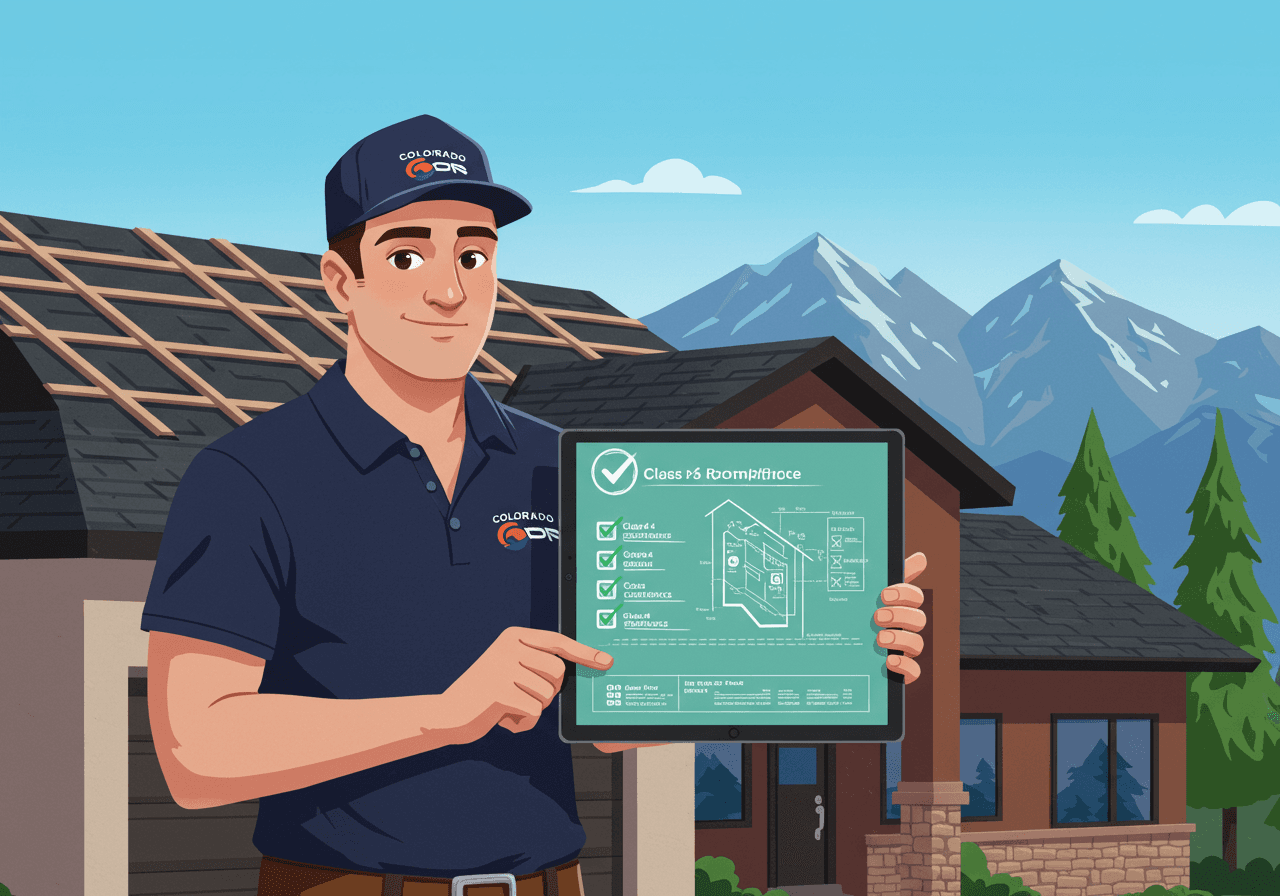
The dust has settled from last year's storm season. Across the Front Range, your crews are gearing up, and the phones are starting to ring with homeowners looking to invest in their properties before the next hailstorm or wind event rolls down from the Rockies. The competition is fierce, the material costs are what they are, and every contractor from Fort Collins to Colorado Springs is fighting for the same profitable jobs. So, what's your edge? Is it your crew's speed? Your supplier discount? I'll argue it's something far less glamorous but infinitely more powerful: your complete, unshakeable mastery of Colorado's complex and ever-changing building codes.
Too many contractors see the International Residential Code (IRC) and local amendments as a bureaucratic burden—a checklist to begrudgingly complete. But the elite few, the ones building lasting, highly profitable businesses, see it for what it truly is: a strategic playbook. In a market flooded with post-storm opportunists, proving you're a code expert isn't just about avoiding a failed inspection; it's your single greatest differentiator. It's how you climb the "Paperwork Peak" and find the clear air of profitability at the summit.
Why Code Mastery Matters
Building codes aren't just rules—they're your competitive advantage. When you understand Colorado's complex code landscape, you can confidently explain why your installation methods are superior, justify premium pricing, and build trust with homeowners who want peace of mind, not just a quick fix.
The Patchwork Quilt: Navigating Colorado's Municipal Maze
Let's be honest: there is no single "Colorado roofing code." What we have is a patchwork quilt of regulations stitched together by home-rule cities and counties, each with its own unique flavor. A roof that passes with flying colors in Aurora might get red-tagged in Boulder for a completely different reason.
As of early 2026, the variance is more pronounced than ever. While many jurisdictions are operating on the 2021 IRC, progressive cities like Denver and Boulder have forged ahead with significant local amendments focused on energy efficiency, solar readiness, and sustainability.
Colorado's Code Complexity Breakdown
Denver's Green Building Ordinance
This continues to impact roofing projects, especially on larger residential or multi-family jobs. It's not just about the shingles; it's about the entire roof system's role in the building envelope's performance. Are you prepared to discuss cool roof options and their code implications with a Cherry Creek homeowner?
Boulder's Climate Initiatives
Boulder County remains at the forefront of energy codes. For roofers, this means a deeper understanding of insulation R-values, attic ventilation calculations that go beyond the bare minimum, and how the roof integrates with the city's aggressive energy-saving goals.
The Wildland-Urban Interface (WUI)
For contractors working in the foothills west of Golden, Colorado Springs, or Loveland, WUI codes are non-negotiable. These regulations, dictating Class A fire-rated materials and specific installation methods for vents and eaves, are life-saving protocols. Knowing them inside and out positions you as a true mountain-living expert, not just a roofer.
Treating every job from Castle Rock to Greeley with the same code checklist is a recipe for failed inspections, costly delays, and a damaged reputation. The profitable roofer has a system—a digital cheat sheet, a pre-job code review process—to verify the specific requirements for every single municipality they work in.
⚠️ The Cost of Code Ignorance
Failed inspections don't just delay projects—they damage your reputation, waste crew time, and force expensive rework. In Colorado's competitive market, homeowners remember contractors who navigate codes smoothly versus those who stumble through inspections. Your code expertise directly impacts your bottom line.
From High Winds to Heavy Snow: Turning Code into a Sales Tool
Colorado's weather is the ultimate stress test for any roof system, and the building codes are written in response to its ferocity. Instead of just meeting the minimum, use your code knowledge to educate homeowners and upsell them on a truly "Colorado-proof" roof.
Using Code Knowledge to Win More Jobs
The Front Range Wind Factor
The IRC's high-wind provisions are not abstract rules here; they are a direct response to the microbursts and sustained gales that blast the I-25 corridor. When you explain to a homeowner why you use six nails per shingle instead of four, you're not just rattling off a code requirement (IRC R905.2.6). You are demonstrating your commitment to preventing the blow-offs they see on their neighbor's roof after every windstorm. Frame it as a durability upgrade rooted in engineering and local code.
The Mountain Snow Load
In communities like Evergreen, Vail, or Steamboat Springs, the code's requirements for ice and water shield are critical. Don't just say, "Code requires it." Explain how extending the shield further up the roof deck (often beyond the 24-inch minimum) provides superior protection against the brutal freeze-thaw cycles and heavy snowpack inherent to high-altitude living. This is an opportunity to sell a premium, long-lasting system that provides peace of mind.
The Hail Alley Mandate
While the code itself may not mandate Class 4 impact-resistant shingles, the insurance industry and homeowner demand certainly do. Your code expertise comes into play with the installation. Many Class 4 products have specific fastening and underlayment requirements to validate their warranty and rating. Being able to articulate these technical specifics assures the client they are getting the full value and protection they're paying for.
Code Knowledge = Sales Confidence
When you can explain the "why" behind code requirements, you're not just a contractor—you're a trusted advisor. Homeowners pay premium prices for expertise, not just labor. Your code mastery positions you as the expert who understands both the technical requirements and the real-world performance needs of Colorado roofs.
Looking Ahead: The 2024 IRC Adoption and Beyond
The conversation in municipal building departments across the state is turning toward the adoption of the 2024 IRC. This next cycle promises even stricter energy efficiency standards, updated wind speed maps, and potentially new requirements for roof-mounted solar installations.
The contractors who are already studying these pending changes will be miles ahead of the competition. They'll be able to advise clients on future-proofing their homes, navigating new rebate programs, and building systems that won't just pass today's inspection, but will be considered high-performance for years to come.
💡 The ROI of Code Mastery
Without Code Expertise:
- Failed inspections = delays and rework
- Generic pricing = competing on price alone
- No differentiation = lost jobs to competitors
- Result: Lower margins, damaged reputation
With Code Mastery:
- Smooth inspections = faster project completion
- Code-based upsells = premium pricing justified
- Expert positioning = homeowners choose you
- Result: Higher profits, trusted brand
Stop viewing building codes as a hurdle. Start seeing them as your strategic guide. Mastering this complex landscape is your clearest path to reducing callbacks, justifying higher prices, and building a brand that Coloradans trust to protect their homes against anything the high country can throw at it.
Your Code Mastery Action Plan
- Create a digital code reference system for every municipality you work in, including Denver, Boulder, Colorado Springs, Fort Collins, and any foothills communities with WUI requirements.
- Study the 2024 IRC changes now, before your competitors do. Be ready to advise clients on future-proofing their roofs.
- Train your sales team to explain code requirements as value propositions, not just compliance checkboxes. Turn code knowledge into closing power.
- Build relationships with local building departments. Being known as a code-compliant contractor speeds up inspections and builds trust.
- Document your code expertise in marketing materials. Homeowners want to work with contractors who understand regulations, not those who learn them on the job.
Ready to Build Your Code-Compliant Business?
Mastering Colorado's building codes is just one piece of building a profitable roofing business. To grow consistently, you need a steady stream of qualified leads who value expertise over price. Learn how LeadZik generates exclusive roofing leads that connect you with homeowners ready to invest in quality work, not just the lowest bid.
Climb Higher with Exclusive Colorado Leads
You've mastered the codes. You've built the expertise. Now it's time to connect with homeowners who value what you bring to the table. LeadZik delivers exclusive, pre-qualified roofing leads across Colorado—from Denver to Boulder, Fort Collins to Colorado Springs. You'll be the only contractor calling each lead, eliminating competition and maximizing your closing rate.
100% Exclusive Leads
No competition from other contractors—you're the only one calling each homeowner.
Higher Conversion Rates
Our leads convert at 3-5x the rate of shared leads, saving you time and maximizing ROI.
Colorado-Specific Targeting
We understand the unique needs of Colorado homeowners—from Front Range wind to mountain snow loads.
Quality Guarantee
Every lead is pre-qualified and verified before being delivered to you, ensuring you spend time on serious prospects.
Join Colorado's top roofing contractors who've made the switch to exclusive leads.
Get Your Exclusive Leads Today