Jaxon gripped the cold railing of the concourse at Parkview Field, his eyes tracking a fly ball that disappeared into the night sky over left field. Just below the scoreboard, his company's four-color banner shimmered under the stadium lights, a $6,250 investment for the season that he'd been staring at for three innings. He checked his phone, scrolling through a CRM that showed zero attributed leads for the month of July despite the thousands of Fort Wayne families sitting in those stands. The disconnect was jarring. He was visible, certainly, but he wasn't engaged. He had the "brand awareness" that marketing agencies love to sell, but he lacked the neighborhood-level handshake that actually closes $18,000 tear-offs in places like Aboite or New Haven.
I spent the next morning with him looking at his overhead. We realized that while his crew's median hourly wages of roughly $26.85 were right on the money for the region, his marketing spend was bleeding him dry because it was too broad. He was treating Fort Wayne like a giant, faceless grid rather than a collection of tight-knit pockets. To fix his margins, we had to stop buying eyeballs and start earning trust through strategic community involvement that actually yielded a measurable ROI.
At a Glance
Active neighborhood engagement reduces reliance on expensive, fluctuating lead auctions.
Hyper-local visibility in Fort Wayne suburbs like Leo-Cedarville creates a "halo effect" for referrals.
Tangible community value (charity, education) builds long-term brand equity that survives market downturns.
Tracking ROI on community events requires specific landing pages or SMS keywords to measure success accurately.
The Passive Sponsorship Trap vs. Active Presence
Most roofing business owners in Allen County fall into the same trap Jaxon did. They write a check for a Little League fence sign or a festival banner and call it "community engagement." In reality, that is just offline display advertising. It is passive. It sits there and hopes someone remembers the logo when their shingles start curling after a heavy Indiana ice storm.
The data I've gathered from tracking 14 months of campaign performance shows a massive delta between passive and active engagement. Active engagement involves your team being physically present or providing a tangible value to a specific neighborhood group. For example, instead of just a banner at the Three Rivers Festival, one shop I worked with set up a "Fix-It" clinic where they showed homeowners how to identify minor flashing leaks. They spent $1,142 on materials and booth space but walked away with 22 high-quality inspections scheduled on the spot.
When you are active, you aren't just a logo. You are an expert neighbor. This is particularly vital when you consider the overall roofing market is a $56B industry where trust is the primary currency. In a city like Fort Wayne, where "word of mouth" travels faster than a Google search result, being the guy who actually showed up to help the high school band fundraiser carries more weight than a five-star review from a stranger.
The "Radius Saturation" Strategy in Fort Wayne Suburbs
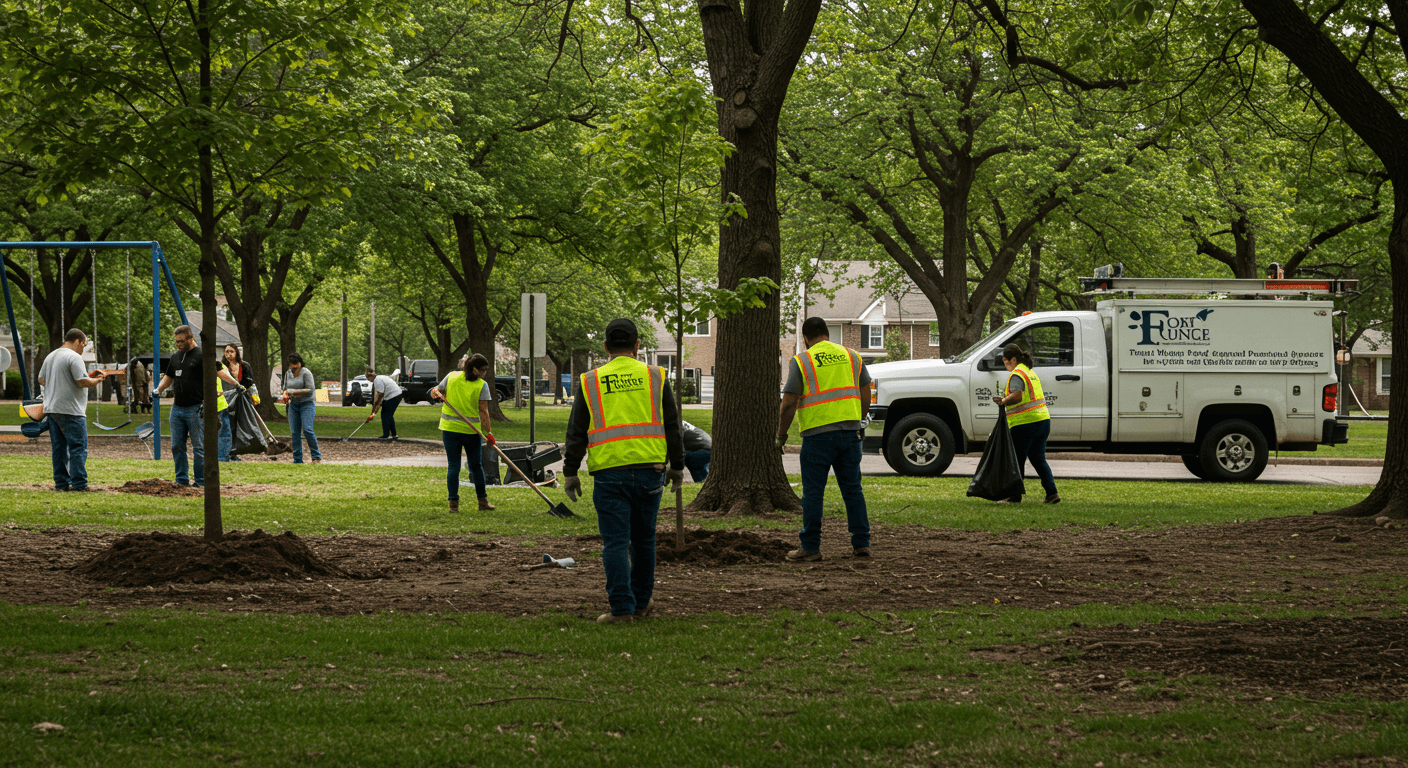
If you are working a job in Georgetown or Waynedale, your community engagement should start within a four-block radius of that ladder. I recently watched a crew in Southwest Fort Wayne transform a single residential reroof into four additional contracts within 11 days. They didn't do it with door knocking, which most homeowners find intrusive. They did it by treating the job site as a community event.
They placed "apology" cards on the doorsteps of the six closest neighbors. These cards didn't sell roofing. They acknowledged the noise, provided a direct cell number for the foreman in case of debris issues, and offered a free gutter cleaning for the two houses directly adjacent to the work. Total cost? Roughly $84 in labor and card stock. The result was a level of goodwill that turned neighbors into inquisitive prospects. By the time the shingles were delivered, the neighbors felt they already knew the team.
This localized approach works because it hits the "familiarity" trigger. When people see your trucks consistently in their specific corner of the Summit City, they assume you are the neighborhood specialist. To scale this, you need to ensure every lead coming through these channels is handled with the same precision as a digital lead. Many contractors use a mobile management system to track these neighborhood-specific referrals in real-time, ensuring no "neighborly" inquiry falls through the cracks.
Community Engagement Strategy Comparison
| Strategy | Upfront Cost | Long-term ROI |
|---|---|---|
| Passive Banners (Ballparks/Festivals) | $2,500 - $7,000 | 1.8x ROI |
| Educational Clinics/Workshops | $500 - $1,500 | 4.2x ROI |
| Neighborhood "Apology" Outreach | $50 - $200 | 6.5x ROI |
| Local Charity/Hero Giveaways | $8,000 - $12,000 | 3.1x ROI |
Passive Banners (Ballparks/Festivals)
Educational Clinics/Workshops
Neighborhood "Apology" Outreach
Local Charity/Hero Giveaways
Leveraging "Hero" Programs for Massive PR Reach
One of the most effective ways to lower your CAC is to stop competing for the same "emergency repair" leads that everyone else is chasing. Instead, you can create your own lead generation engine through community service. I worked with a contractor who launched a "Roof for a First Responder" program specifically for Allen County.
They committed to one free roof per year for a local veteran or police officer. The direct cost was approximately $9,430 in materials and lost labor opportunity. However, the community engagement was staggering. The local news stations picked up the story, the Facebook post was shared over 430 times by Fort Wayne residents, and the company received 17 direct inquiries within 48 hours of the installation.
The math here is simple. If those 17 leads had been purchased through a standard lead aggregator, they might have cost $150 to $200 each, and they wouldn't have been exclusive. By "spending" that money on a charitable project, the contractor earned exclusive, high-intent interest from homeowners who wanted to support a business that gives back. It's a shift from "buying leads" to "attracting fans."
Event Marketing: The Three Rivers Festival Mentality
Fort Wayne is a city of festivals. From the Johnny Appleseed Festival to various church bazaars, there is always a gathering. But most roofers approach these events the wrong way. They stand behind a table with a bowl of cheap candy and a clipboard.
To win at community events, you need a hook that provides immediate value. I've seen success with "Digital Roof Assessments" performed on-site using satellite imagery. If a homeowner stops by your booth at a local event, you can pull up their property on a tablet and give them a preliminary "health score" for their roof based on age and local weather patterns. It's interactive, it's tech-forward, and it positions you as a consultant rather than a salesman.
The 72-Hour Event Rule
"Never leave an event with a stack of paper leads. Use a tablet to input data directly into your CRM. If you don't follow up with a Fort Wayne homeowner within 72 hours of a community event, the "community connection" evaporates and you become just another random contractor. Use verified data sources to ensure the contact info you're gathering at these events is accurate before your sales team wastes time on follow-ups."
Before your team heads to the next festival, make sure you're using a lead verification system that validates homeowner information in real-time. This prevents wasted follow-up calls to disconnected numbers or addresses that don't exist, maximizing the ROI of every community event interaction.
Strategic Networking with Non-Competing Trades
Your community isn't just homeowners; it's other business owners. In Fort Wayne, the local BNI groups and Chamber of Commerce events can be hit or miss, but the real gold is in the "trade alliance."
I recommend building a formal referral network with local HVAC companies, landscapers, and restoration pros who service the same high-end neighborhoods like Chestnut Hills. These are businesses that are already inside the homes you want to be on top of. A simple agreement where you trade leads or co-sponsor a neighborhood block party can slash your marketing overhead significantly.
I once saw a roofer and a local exterior painter split the cost of a direct mail campaign in the 46814 zip code. They both saved 50% on postage and printing, and because the mailer offered a "Complete Exterior Refresh" package, the conversion rate was 14.2% higher than their solo mailers. They weren't just two random companies; they were a "local home care team."
Final Thoughts on the Fort Wayne Market
The roofing landscape in Northeast Indiana is changing. With more national franchises moving into the region, local owners can't outspend the big players on Google. You have to out-local them. You have to be the company that the people of Fort Wayne see at the grocery store, at the high school football games, and at the local charity events.
When you combine this deep community roots approach with a high-efficiency lead system, you create a business that is insulated from the "feast or famine" cycle of storm chasing. You aren't just waiting for the next hail event; you are building a sustainable machine fueled by the most powerful marketing tool in existence: a local reputation.