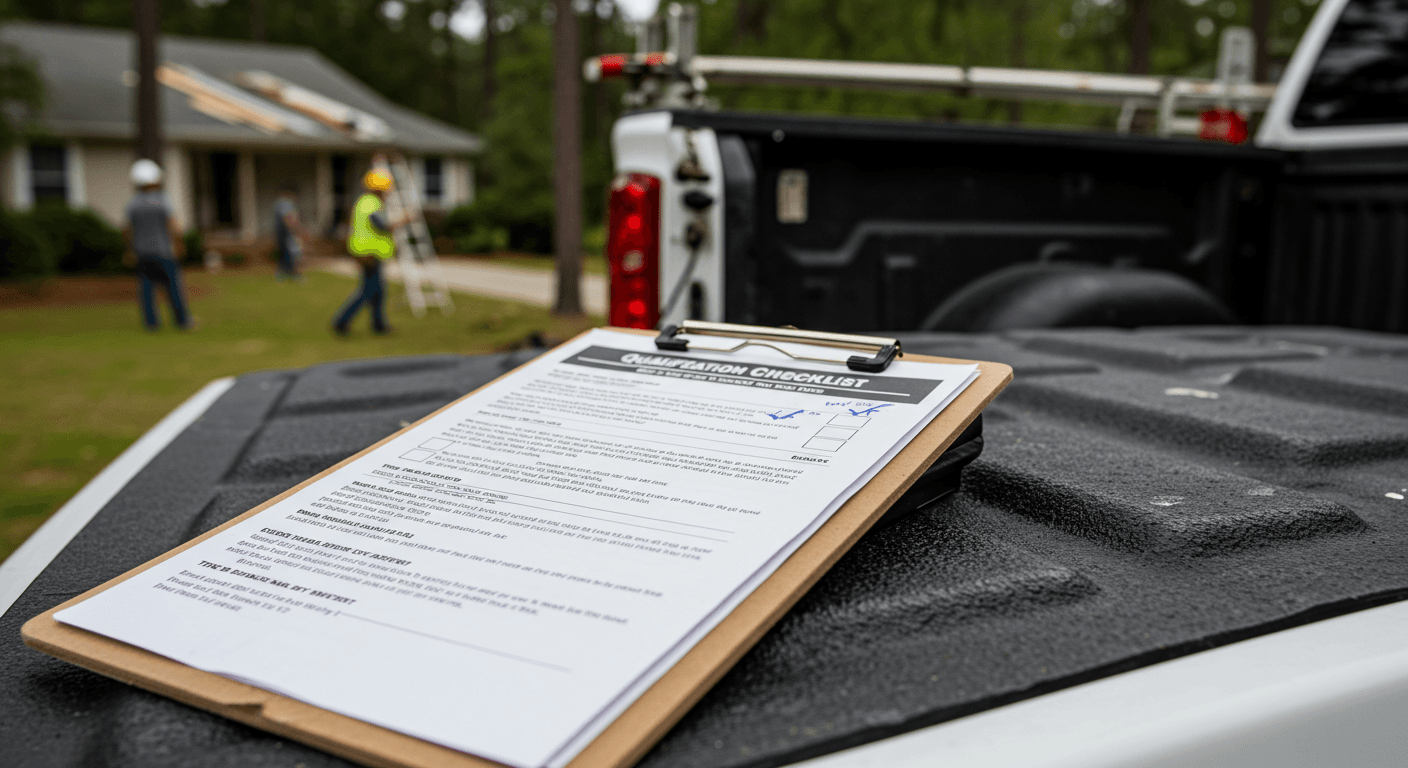
Scaling across the Southeast usually forces a choice. You can chase aggressive door counts, or you can tighten vetting so your closers stop eating empty calendar blocks. This playbook is built around a simple shift: treat intake like a filter, not a reception desk. When Georgia and Carolina shops obsess over how many assessments got booked, they often miss the quieter win. A 14.2% lift in vetting discipline can beat a 30% spike in raw lead volume because net margin follows probability, not noise.
Speed at the door matters less than the quality of the conversation on the porch. If canvassers are coached to win a fast yes to an inspection, they frequently hand closers a slow no at the contract. Compare two real patterns. One team takes every ringing line and runs wide open routes. Close rates often stall near 19%. Another team narrows early with a written gate and lands closer to 31% while protecting average ticket. Same market, different definition of a good appointment.
If the scoreboard only rewards sets, the field will game sets
Owners love a full calendar until they see reps living in driveways where nobody is ready to decide. Publish a second metric, qualified opportunity per route hour, even if you keep sets private for now.
Table of Contents
Volume first routing versus early qualification
| Operating signal | Wide net intake | Tight gate intake |
|---|---|---|
| Primary KPI on the wall | Weekly inspections booked | Qualified opportunities per rep |
| Closer experience | Thin notes, surprise one legger | Decision makers named, triggers logged |
| Typical close band we see | Often near 19% | Often above 31% with stronger tickets |
| Turnover pressure | Burnout from empty runs | Morale tied to winnable work |
Primary KPI on the wall
Closer experience
Typical close band we see
Turnover pressure
None of this replaces honest marketing. It keeps your expensive talent on roofs where a decision is actually possible.
Train canvassers to read the roof line, not a single symptom
If the field script only chases obvious missing tabs, you miss most of the story.
Canvassers are scouts. In coastal Georgia and the Carolinas, adjusters respond to patterns, not vibes. I teach three field markers that usually line up with documented weather damage: oxidized soft metals with pockmarks on box vents or chimney flashing, granule piles at downspouts that hint at shedding caps, and neighborhood rhythm where multiple installs or yard signs already primed the block.
Visuals come first, then language. Before they ask for the inspection, they should ask a question that exposes where the homeowner sits in the process. One line that has held up in training: Most neighbors are treating last week's gust line as a reason to update coverage. Have you already had an adjuster on the slope, or are you still waiting your turn? Social proof is gentle. The answer tells you if you are on supplement work, retail, or a fresh claim path. That fork changes pricing, crew, and paperwork from minute one.
Action Plan
Four beats that turn booking into qualifying
Move your field org from appointment collecting to opportunity grading. Each step hands the next role a cleaner file.
Stage 1, porch line audit. Canvasser lists three physical age or storm cues before the knock.
Stage 2, awareness pivot. Open with a question that surfaces how the homeowner already thinks about roof risk.
Stage 3, inside bridge. Inside sales confirms the set inside ten minutes and runs the same gate every time.
Stage 4, closer match. Route complex steep work to climbers who own that profile, not whoever is closest.
The inside rep pre-flight gate
If nobody ever says no at the desk, your closers will say no with their feet.
Inside reps exist to defend the calendar of your best estimators. If ISR is not disqualifying at least fifteen percent of what marketing and canvassing dump in, they are probably just scheduling. During a session with an ISR named Maya, she admitted she was scared to sound pushy about budget and timeline. I walked her through a simple truth. A homeowner who will not give four minutes on the phone to confirm basics is unlikely to give ninety in the kitchen for a signature.
We made a four question filter mandatory on every lead. Decision maker availability for the assessment window. Approximate roof age so samples match reality. The specific trigger that made this week the week. Insurance posture, started claim versus professional documentation first. If both decision makers cannot be present, you reschedule instead of sending a closer into a one sided kitchen. That single rule prevents a predictable gas and labor leak. For longer intake breakdowns, I keep updated field notes inside our blog library.
Inside rep gate: four questions before the calendar locks
Will you and your spouse both be available for the twenty five minute walkthrough so we can align on material direction?
Do you know if the roof is older than sixteen years so we bring the right sample boards?
What specific event made this the week you wanted eyes on the roof?
Have you already opened a claim, or are you asking us to document condition for your records first?
Catch technical requirements while the homeowner is still engaged
Qualification is also about whether you can build it cleanly.
Coastal Georgia and the Lowcountry throw wild rooflines. If intake books a steep wrap porch and the estimator shows up with the wrong ladder plan, you lose the day on logistics instead of price. While ISR is live on the phone, someone should be scanning satellite imagery for pitch, valleys, metal accents, and access pain like tight fence lines or power service drops hugging the eave.
Flag steep charges, mixed systems, and landscape friction before you promise a crew day. That keeps bids honest and stops the late add labor line that makes homeowners feel baited and switched. If you want shared language on what counts as verified demand, territory fit, and how refunds work when a record is off, start with the LeadZik FAQ, then align your own definitions inside the CRM.
Most of that is not material. It is rescope labor, second visits, and the margin you give away when trust fractures before ink.
Drop the storm chaser costume without dropping urgency
Skepticism is a qualification problem too.
Homeowners are not stupid. After big wind, they have seen every flavor of operator. Recent ConsumerAffairs roofing statistics keep pointing at trust as a hiring driver, especially after headline weather. If your opener sounds like free pizza and a hail coupon, you get treated like a commodity. Lead with education. Swap the generic neighborhood inspection line for language about ventilation risk after measured gusts and what humidity does to trapped attic air.
That framing pulls a different homeowner forward. They tend to own higher value homes, care about install quality, and stay in the conversation when price is not the only hook. Retail tickets reward that patience when you are not splitting every line with an adjuster.
Turnover has a receipt
Bad intake taxes payroll twice, recruiting cost and lost production.
Replacement math is blunt. Recruit, hire, ramp a roofing sales rep and you are often near nine thousand four hundred dollars all in before they reliably hit quota. Lose two reps a year to burnout from weak sets and you might as well write a nineteen thousand dollar check to nobody. Canvass works for closers. When the payload is thin, closers cannot invent margin.
In Savannah we wired a simple grading loop. Closers scored every lead one through five. Canvassers who averaged under 3.2 for two weeks went back to drills, not doors. It was not public shaming. It was alignment. The bonus went to the highest average grade, not only the highest set count. Accountability turned polite conflict into shared standards.
The drive by pause
"Give estimators permission to call the office for a quick pass when the roof is obviously new, a real estate sign appeared since booking, or access is nothing like the notes. A ninety minute save beats a heroic pitch on the wrong house."
Roll the playbook out in four weeks, not one speech
Culture changes on repetition, not slogans.
Week one lives in the field with canvassers. You are not pitching homeowners beside them. You are pointing at qualified versus unqualified curb stories, algae streaks, lifted tabs, flashing rust. Week two is ISR tape review. Listen for selling the calendar instead of vetting the human. Drill the four question filter until pushback on spouses feels boring.
Week three launches the grade board with a visible reward for quality, not volume alone. Week four is metrics review. Expect total sets to dip slightly while contract to lead climbs. If close rate moves from eighteen percent to twenty six percent, you are earning more money on fewer windshield hours, which is the whole point.
People buy relief from the next problem
Qualification is diagnosis, not persuasion theater.
In our humidity and hurricane rhythm, the fear is usually the next season, the next power outage, or the silent attic bake that shows up as a $500 cooling bill. When reps run real questions, they behave more like a clinician and less like a contestant. Guard drops because the homeowner feels seen instead of hunted.
River, a closer I shadowed, turned a quote shopper into a twenty one thousand four hundred thirty dollar single visit file because intake caught the real worry, an elderly parent upstairs and moisture anxiety. River talked air sealing and vapor management before shingle brand. That only happens when your questions surface the why beneath the request.
Common Questions
Close the loop on measurement
Your roofing company is only as durable as the weakest record in the hopper.
Storm chasing headlines can hide sloppy intake for a season. Long term shops win because scouts know what to look for, inside teams hold a four gate standard, and closers grade what arrives. When those three layers agree on what qualified means, reps stop guessing which pins deserve their best energy.
Stop celebrating windshield time. Celebrate profitable installs that survive review, referral, and warranty. Confidence is not loud. It is the quiet result of knowing the next appointment was worth the parking brake.