Prioritizing a 25 minute speed pitch creates a 68% likelihood of a cancellation inside the three day rescission window. Investing 85 minutes in a structural consultation drops that risk to about 4.2% while lifting contract values by 33.7% on average. That split between velocity and value is the fork a lot of Yellowhammer State owners keep walking past. One lane is a stressed commodity race where you get undercut by crews that measure success in how fast they can email a number. The other lane is a diagnostic rhythm that earns premium pricing from Huntsville down to Mobile. Most teams still think high ticket work is about being a sharper closer. The cleaner read is that closing is mostly a consequence of how you open the visit.
I have spent 14 years studying the gap between shops that stall near $900,000 and shops that push past $4.2 million in annual revenue. Alabama adds its own pressure cooker. Storm seasons swing hard, humidity punishes attic airflow, and a stiff kitchen table script reads like a liability. If your rep walks into a Montgomery living room with a generic brochure and a sign tonight posture, plan on leaving meaningful money on the table. Homeowners are tired of operators who blow through after hail. They want someone who can explain decking, dew point, and why their upstairs hallway bakes in July.
Table of Contents
Speed without proof invites buyer remorse
When the first hour feels like a pitch instead of an inspection, homeowners nod, then cool off once the adrenaline fades. Rescission windows exist for a reason. Build the file before you lean on urgency.
Same crews, same suppliers. The delta is how much proof you bring from the attic and perimeter before dollars hit the page.
The myth of the universal sales script
Efficiency metrics that ignore risk turn your best reps into coupon clerks.
Conventional shop talk still treats the one call close like a badge. Owners wire big checks to trainers who teach pressure, false urgency, and assumptive language. That might move a small repair ticket. It curdles fast on a $24,850 steep slope architectural job. When you ask a family to fund a project the size of a decent used SUV, pressure creates friction. Friction sounds like we need to sleep on it.
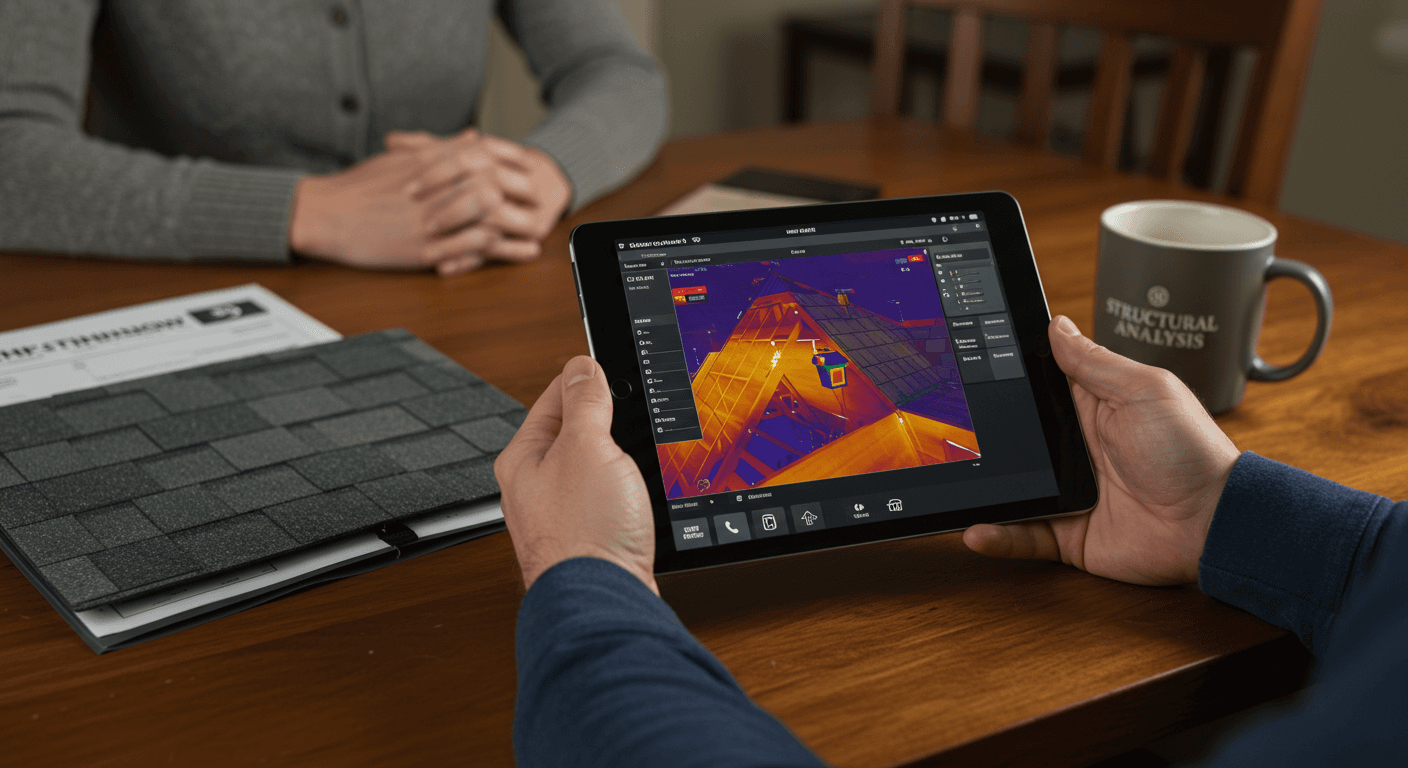
The Alabama crews I respect stopped performing scripts and started running diagnostics. Think clinician, not carnival barker. You collect evidence, label the failure mode, explain what happens if nothing changes, then outline a recovery plan. When the conversation follows that order, price stops being the headline and risk reduction becomes the headline.
This matters more as skilled labor stays expensive. The BLS outlook for roofers keeps pointing at tight capacity. Low margin volume is not a strategy when wages, insurance, and equipment lines all creep upward. You need each qualified appointment to carry real margin, not a race to the bottom.
Xavier in Birmingham ran three crews with a 42% close rate but only 8% net. He was proud of winning bids until we mapped labor, supplements, and callbacks against ticket size. Winning on price was quietly teaching his team to fund other people's roofs. We rebuilt the first hour around photos, attic readings, and plainspoken risk language. Margin followed without him having to double his marketing spend.
Framework anchors that hold in humid markets
Move the story from brand names on a shingle sample to a moisture and heat plan that fits Alabama attics.
Track talk time during the first hour. If your rep is over 30% of the words, you are probably missing the homeowner's actual pain.
Document discovery with dated photos homeowners can scroll while you are still onsite, not only after you leave.
Protect margin over raw close count. Two jobs at 35% net beats four jobs at 15% when you include overhead and warranty exposure.
The revenue gap between commodity quotes and consultant assemblies
Same roof plane, two different stories about what the house needs.
Picture a Birmingham reroof. The commodity path measures quickly, anchors on a mid grade shingle, and lands near $12,850 with a warranty chart and a today only sweetener. The consultant path still starts at the curb, but it budgets time for clogged soffit intakes, an undersized ridge run for the heated footprint, and chimney flashing that has already started to telegraph moisture.
The consultant is not adding mystery fees. They are naming a $27,170 assembly with upgraded underlayment, corrected ventilation math, and a field plan that lines up with OSHA Stop Falls expectations on steep work. The homeowner sees the $14,320 delta as protection, not a shakedown, because each line ties back to photos they watched you take.
Lead quality decides whether your team even gets to run that playbook. Shared lists that blast five estimates into one inbox train reps to defend price before they earn trust. Shops that pair this diagnostic style with territory aware alerts and scoring inside LeadZik spend less energy racing strangers and more energy matching the right tech to the right roof.
Two sales identities on the same lead
| Decision point | Commodity pitcher | Structural consultant |
|---|---|---|
| Primary story at the table | Brand, price, and limited time sweeteners | Attic health, thermal load, and documented defects |
| Time allocation | Short roof pass, long price talk | Long inspection, shorter price reveal backed by proof |
| Pressure style | Buy tonight framing | Risk language tied to photo evidence |
| Typical gross margin band | 18% to 22% | 34% to 41% |
Primary story at the table
Time allocation
Pressure style
Typical gross margin band
Margins assume honest burden loads and crews that do not cut spec to recover a bad sale.
The Alabama attic framework
A four step rhythm that builds authority without sounding like a lecture.
Premium tickets need a repeatable system. I call this the Alabama attic framework because it forces the conversation through the stressors that actually hit our region. If you are not talking about radiant heat, humidity, and mold risk in Hoover or Vestavia Hills, you are not selling a premium assembly. You are selling a shingle swap with better adjectives.
Action Plan
Four beats that hold on storm weary homeowners
Run these in order so the kitchen table conversation feels like a recap of what you already proved outside.
Evidence based intake starts at the curb, not the dining table. Capture 25 or more perimeter photos, then get into the attic where a 145 degree summer reading does more than any slick brochure.
Risk assessment replaces your roof is old. Tie granule loss and curl on the south face to the secondary water barrier that is currently doing the heavy lifting when thunderstorms hit.
System specification means naming the thermal envelope. Starter strip wind ratings for Gulf adjacent zip codes, high grip synthetics on steep pitches, and NFA math that shows how airflow extends HVAC life.
Financial engineering leads with monthly options on big tickets. Harper in Mobile added serious top line in under a year by anchoring on a $289 per month bridge before he unpacked the full contract total.
High margin components worth spelling out loud
Starter strips engineered past 110 mph wind zones when coastal surge seasons are in play.
Synthetic underlayment with grip that keeps crews safer on steep planes while monsoon style pop storms roll through.
Balanced intake and exhaust that protects decking and keeps upstairs rooms closer to thermostat set points.
The four foot rule
"Hold the final number until you are within four feet of the homeowner and you have walked them through at least three photos of hidden damage from the inspection. Proximity plus proof lowers the reflex to treat your price like a random sticker."
Breaking the wait on insurance mindset
Carrier scopes pay for like kind and quality, not the comfort fixes homeowners actually feel.
Plenty of Alabama homeowners still believe a new roof only arrives after a storm and an adjuster. That belief drags your margin because it chains you to a scope written for minimums. Your language has to highlight what insurance will not buy, upgraded ventilation that fixes high power bills, copper flashing details that add decades, and decking protection that survives the next microburst season.
Treat the carrier check like a down payment on a better assembly instead of the final word. When you explain the gap between indemnity scope and real world performance, you reclaim upsells that actually stick after install.
Intelligence Deep Dive
Retail first books breathe easier
"Shops that rebuild around consultant led retail work stop betting the company on the next hail map. They still take insurance jobs, but they are not waiting on chaos to fund payroll."
That shift is uncomfortable because it asks you to say no to noisy demand. The teams that stick with it usually rethink how they tell their story publicly. If you want the short version of why LeadZik favors verified demand over chaotic marketplaces, read the origin story on our about page. It lines up with the same idea as this article. Protect the craft, protect the margin, and protect the homeowner from another rushed patch job.
Train technical authority, not adrenaline
Confidence is the product. Shingles are just the container.
You cannot send a green rep into a $3.5 million Mountain Brook home with flash cards and expect authority. Spend about twenty percent of training on closing mechanics and eighty percent on building science basics. When someone can explain dew point on decking or fastener corrosion in salty Gulf air, they stop sounding like they memorized a pamphlet.
Devin could not break $15,000 tickets until we drilled ventilation math for a full week. Net free area became his handshake. Average signed work moved from $13,400 to $21,950 in under sixty days because homeowners felt they were buying judgment, not a quota.
Scaling past eight figures is less about brute hours and more about increasing the value of each hour at the table. Lift gross margin from the mid twenties to the high thirties and you finally build the reserve that funds better crews, better safety gear, and marketing that does not panic every slow week. The move from commodity roofer to structural consultant is a decision. It costs you some bad fits in the lead pool. It pays you back in fewer rescissions, fewer apology calls, and homeowners who send neighbors without you begging for referrals.