A single uncompensated callback in the Seattle metro area costs the average gutter operation about $418.27 in fuel, labor, and lost slot time. When a crew backtracks to Bellevue for a small pitch miss, you are not only losing two hours. You are giving up the gross profit on the next install that should have started at 8:15 AM. In a market where roughly 38.6 inches of annual rainfall tests every seam and miter, the gap between a 14% net margin and a 22.4% net margin often shows up in the last few minutes of how you close the job.
I have spent years reading P&L lines for exterior shops across Washington. The ones that push past about $2.5M in revenue rarely move faster. They just avoid doing the same run twice. In Seattle metro data, shops that enforced this seven-point audit stack cut callbacks about 31.4% once the photos and pitch checks became non-negotiable. Trim callbacks by even 9% and you can move something like $34,800 to the bottom line in a year without buying a single extra lead. This is margin you already earned, then leaked out the bay door.
Based on shops that pair tighter field audits with honest dispatch math, not wishful scheduling.
The real bill on the second truck roll
I-5 and I-405 do not care that you promised a quick tweak.
Most owners around Puget Sound lowball what a "quick fix" costs. Send a lead installer and helper in a box truck and you are often north of $92 an hour once wages and burden hit the job code. Add traffic that turns ten miles into forty five minutes and overhead climbs before the ladder touches fascia.
The quiet killer is momentum. A crew on a roll finishes about 6.5 jobs a week in the data I trust. A crew fighting callbacks slips toward 4.8. That 1.7 job gap is high-margin work because rent, insurance, and software are already paid. Fix the leak in process, not only the leak in the corner miter.
Eyeballing versus auditing the gutter system
| Decision point | Visual pass (higher callback risk) | Hydraulic audit mindset (lower callback risk) |
|---|---|---|
| Fascia condition | Paint looks fine from the ground | Probe every four feet, flag punky wood, pause for repair before hangers bite |
| Roof-to-gutter transition | Assume shingles will behave | Measure overhang, plan apron or trim, price flashing before you hang metal |
| Downspout exit | Water left the roof, call it done | Trace discharge to grade, note window wells, walks, and neighbor lines |
| Corners and sealant | Sealant tube squeezed, move on | Clean with alcohol first, inspect bead, photo the inside of each miter |
Fascia condition
Roof-to-gutter transition
Downspout exit
Corners and sealant
Treat the gutter line like plumbing for the roof. If water has nowhere honest to go, you bought a return trip.
Table of Contents
Standard 1: Substrate density and drip edge honesty
Soft fascia does not announce itself from the sidewalk.
Seattle humidity punishes wood. On a ride-along in Kirkland with a tech named Wesley, we priced a routine six inch K-style replacement. Fascia looked crisp from the lawn. Wesley still worked an awl every four feet. He caught about 17% of the board line feeling punky behind old paint where a prior roof crew failed drip edge detail.
Hang hangers in that mush and November slush can yank fasteners before the holidays. Manufacturer guidance on rain-ready decks, flashing, and drainage keeps pointing back to substrate integrity. If crews cannot stop the job to sell fascia repair when rot shows up, you are quietly booking a winter callback. Wesley added $645 in fascia work and an hour of labor, which still beat a $400 truck roll later.
Action Plan
Run a three-stage gutter quality audit
Shift from glancing at aluminum to verifying how water moves. The audit is short, repeatable, and built for wet Pacific Northwest winters.
Substrate and flashing check: probe fascia every four feet and confirm drip edge is doing real work, not hiding rot.
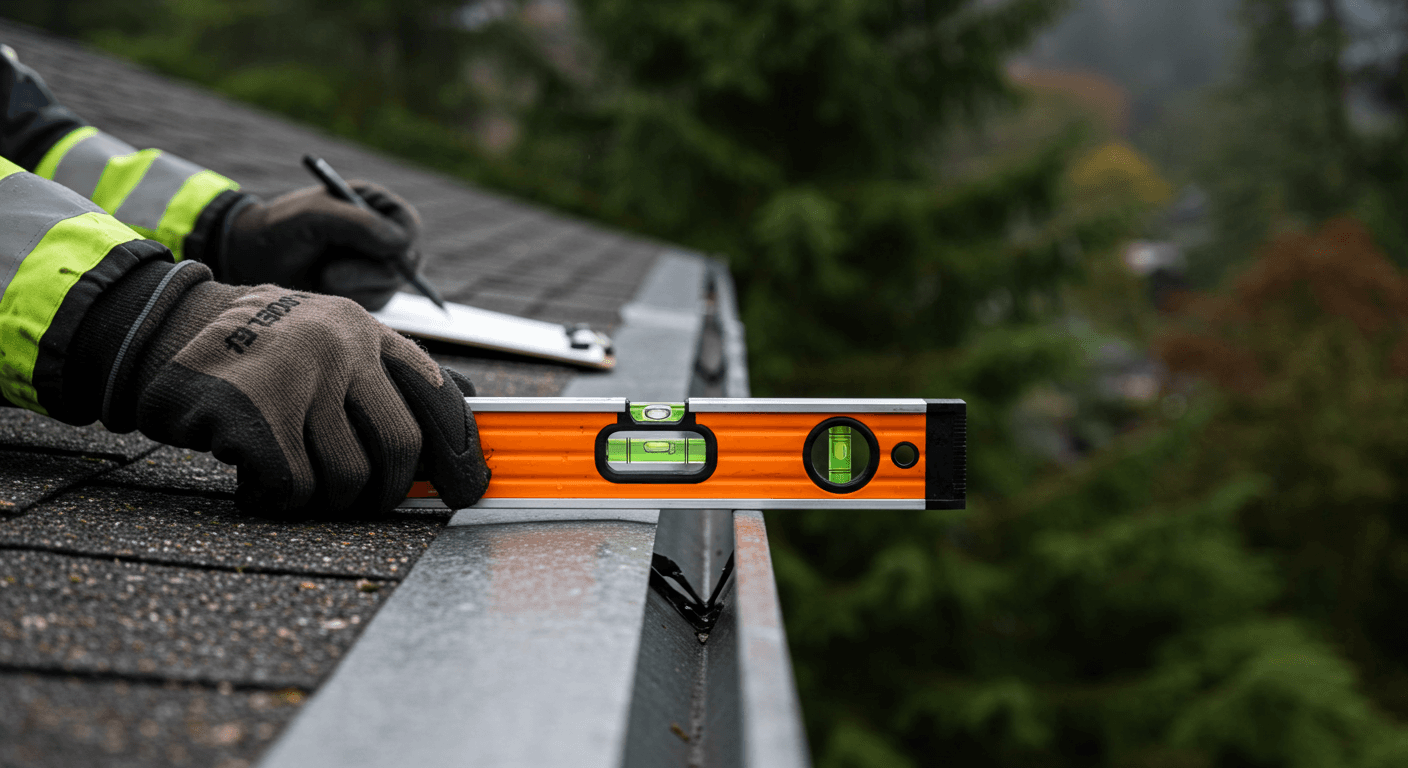
Hydraulic pitch pass: use a four foot level or laser to hold about a half inch of fall per ten feet toward the downspout.
Fastener and miter stress pass: tug hangers to solid wood and inspect sealant inside every corner before you wrap.
Standard 2: Shingle overhang and water tracking
Overshoot and reverse tracking both show up in Shoreline and Edmonds complaints.
Homeowners describe it as water jumping the gutter or sneaking behind it. Usually the shingle overhang is too short and wash runs the fascia, or too long and heavy rain skips the gutter entirely. Your inspection sheet should include a real measurement, not a shrug.
On high-volume rain strips we like roughly three quarters to one inch of overhang. Less gets a gutter apron. More may need a tuck or a careful trim plan. If you are running gutter machines inside your exterior workflow, custom lengths help, but they cannot fix a bad roof line. I have seen shops give up a little over 4% of annual revenue on tracking callbacks that a twelve dollar flashing detail would have caught on day one.
Standard 3: Downspout discharge pathing
Queen Anne and Capitol Hill punish lazy exits.
Tight setbacks and steep grades mean getting water off the roof is only half the story. You need a plan at grade that does not flood a window well or ice a walk during the freezes we pretend never happen.
I coached a rep named Vance who only sold the elevated work. We added a drainage exit audit to his inspection. He carried a small camera, documented bad discharges, and priced extensions and splash plans like a water manager instead of a commodity bidder. Average ticket moved from $2,140 to $2,895 once the scope told the full story.
The five-gallon flow check
"Before you load ladders, pour five gallons at the high point of the longest run. If it does not reach the downspout in about forty five seconds, pitch is shy. Two minutes on site beats a homeowner calling about standing water."
Standard 4: Miter sealant consistency
Humid air and dirty aluminum are the enemy of a clean bead.
Leaky corners still drive a large share of Western Washington warranty calls. Crews often own good sealant, then wipe it over damp metal. In our climate, clean the joint with denatured alcohol first, then seal.
Make the lead photo the inside of every miter before leaving. It forces a real look, and it gives you dated proof if someone claims three years later that nobody sealed anything. When techs know the photo is mandatory, workmanship tightens without you hovering. Measurement changes behavior.
Standard 5: Machine calibration and maintenance
Twisted stock eats labor on every foot.
Profile quality follows the machine. Misalignment introduces camber or twist that fights pitch on long runs. Once a month, run a twenty foot sample, check flatness and level, and look for finish marring or curl that signals setup drift.
A Tacoma contractor blamed crew speed until we watched them fight a bad coil path. Forty extra minutes per job disappeared after a professional calibration that cost about $1,200 and saved roughly $9,000 in labor inside six months. The machine is part of QC, not only the shop corner.
Standard 6: Hydraulic pitch signed off in the field
Levels, lasers, and the bucket test need a named owner.
Tie standard six to whoever runs the final walk. They confirm fall to outlets, verify downspout straps and shoes, and run the quick water pass when the roof allows. Document who signed the hydraulic check the same way you document photos. Ambiguity is how callbacks survive "we thought Mike did it" culture.
Skipping drip edge documentation
If you see missing or reversed drip edge and keep quiet, you inherit the roof-to-gutter story. Price the fix, or get a written waiver that states you are not responsible for tracking tied to roofing defects.
Standard 7: Close-out proof and crew skin in the game
You cannot be on every driveway. Build incentives that mirror the cost of a truck roll.
Pair photo rules with a simple margin share. When a crew clears a month without a valid callback, share a slice of the overhead you did not burn. If a callback costs about $418 and they avoid three, that is roughly $1,254 you kept. Handing the team $150 of that found money often beats another safety speech.
Clear intake helps too. When you start with verified scope and cleaner job details, trucks roll once with the right ladders, heights, and fascia expectations. Surprises are where standards collapse.
High standards need jobs that reward them. If you only chase price shoppers, the extra minutes look expensive. Preview exclusive, verified gutter opportunities so you are bidding homeowners who want dry basements, not the lowest bidder who ignores rot. Seattle shops that own the no-callback story win on value, not on skipping the audit.
What holds the margin on gutter work
Callbacks are a scheduling tax. Protect the next job slot the same way you protect copper prices.
Treat gutters as hydraulic design: wood, roof edge, pitch, discharge, and sealant all tie together.
Photos and quick water tests are cheap insurance compared to I-405 at 4:30 PM.
Crew incentives beat lectures when you connect saved truck rolls to real dollars.
Closing thought
Rain is not the enemy. Sloppy close-out is.
Seattle is expensive and crowded. Every backward truck roll trims the week you planned. Lock these seven inspection habits into a simple checklist, train once, then audit like you mean it. You are building a machine that keeps profit on the books, not on the road.
Noah ParkerSales Performance Coach, LeadZik