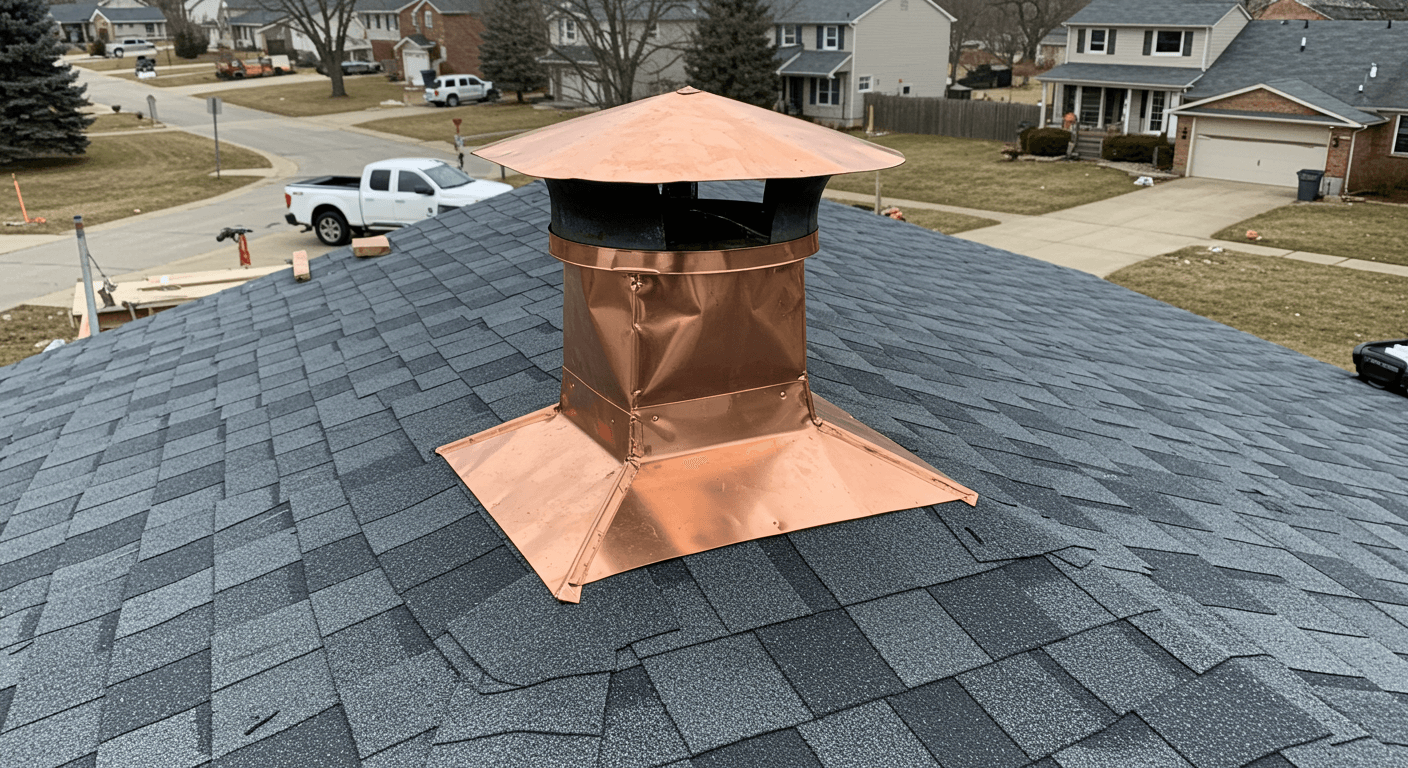
When your durability checklist lives in someone's head, margin rides on whoever showed up that morning. In Michigan you also get roughly 64 freeze-thaw swings in a typical winter, so code-minimum flashing is not a strategy. It is exposure. Shops that run a written water management playbook usually see warranty labor spend fall by about 31% while homeowners stay quieter through the spring thaw. This walkthrough is the transition-point protocol one Grand Rapids crew used to cut callbacks 43% inside two seasons.
Table of Contents
The code floor is not a profit plan
Passing inspection in Detroit or Grand Rapids still leaves you on the hook when water finds the path of least resistance.
Plenty of owners treat the Michigan Residential Code as the finish line. In practice it is the starting gate for keeping a license, not a recipe for a dry deck twenty years out. I dug through books for Nolan in Lansing when his 14.8% net margin kept bleeding into nuisance leaks after the snow melted.
The failures were not in open field. They clustered at kick-out flashings and chimney shoulders. Crews were legal, but they were shedding water instead of steering it. On a busy board, that gap is often the difference between clearing about $9,200 on a job and eating a $1,450 loss after three return trips.
Measured as fewer warranty truck rolls once transition photos were mandatory before shingles hit the deck.
What actually held the margin
Transition priority: park most QC time on plane changes, not the big open fields.
Climate-specific specs: valleys and rakes in Michigan often need more ice shield and metal than generic manufacturer minimums.
Callback math: a single warranty truck roll can clear $640 once you add fuel, labor, and the slot you did not sell.
Consistency: a short photo set for every chimney and wall tie-in beats a verbal promise from the foreman.
Michigan forces two different rain plans
Traverse City snow loads and Ann Arbor wind-driven rain do not belong on the same detail sheet.
Cold-climate guidance from the National Roofing Contractors Association (NRCA) keeps pointing owners toward ice dam protection and ventilation discipline. Skip that pairing and you are planning for premature failure, not a long service life.
If you flash a 4:12 the same as a 10:12, capillary action will invite moisture under tabs. I have watched shops give up almost 9% of annual revenue because valley lining never changed with pitch. The fix is operational: name the detail, train it once, audit it every time.
Standard installs versus a durability-first water plan
| Detail | Standard install (higher risk) | Durability playbook (lower risk) |
|---|---|---|
| Valley treatment | Woven valley with baseline underlayment | Open metal valley with ice and water shield backing |
| Ice and water shield | Code-minimum 24-inch strip at eaves | 36 to 72 inches based on eave depth and local snow history |
| Wall and chimney metal | Step flashing only, light on counter-flashing | Custom-bent counter-flashing with high-grade sealant at laps |
| Kick-out at gutters | Minimal or improvised termination | Six-inch kick-out at every wall-to-gutter end |
Valley treatment
Ice and water shield
Wall and chimney metal
Kick-out at gutters
Use the right column as your shop standard, then adjust for municipality amendments and manufacturer bulletins.
Three photos before the first bundle
Nolan did not ask people to try harder. He blocked payroll until the file showed proof.
- Deck-to-wall junction. Ice and water shield turned up the wall at least five inches behind siding, photo in the job folder.
- Chimney saddle. Chimneys wider than 29 inches get a built cricket even when the original scope tried to skip it.
- Drip edge overlap. Three-inch lap with sealant at every joint so wind-driven rain cannot sneak behind fascia.
Payroll did not release until uploads hit the CRM. That sounds harsh until Saturday callbacks disappear. Treating photos as evidence also lines up with how we think about verified job documentation: if it is not in the file, it did not happen.
Kick-outs beat courtroom drama
"Install a factory kick-out at the end of every step-flash run. A few dollars in metal and a handful of minutes beats rot repairs that turn into lawsuits once attorneys read Michigan weather data."
Leads have to fund the better detail
If sales chases the cheapest shared lead, you will never pay for 72 inches of ice shield.
When owners tell me homeowners will not pay for upgraded flashing, the real issue is usually lead quality. Shared boards reward price, not craft. The crews I like working with hunt exclusivity so they can show photos, not just shingle brand. Coverage in Roofing Contractor keeps pointing the same direction: performance-based selling wins when durability is the closer.
If you need help filtering for jobs that actually fit a high-detail model, reach the LeadZik team and compare notes on scope before you price another skinny bid.
Action Plan
Rolling out a water management audit
Start with warranty data, not opinions. The goal is a repeatable field standard your newest sub can execute without guessing.
Pull the last twelve months of warranty tickets and tag each one by location: valley, chimney, eave, wall, penetration.
Print a one-page Golden Detail sheet with photos only for chimney, valley, and wall transitions. No paragraphs.
Add a mid-day inspection after tear-off and underlayment, before shingles, so corrections happen while the deck is open.
Require four high-resolution flashing photos in the CRM before the job can close for billing.
Quarterly, stack warranty dollars against the prior year and share the delta with sales so they see why premium specs matter.
Cheap mastic in freeze-thaw
Standard asphalt plastic cement is a poor choice on high-exposure transitions. Michigan swings from brutal cold to hot sun, and budget mastic often checks and cracks inside about three and a half years. Spend a few more dollars per tube on a flexible tri-polymer sealant rated for wide temperature swings.
Efficiency is the scaling lever
Every truck roll you delete is capacity for the next full replacement.
When crews are not chasing drips in Novi or Grand Rapids, that labor can open the next $18,400 roof. Durability is not vanity. It is how you protect the most expensive asset you have, which is skilled time on a steep deck.