Roughly 18.4% of roofing revenue in the Southwest leaks out when schedules stay reactive instead of running on maintenance cycles. Last July I was in the books with a Scottsdale owner I will call Ethan. His crews sat idle three weeks while monsoon claims crawled through carriers. Meanwhile, more than 480 past installs had no real touchpoint for preventative work. In owner interviews across Maricopa and Pima counties, about 64% still treat seasonal maintenance like a side conversation instead of a product line. That is the gap the title is pointing at.
In Arizona we run roofing like an emergency room when the business model wants a clinic. Ignore thermal expansion on concrete tile or UV fatigue on TPO and you leave high-margin service dollars on the table. This is not only about staying busy. It is about moving acquisition cost from roughly $3,940 on cold installs toward repeat service work that often clears the desk closer to $215 when the customer already trusts your name.
Operational gains of seasonal service
Reduces technician downtime by 24% during the shoulder seasons between monsoon and winter.
Cuts customer acquisition costs by 41% by monetizing the existing database.
Increases customer lifetime value (LTV) by an average of $8,642 over a ten-year period.
Prevents emergency-response burnout in crews by smoothing out the production calendar.
The Arizona thermal cycle
Sun and rapid temperature swings do work snow load never did on your crews.
Most roofing guidance still assumes ice dams and snow load. In the Salt River Valley or the Tucson basin the real stressor is sun plus thermal shock, sometimes a 40-degree swing in half a day. On a Mesa commercial walk-through, a supervisor named Jaxon showed me expansion joints that had torn away from a parapet because reflective coating had not been refreshed in four and a half years.
Here, seasonal maintenance is part of keeping a warranty honest. When concrete tile hits 118 degrees in August and a cooler microburst follows, underlayment takes the hit. If you are not tracking those cycles, you miss tune-ups that might bill around $950 to the homeowner while netting the shop roughly 62% margin when labor and material are priced honestly.
The National Roofing Contractors Association (NRCA) positions preventative maintenance as one of the most practical ways to extend system life. For Arizona that means retiring the one-and-done install mindset and treating the roof like an asset that needs a quarterly or bi-annual visit.
Market reality: the "wait for the storm" model
When the schedule only wakes up for weather, overhead still clocks in every morning.
If production only lights up when clouds build, fixed cost devours the good months. I have walked P&L lines for more than twenty-three Phoenix-metro shops. The ones living on ninety-percent storm leads often swing roughly 47% month-to-month on net profit. That volatility makes it hard to keep foremen like Jaxon or owners like Ethan paid for steady leadership instead of constant firefighting.
Volatility shows up as hiring freezes, rushed bids, and crews asked to carry the business on hero hours.
Storm chasing versus maintenance-first routing
| Factor | Storm-led shop | Maintenance-led shop |
|---|---|---|
| Schedule shape | Long flat gaps, then panic stacks after weather | Recurring inspections anchor the calendar |
| Truck miles | One-off repairs scattered across the valley | Clustered tune-ups cut dead haul time |
| Customer record | Install file collects dust until a leak screams | Seasonal notes show what you already fixed |
| Crew experience | Boom-bust pay and unpredictable hours | Predictable service days train junior techs |
Schedule shape
Truck miles
Customer record
Crew experience
The five-year maintenance upsell
"At a major install or steep repair, offer a five-year Roof Health package. Price it around $1,250 upfront or $25 a month, cover two yearly inspections plus light debris work, and you lock the next reroof conversation while service techs stay fed."
When you stage ten tune-ups in one neighborhood instead of chasing singles across the West Valley, fuel and truck wear typically fall on the order of fourteen percent against a reactive route. That is the boring math that separates a $2M shop from a $10M one.
Insurance lag is not a staffing plan
If your only plan for June is waiting on adjusters, you still owe payroll, rent, and insurance. Maintenance gives you something to sell while claims grind. Without it, owners usually borrow from busy months to float quiet ones, which hides the real cost of a storm-only pipeline.
Pre-monsoon work in May and June
Find weak links before they become five-figure interior jobs.
The weeks before the first serious dust event are your highest leverage window. You are hunting failures while homeowners still feel calm.
Three moves that pay for the truck roll
Debris clear-out: pine needles and palo verde bloom love to clog scuppers and internal drains on Paradise Valley or Biltmore flats. A plugged scupper is a shallow pool waiting for a breach.
Fastener audit: haboob wind uplift is real. Walk the perimeter for loose flashing, slipped tile, and sketchy starter courses before the sky turns orange.
Sealant refresh: Arizona UV turns premium sealant brittle. If a pipe jack has gone 3.2 years without attention, assume cracks until you prove otherwise.
I have watched a two-hour pass surface over $4,200 in legitimate follow-on work. That is not sleazy upselling when the roof needs the repair to survive the next wind event. It is documentation and advocacy.
Post-summer UV audits
October is revenue if you treat sun damage like storm damage.
When heat breaks, most Arizona roofers exhale. That is when Aria, a Flagstaff contractor I work with, leans into thermal imaging. She shows homeowners where insulation quits and where moisture sat under membrane through the wet months. Average ticket size climbed about 29% once the conversation moved from guesswork to pictures.
Action Plan
Seasonal checklist rollout
A practical way to operationalize maintenance without building a second company inside your company.
Segment the last three years of installs by ZIP and roof type so messaging matches tile, shingle, and flat realities.
Write a twelve-point Arizona Survival checklist per material family, not one generic form that ignores scuppers.
Thirty days ahead of monsoon prep or the winter cool-down, send a short video or email that names their roof type and neighborhood risk.
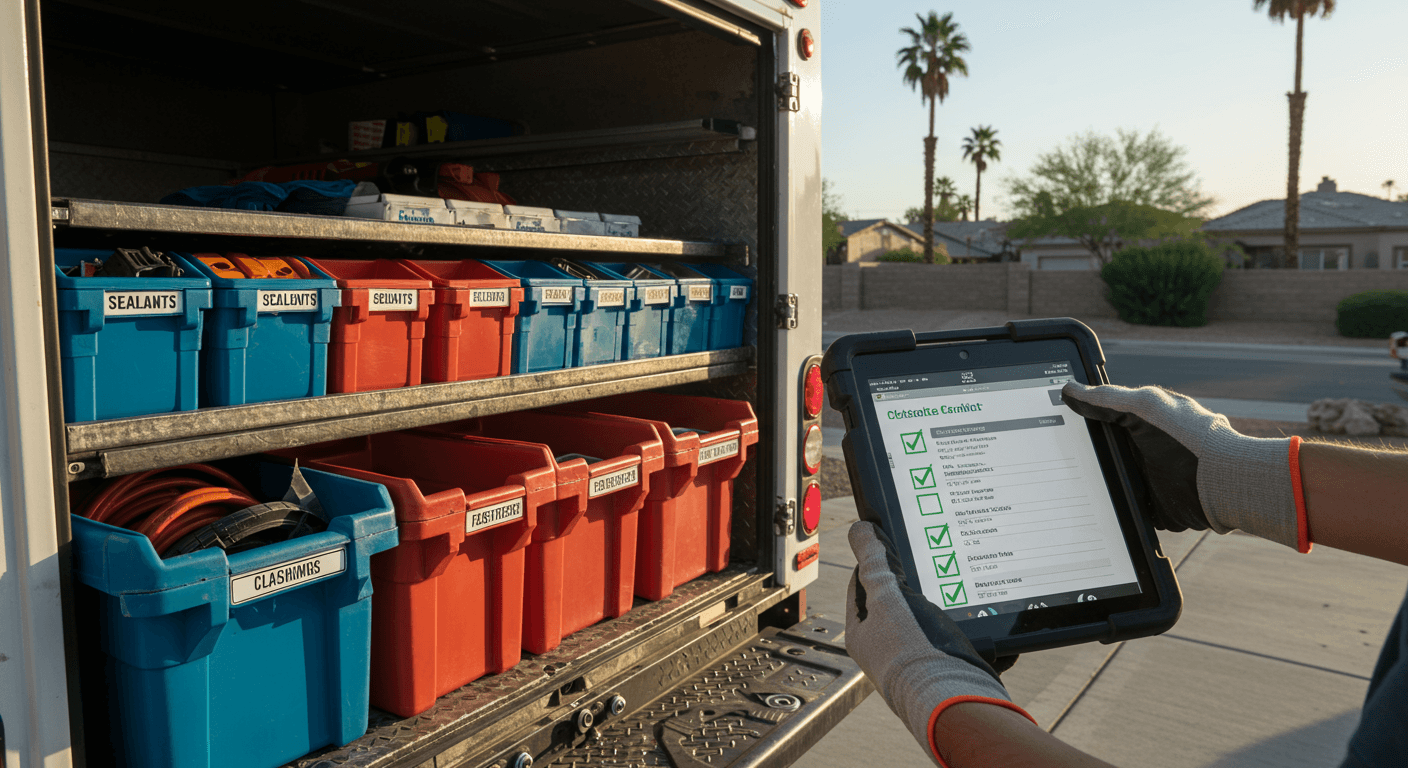
Arm service techs with tablets for before-and-after photos on every line item so sales and warranty files stay aligned.
Track inspection-only visits that convert to repair tickets so you know true ROI instead of guessing from gut feel.
Staffing through a real service lane
Good techs want hours every week, not a lottery ticket.
The labor complaint I hear most is that solid installers are impossible to find. In practice, solid installers want forty hours, fifty-two weeks a year. A maintenance lane gives you work in November instead of layoffs.
A recent Roofing Contractor industry piece put labor shortage at the top of the growth barrier list. A checklist-driven service department becomes the bench. New hires learn debris, photos, and customer tone while masters stay on complex flashing. That ladder keeps people from leaving for a dollar an hour at the shop down the street.
When the board still looks thin
Pair database work with selective new demand you can see before you commit.
Even disciplined shops hit quiet weeks. That is when lead strategy needs to be picky. Blind shared lists that pit six bidders on a price shopper waste truck time.
Shops that stabilize revenue often start by reading how lead previews and refunds work so they know what they are buying. When a Chandler crew finishes early and a verified repair three miles away already has scope photos, you turn a half day into billable hours instead of windshield time.
ROI on a five-year "Roof Health" plan
Model the subscription, then count found repairs.
If five hundred customers buy a $450 annual plan at a fifteen percent conversion, that is $33,750 with almost no media spend. The quieter win is discovered work. On recent programs, about three out of ten inspections surfaced repairs averaging $1,142. Stack that against lower repeat CAC and less competitor access to the same deck, and the payback clears four hundred percent once the process is honest.
If the pipeline feels thin or storm chasing is chewing your sleep, step back to operational ideas on the LeadZik blog and compare your service cadence to your install volume. A checklist-driven department is balance-sheet hygiene, not a charity program for homeowners.
East Valley shops I know moved from low-bid panic to calm high-margin service work once seasonal protocols stuck. It takes discipline to park for an inspection when a reroof lead is flashing on the phone. The crews that stay with the long game tend to own the zip codes they want.