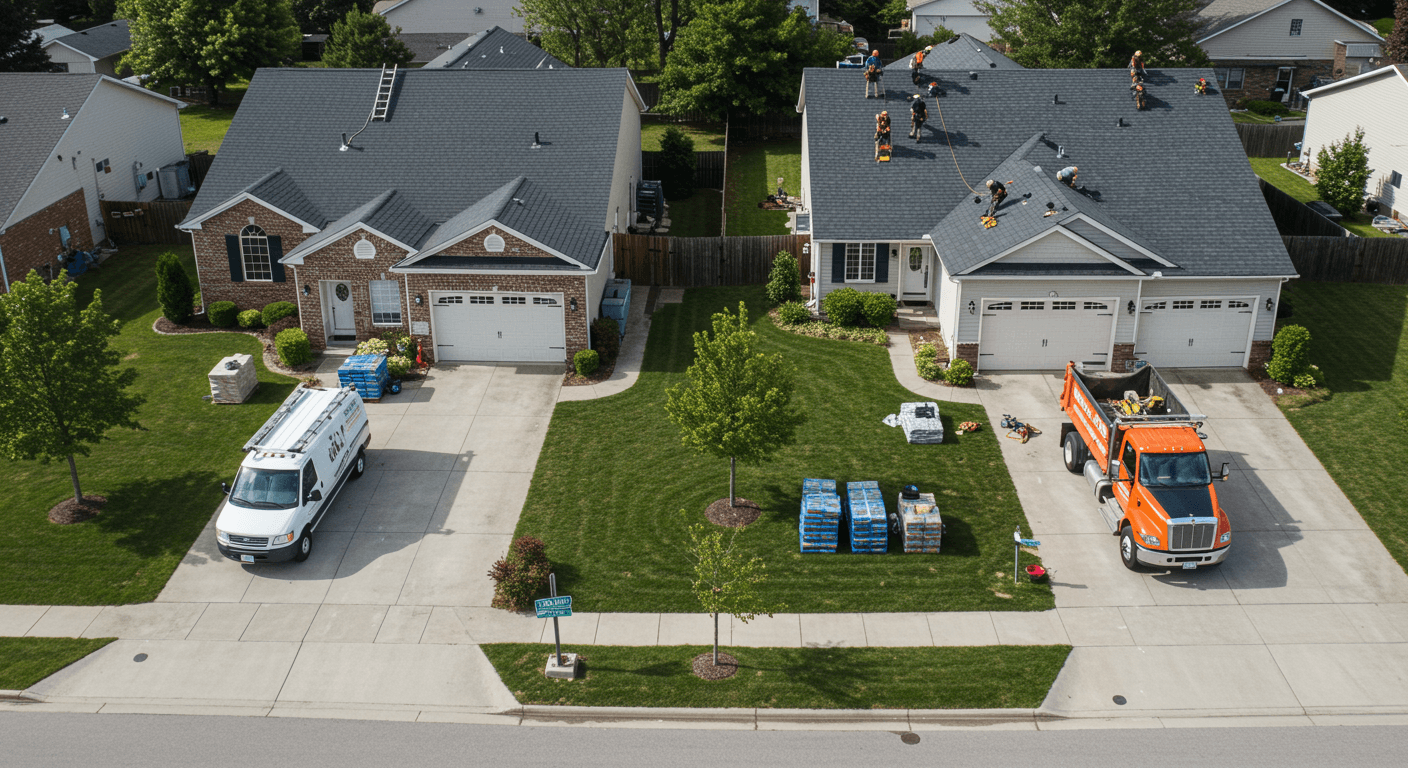
Picture a steep hip roof, bright sun, and a homeowner who swears a tube of sealant should quiet a twenty-year-old laminate field. Up top, decking is soft and two rafters already tell the story. On the street, a loaded service van idles while the conversation stays stuck on patch pricing. That is not a weak pitch. It is a routing mistake that burned $421 in labor and fuel before the first fastener came out of the pouch.
Plenty of owners still believe any skilled rep can flip a repair mindset into a replacement close on the spot. Across forty-seven roofing operations I have tracked, the data rarely agrees. Send a repair-first tech toward a full tear-off, or park a high-ticket closer on a tiny shingle swap, and you are not only losing hours. You are shaving net margin by about 14.8% on every poorly matched field send.
Where margin quietly leaves
Across monitored shops, more than 63% of repair-labeled calls on roofs past eighteen years were immediate replacement work once age, deck, and tab integrity were read honestly.
Moving chronic leak triage off senior estimators saved about $194 per visit in blended labor in the Midwest audit because master rates were not subsidizing patch work.
When teams confirmed roof age and material with locked previews before buying demand, customer acquisition cost dropped roughly 22% inside the first quarter.
Calling full replacement early lifted insurance supplement success by about 11.6% because photo sets and line items matched the real assembly from the first visit.
The hidden tax of the do-everything estimator
A foot in the door is not a strategy if the wrong feet keep climbing ladders.
Old playbooks treat every wet ceiling like a win so long as someone shows up. The problem is chemistry. The calm, puzzle-solving temperament that finds a sneaky sidewall leak is not the same wiring that holds financing, timeline, and full-roof risk in one conversation. Stack both jobs on one person and you build a generalist choke point.
I recently audited a Midwest shop whose replacement count had gone flat. Their best closer was spending more than a third of the week on leak investigations. Fewer than one in ten of those visits turned into full roofs. The rest were small patches the rep did not want on the books, so homeowners drifted away without a clean proposal. After repair triage moved to a junior tech and closers stayed on verified full-roof opportunities, monthly revenue jumped by $82,300 inside sixty days.
Repair discipline versus replacement selling
| Focus | Service tech (repair) | Production estimator (replacement) |
|---|---|---|
| Primary goal | Stop water, document defects | Long-term assembly, ROI story |
| Core skill | Flashing detail, moisture tracing | Scope control, finance, psychology |
| Typical lead cost band | $45 to $85 | $180 to $350 |
| Average ticket band | $350 to $1,200 | $12,000 to $28,000 |
| Margin profile | High percent, low dollars | Moderate percent, high dollars |
Primary goal
Core skill
Typical lead cost band
Average ticket band
Margin profile
The chart is not about good versus bad people. It is about matching expensive talent to the economic shape of the ticket.
Why 14.8% margin erosion is not melodrama
Burdened vehicle and labor math turns small misfires into annual leaks.
Separating lead types is not a culture preference. It is arithmetic. Fully burdened costs to put a specialized roofing rig on a residential driveway often land between $175 and $260 before boots hit the ground, a range that tracks what operators report in Roofing Contractor coverage on field economics. If a senior tech who should be running cedar restoration is instead burning three hours on a ridge vent drip, the hidden cost is whatever that person could have produced on the right job.
Aggregated shop data where repair and replacement demand were blended without scoring, then normalized for labor burden and average contract size.
Shops that refuse to classify demand at the phone or form lose roughly that share of potential annual profit through misfired logistics alone. It is quieter than a bad marketing month, which is why it survives budget reviews.
Do not let intake mirror the homeowner story
People understate damage to avoid a big number. If your script only asks what is wet, you inherit their blind spots. Build questions that force age, prior repairs, and storm history into the same breath.
A three-signal intake filter before you commit a ladder
Age, repeat intrusion, and visual facts beat hunches every time.
First, age against rated life. When reported age clears about eighty-two percent of expected life on a common twenty-year laminate, treat the ticket as replacement-first. Material science in the final fifth of life gets brittle fast, which is why trade guidance from the National Roofing Contractors Association (NRCA) matters beyond code minima. Granule washout and tab cracking are not cosmetic trivia when you still have to warranty the fix.
Second, count prior water events. Two meaningful repairs inside twenty-four months usually means the system is done pretending. A third patch is brand risk and a bad use of their checkbook. Third, insist on facts, not vibes. Square footage, pitch class, and laminate versus strip profile change economics fast.
One practical way teams tighten this is to lean on workflows that show locked previews before purchase so dispatch sees roof massing cues instead of a one-line form. Read how verification and delivery line up on LeadZik's how-it-works page, then mirror the same discipline inside your CRM stages.
Three intake signals to log on every repair call
Reported age versus manufacturer-rated life, including second-layer notes if present.
Count and dates of prior intrusion repairs, not just the current stain location.
Squares, pitch bucket, and shingle class captured before you promise a same-day climb.
Brittle tab read in the first few minutes
"Train estimators to lift three tabs gently early in the visit. If laminate tabs crack near a forty-five degree flex, stop selling a patch story. Pivot language to non-repairable assembly status and tie it to warranty reality before tape measures become a debate prop."
Exclusive replacement demand versus shared micro-bids
Cheap shared pings often buy you a sprint to the bottom, not a customer.
Shared repair leads priced like carnival tokens look efficient until you count the hidden sprint. Five other companies see the same ping, which means you paid for the privilege of racing on price for work you never wanted on the calendar.
Exclusive, verified demand costs more per ping, but the cost per signed contract often falls because you are not re-selling yourself on commodity patches. If you want to test that trade without rewiring the whole budget, open a LeadZik account with $150 in starter credits and aim filters at replacement-heavy previews only. Keep score on signed dollars, not raw lead volume.
When a repair call is really an insurance story
Storm context belongs with restoration specialists, not patch crews.
A meaningful slice of repair language is retail-to-carrier work hiding in plain sight. When intake hears recent hail or wind in the neighborhood, route the ticket toward your experienced storm desk before someone orders flashing parts for a field that should be totaled.
In a 2023 slice I reviewed, more than a fifth of skylight leak tickets carried enough collateral hail on surrounding slopes to justify a carrier-funded replacement. A narrow flashing fix would have cleared the symptom while leaving five figures on the table. Storm routing at intake, plus preview photos when available, captured about $12,600 more revenue from the same address once the right specialist opened the file.
Action Plan
Seven routing moves that keep replacements on the right desk
Use this as a weekly ops checklist. None of these require new software on day one, but each one assumes you track source, age, and outcome like a serious contractor, not a hobbyist.
Split chronic leak chasing from full-roof estimating, including a junior path for repeat low-ticket callbacks.
Default replacement evaluation when reported age clears roughly eighty percent of rated shingle life for that product class.
Treat two meaningful water repairs inside twenty-four months as a compromised system and escalate before booking another patch visit.
Confirm squares, pitch bucket, and laminate versus strip profile at intake so dispatch matches economic reality.
When wind or hail context shows on the call, route to storm restoration before a repair tech orders parts.
Shift spend away from shared micro-bids and into exclusive demand when closed-contract cost is your scoreboard.
Add a small diagnostic fee with credit-on-hire so serious homeowners self-select before estimator calendars fill.
Capacity is the inventory you cannot warehouse
Say no to the wrong sends so yes still means something on big roofs.
Senior closers are finite. Every hour spent arguing someone out of a two-hundred-dollar band-aid is an hour not spent on a twenty-thousand-dollar assembly. Tight intake, honest classification, and selective buying of verified demand are how grown shops protect margin without sounding clever on LinkedIn.