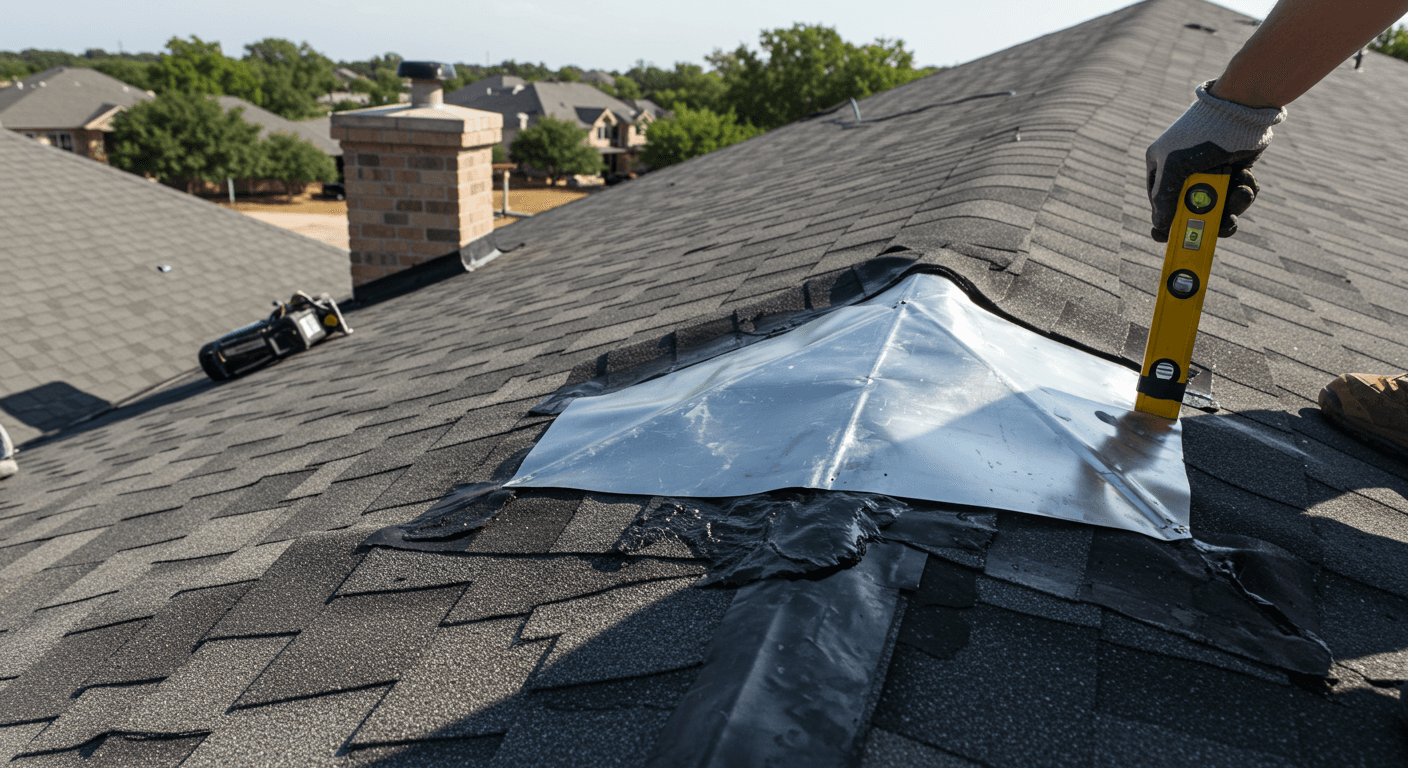
$3,142 in unrecovered overhead is the average price tag for a single leak-related callback in the DFW metroplex when you count lost crew momentum. That number is not only the labor for a localized repair. It also reflects the 6.4 hours of production time that vanishes when a lead technician leaves a $14,800 installation near Lake Arlington to chase a weeping chimney backer. Each time you route a lead tech back to a finished job, your effective hourly rate across the whole company drops by an average of 14.7%. In a market where labor is tight and material pricing still swings, durable water management details are not a quality control hobby. They are margin protection.
The weight of that showed up during a systematic audit of a mid-sized shop working out of North Arlington. We reviewed 83 completed projects across 14 months and found that 72% of warranty claims traced to three transition families: valley terminations, skylight crickets, and step flashing at the wall-to-roof interface. Crews were technically meeting local code, yet assemblies were failing under the thermal swing pattern North Texas throws at laps and sealants.
What ridge and transition discipline buys you
Treat flashing, underlayment, and ventilation as one system. When one layer is code-minimum, the other two rarely make up the gap under wind-driven rain.
Photo every valley, cricket, wall step, and ridge vent cut before cover. Time-stamped proof shortens warranty debates and keeps supplements tied to real build conditions.
Standardize a truck kit with heavy valley metal, premium sealant, and extra ice and water rolls for Interlochen-style cutups so crews are not guessing at the supplier counter.
The Arlington variable: why generic details fail
Tarrant County heat, fast evening cool-downs, and airport-adjacent wind change how laps behave across a year.
Regional climate loads a specific stress profile that basic manufacturer pamphlets rarely spell out. You get 100-degree decks followed by rapid cooling when a thunderstorm hits, so metal, asphalt, and wood expand and contract on different clocks. A crew that defaults to light galvanized flashing or skips a gutter-line kick-out is asking that seal to survive dozens of harsh cycles annually.
Some ops teams still frame water management as a shingle issue instead of a system issue. A steep-slope job in Interlochen is not solved by standard underlayment alone. The gap between a 15-year roof and a 30-year roof is often the few hundred dollars in upgraded transition materials that never make the proposal because they are not priced as a line item.
Most of that bleed is not catastrophic failure. It is small weeps that steal senior tech hours and compress the week you had already sold.
The drip edge trap
Many Arlington contractors assume a standard D-style drip edge is enough near high-wind corridors by the airport. Without at least a 2.5-inch deck flange and clean overlap sequencing, wind-driven rain can sneak behind the starter course. Fascia rot from that bypass commonly runs $1,240 or more to fix under warranty when the homeowner notices staining first.
Comparing water management strategies
Three install philosophies we see in Arlington bids right now, with different callback math.
Code minimum versus enhanced durability on Arlington steep-slope work
| Factor | Code-minimum stack | Enhanced durability system |
|---|---|---|
| Metal and valley package | 26-ga galvanized, basic laps | 24-ga pre-finished, taped laps where spec calls |
| Underlayment plan | Basic felt or low-end synthetic | Self-adhered in valleys and penetrations |
| Ventilation at ridge | Standard plastic ridge vent | High-profile ridge vent with matched intake |
| Labor per 10 squares | Near 18.5 man-hours | Near 20.2 man-hours |
| Typical 36-mo callback signal | Near 12.4% on leak callouts | Under 2.1% in our file |
Metal and valley package
Underlayment plan
Ventilation at ridge
Labor per 10 squares
Typical 36-mo callback signal
Premium residential upgrades in Viridian-style neighborhoods often add a copper and zinc package for algae control plus a written lifetime workmanship wrapper. Expect roughly 23.8 man-hours per 10 squares and a 15% to 20% price lift that only works when the folder proves the build.
On the enhanced track, modeled spend lands near $845 above a code-minimum residential shell while callback pressure falls hard enough that each dollar in upgraded details tends to return about $3.42 in profit that would otherwise fund warranty trucks and office firefighting.
Action Plan
Field implementation: the flashing photo gate
Better metal does nothing if nobody checks it before shingles hide the laps. This is the lightweight process Jaxon-style managers use to keep Arlington crews honest without adding another full-time inspector.
Crew lead photographs valley metal, ice and water, and cricket framing before any field shingles bridge the channel.
Upload the set to the job file with a timestamp so sales and production share the same evidence if a homeowner calls months later.
Wall step and skylight kits get a second photo after sealant and fasteners, not only before shingle cover.
Night-before review: production glances at the album for missing pieces instead of discovering them from a ladder in the rain.
Crew safety while detail work slows the deck
More minutes on slope means fall protection has to stay boring and consistent.
Detailed flashing work keeps people on the roof longer, which makes the basics matter more, not less. OSHA's Stop Falls campaign is a good reset for foremen: guardrails, anchors, and staged material so techs are not rushing laps because a storm cell is pushing the schedule.
Documentation also protects the balance sheet. When a homeowner reports a leak two years out, a dated photo set beats a memory contest every time.
Mobile discipline
"If your team already runs intake from a phone, mirror that habit for quality. A simple rule is one photo album per job that lives beside the material list so nobody drives across town without the ice and water rolls a cut-up Arlington deck actually needs."
The same discipline applies when a lead pings while crews are mid-build. A mobile workflow for alerts and claiming keeps dispatch from yanking focus away from the valley that still needs a final lap check.
Truck kit staples for North Arlington cutups
Heavy-gauge valley metal with extra straight lengths for long runs
Two full rolls of self-adhered membrane beyond the takeoff buffer
Kick-out and diverter pieces staged before wall metal gets covered
Color-matched sealant rated for metal and shingle contact
High-profile ridge vent bundles matched to intake calculations
Labor supply and long-term scalability
When veteran flashers retire, your process has to carry the craft.
The Bureau of Labor Statistics outlook for roofers still shows demand climbing while the pool of installers who grew up on hand-cut chimney flashings shrinks. That mismatch pushes owners to codify details instead of betting on tribal knowledge alone.
When water management becomes a repeatable kit on every truck, you cut on-site decision fatigue. Each crew pulls the same valley tin, the same premium sealant, and the same cricket notes for oversized masonry. That consistency is how a roofing company can climb from about $2M to about $8M without warranty volume eating the extra gross margin.
Intelligence Deep Dive
Ridge math is overhead math
"If the ridge vent opening is starved while intake is choked by poor drip sequencing, hot decks exaggerate nail line movement and callbacks spike even when the shingles look new from the curb."
Common Questions
Training crews for durability, not speed alone
A wet mockup beats a slideshow when you need buy-in on laps.
Once a quarter, stage a wet test on a practice deck. Flash the mockup, then hit it with a hose on a focused spray pattern for fifteen minutes. Installers quietly learn how water climbs a short lap through capillary action when the overlap should have been four inches instead of two.
The shift is cultural: move the brand from shingle applicator to water management partner. Arlington homeowners already read storm blogs and HOA letters. When your process proves you plan for the next ten years of Texas weather, the exclusive Arlington roofing jobs you pick up on LeadZik meet a sales story that is grounded in photos, not slogans.
Quarterly wet test
"Pair the hose drill with a quick scoring sheet for laps, cricket width, and nail-line clearance. Rank crews on prep quality, not only squares installed, so foremen compete on leak prevention instead of rushing cover boards."