Would you actually trust your son or daughter to run your roofing business in its current state, or are you just handing them a 60-hour-a-week headache that will likely collapse within 3.4 years of your retirement?
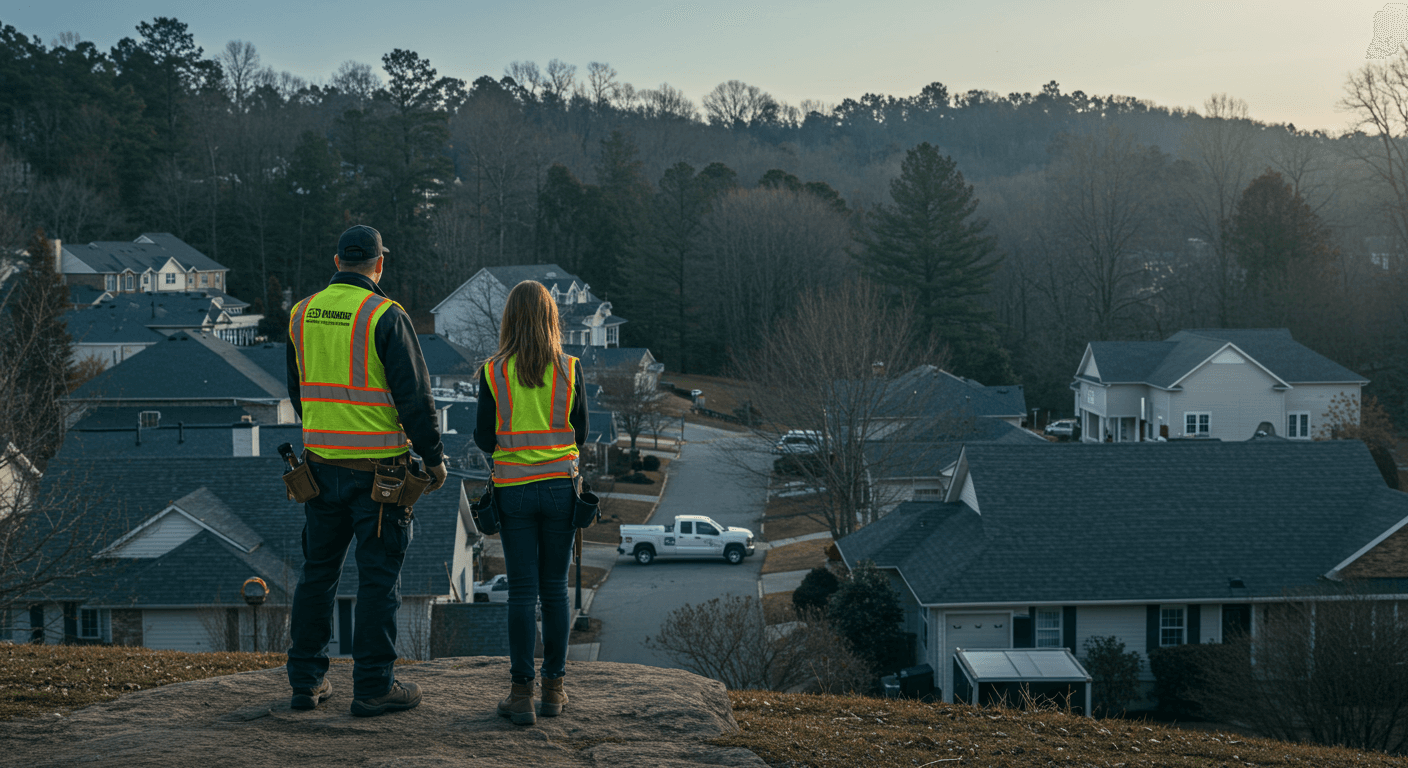
I was standing on a job site in Sandy Springs about 14 months ago with a contractor named Wesley. He was 58, his knees were shot from three decades on pitches, and he was trying to figure out how to hand the reins to his daughter, Yara. Wesley had built a solid reputation in North Atlanta, but his "systems" were a disaster. His lead tracking was a stack of coffee-stained folders on the dashboard of a 2019 F-150, and his sales process lived entirely inside his own head.
We looked at his numbers and realized that while he was doing $2.14M in annual revenue, his net profit was hovering at a shaky 9.3%. If Wesley stepped away, the business didn't just slow down (it stopped). That isn't a dynasty; it is a job you happen to own. To turn a local roofing shop into a legacy that survives the Atlanta market's brutal competition, you have to move from being the primary laborer to being the primary architect of a system.
Average annual revenue increase for family-run shops implementing formal SOPs within the first 14 months of a leadership transition.
At a Glance
Systematize the sales process to ensure 15% minimum net margins regardless of who is running the estimator tool.
Prioritize lead verification to protect the next generation from wasting 22+ hours a week on "tire kickers."
Invest in field-ready technology that allows real-time oversight of crews across the I-285 perimeter.
Implement a 5-year apprenticeship model for family members to ensure they understand every role from the ground up.
The Identity Crisis of the 2.4-Year Transition
Most family roofing businesses fail during the first 2.4 years of a hand-off because the founder is a "doer" and the successor is expected to be a "manager" without any tools to manage. In Wesley's case, we had to dismantle the idea that he was the only one who could estimate a job in Buckhead or Marietta.
The first milestone in building a dynasty is documenting the invisible. If you don't have a written protocol for how a lead is greeted, how a roof is measured, and how a crew cleans up a job site in Gwinnett County, you don't have a business to pass down. You have a collection of habits. We spent 4.7 months mapping out every single touchpoint of a customer journey. We found that by formalizing the follow-up process, Wesley's "no-bid" rate dropped by 18.2% almost overnight.
The Operations Playbook: From Tailgate to Tablet
Succession planning in the Atlanta metro area requires a shift in how you handle field data. The humidity and the sudden afternoon storms in July mean your crews need to be agile. When Yara took over the operations side for Wesley, she implemented a mobile management system that allowed her to track three different crews in Alpharetta, Decatur, and Smyrna simultaneously.
Before this, Wesley was driving 112 miles a day just to "check in." That is a massive waste of executive time. By using a centralized app, they reduced their fuel costs by $642 per month and increased their crew's daily output by 14.6%.
You also need to look at how you are training the next generation of installers. Building a dynasty means you aren't just hiring warm bodies; you are building a culture of expertise. According to the Bureau of Labor Statistics guide on becoming a roofer, on-the-job training and apprenticeships are the lifeblood of the trade. If your family business doesn't have a formal training program for your non-family hires, you will forever be held hostage by sub-crews who don't share your last name's commitment to quality.
The 48-Hour Feedback Loop
"Implement a rule where every job site photo is reviewed by the office within 48 hours. In the Atlanta market, where storm damage leads to high-volume turnover, this catch-all prevents $3,200 re-work orders before the shingles are even settled."
Scaling Lead Acquisition Without Bleeding Cash
A common mistake I see in multi-generational shops is sticking to "the way we've always done it," which usually means relying 100% on referrals or expensive, unverified shared leads. Wesley was spending $4,830 a month on a lead service that sold the same "damaged roof" lead to six other contractors in DeKalb County.
To build a dynasty, you need a predictable, verified lead pipeline. You cannot expect the next generation to scale the business if they are spending 6.5 hours a day fighting five other guys for a single roof in Lawrenceville. When Yara took the lead on marketing, she shifted the budget toward an exclusive platform where they could see the job previews before committing.
This change moved their lead-to-close ratio from a dismal 11.4% to a much healthier 28.7%. When you know the lead is a real homeowner with an actual need, your sales team (whether that is your son, your niece, or a hired gun) stays motivated. High-quality leads are the fuel for growth; garbage leads are just a recipe for burnout.
The Safety Liability: Protecting the Family Assets
You can build a $10M company, but a single fatal fall can wipe out two generations of equity in a single afternoon. This is a reality we don't talk about enough in our industry. A 2025 BLS report on fatal falls noted that roofing contractors had 110 fatal falls in 2023, the highest in the construction industry.
For a family dynasty, safety isn't just a compliance checkbox. It is asset protection. If Wesley's business was hit with a massive OSHA fine or a wrongful death lawsuit, Yara wouldn't have a legacy to inherit; she would have a legal nightmare. We implemented a mandatory safety audit for every job over 2.5 stories. It cost them an extra $145 per job in equipment and time, but it lowered their insurance premiums by 7.4% after the first year.
Legacy Scaling Models
| Factor | Organic Referral Model | Systems-Driven Dynasty |
|---|---|---|
| Growth potential | Growth capped by owner's personal network | Growth fueled by verified lead pipelines |
| Revenue stability | High volatility in monthly revenue | Predictable 15-20% annual scaling |
| Lead quality | Lead quality depends on 'luck' | Lead quality via strict verification |
| Owner workload | Owner works 65+ hours/week | Owner works 35-40 hours/week on strategy |
Growth potential
Revenue stability
Lead quality
Owner workload
The Atlanta Expansion Map: Strategic Territory Dominance
Building a dynasty means knowing where to plant your flag. Atlanta isn't one market; it is a dozen micro-markets. The roofing needs in the historic districts of Inman Park are vastly different from the new developments in Forsyth County.
Wesley and Yara decided to specialize. Instead of trying to be the "everything roofer" for the whole metro area, they focused their dynasty on high-end residential replacements in the northern suburbs. This allowed them to standardize their material orders (saving 4.2% on bulk shingle pricing) and train their crews on a specific type of architectural shingle.
By the time the 12-month mark hit, their overhead had stabilized at 22.8%, and Wesley was finally taking Fridays off to play golf in Milton. He wasn't worried about the phone ringing because he knew the systems were catching the calls, the leads were being verified, and Yara had the data she needed to make decisions.
That is how you build a dynasty. It isn't about the name on the truck. It is about the math in the office and the discipline in the field.