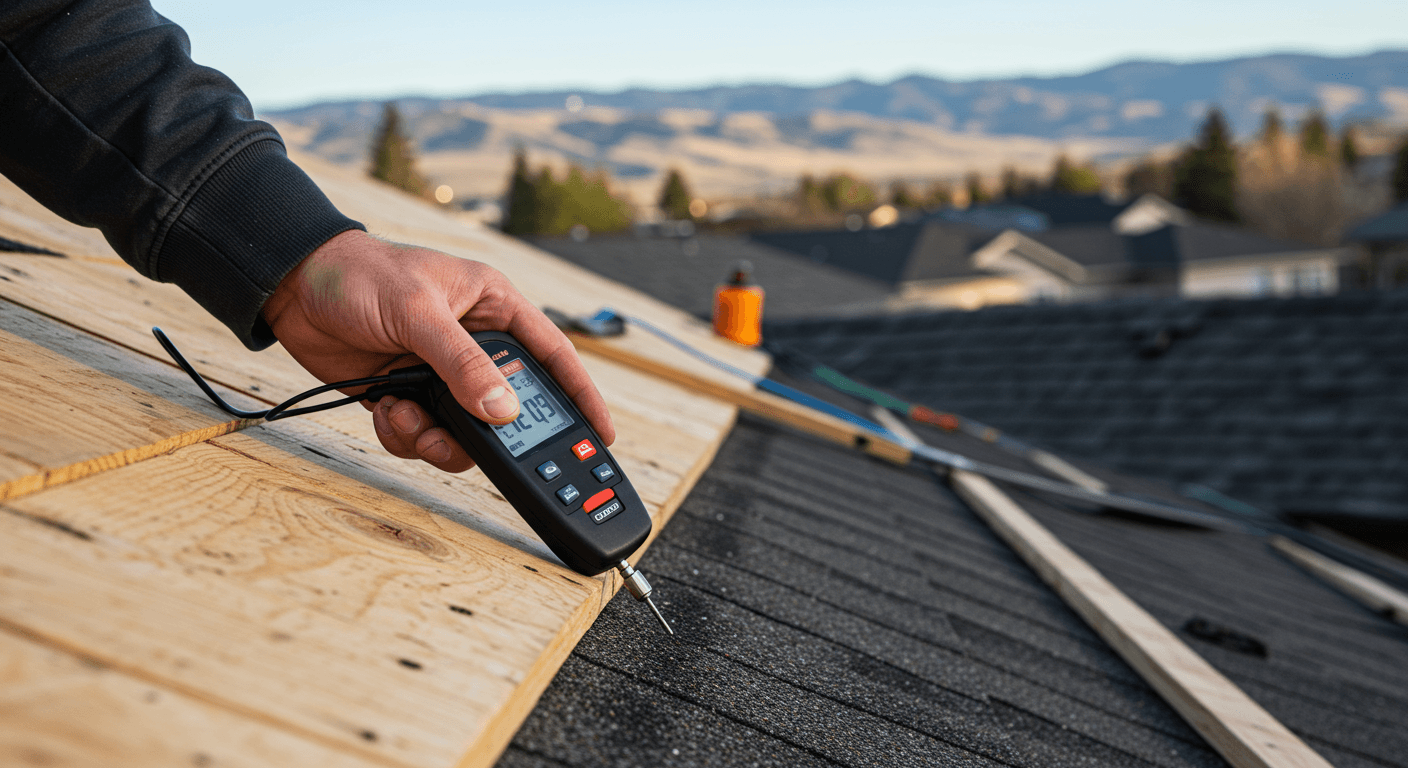
Boise roofing has been squeezed by the same pressure you see across the Treasure Valley: more residential work, tighter carrier language on steep-slope installs in Ada County, and crews asked to cover more squares per week. When speed becomes the default setting, quality control often gets treated like a final walkthrough instead of something that protects margin on the job that is still open.
The expensive part is what shows up later. Shops that push volume in Meridian to chase quarterly revenue north of $3.2M are reporting a 14.7% jump in ghost labor, meaning unbilled hours tied to rework and warranty work. That is not a line item most owners watch daily, which is why it quietly eats the same margin band people hope to recover with pricing tweaks alone.
A smaller set of Boise contractors is doing the opposite. They moved ventilation and flashing checks into mid-install milestones and saw callbacks fall from a local average near 8.4% down to about 1.2%. Shops that document those standards consistently often see warranty-related callbacks drop on the order of 24.3% compared with their old reactive habit, which is the difference between margin that leaks out quietly and margin you can actually reinvest.
On a typical $16,500 residential ticket, that kind of change can put roughly $1,400 back into net profit because you are not funding return trips, extra labor, and office time on the same address. If rework and ghost labor are running near 14.7% of margin today, cutting that load roughly in half gets you into the 11.4% band the headline references, without needing a heroic price increase on every bid.
Where Boise shops usually place their first real inspection
| Control point | Reactive (end of day) | Proactive (mid-install) |
|---|---|---|
| Ice and water at eaves | Visual from the ladder after shingles start | Photo while membrane is exposed and nailed |
| Wall step flashing | Checked if someone remembers at closeout | Close-ups before siding or stucco bridges the joint |
| Ventilation math (NFA) | Often assumed from existing vents | Measured intake and exhaust before ridge cap closes the plane |
| Cost to fix a miss | Typically $600+ once the roof is dried in | Mostly materials and minutes while the deck is open |
Ice and water at eaves
Wall step flashing
Ventilation math (NFA)
Cost to fix a miss
The point is not perfection on day one. It is catching the cheap errors while correction is still cheap.
The hidden cost of the Boise callback
Small fixes on the schedule feel harmless until you add fuel, wages, and the job you did not start.
In the North End or Eagle, owners often describe a warranty run as a quick two-hour touch-up. When you line up the numbers, it is closer to a finance problem. A leak call tied to chimney flashing can land around $642 in direct cost once you count labor, fuel, materials on the truck, and the opportunity cost of that crew not starting a new contract that day.
In roofing, repeatability dies when rework is random. At 250 roofs a year and a 10% callback rate, you can burn more than $16,000 annually on gas and wages alone, before you count reviews, adjuster friction, or the homeowner who tells the neighborhood you were back three times. The SBA guidance on growing a business still applies here: scaling works better when outcomes are predictable week to week. That is the practical argument for standards you can audit, not vibes you assume.
Typical pattern in fast-growing markets: warranty labor and do-overs replace billable install hours without showing up as a marketing problem.
Moving inspections earlier on the calendar
A Nampa-area three-crew operator fixed leaks by changing what counted as an inspection.
I recently reviewed notes from a contractor, Vance, whose shop was sitting near a 9.2% callback rate and eating his seasonal bonus. His inspection was basically a lead tech scanning the roof from the ground before the trailer left. That catches almost nothing that matters for long-term watertight work.
We shifted him to a four-point in-progress standard: photograph ice and water shield at eaves while it is visible, photograph step flashing at every wall intersection, confirm cricket or back pan detail at chimneys, and log pipe boots before shingles hide them. Leak-related callbacks fell about 31.2% in six months because mistakes were fixed while the deck was still open. Post-install fixes that used to run $600 or more dropped toward near-zero labor on most catches.
The 4:00 PM photo rule
"Have the foreman upload five named close-ups (two flashing zones, two penetrations, one ventilation detail) to your CRM before 4:00 PM. If the folder is empty, the job is not complete, even if the shingles look fine from the street."
How quality control shows up on a Boise P&L
Mid-job inspection milestones usually pull warranty labor costs down by roughly 18% once photos and checklists are enforced.
Ventilation standards that match Idaho cold snaps and thaw cycles cut ice-dam callbacks that spike internal damage claims in winter.
Documented flashing and underlayment sequences give you cleaner conversations with adjusters when a storm claim is questioned.
Standard work lets owners delegate field oversight without giving up a high customer satisfaction score on post-job surveys.
Boise-specific ventilation and ice dams
Generic national checklists miss the combination of dry cold nights and fast spring thaws.
In the Treasure Valley, weak airflow is not only a code conversation. It is a callback engine. Ice dams drive interior water damage that can blow past $4,500 per incident once drywall, paint, and mitigation are in play. High-performing crews are adding a simple ventilation audit to the normal inspection path: measure net free area on intake and exhaust, then match products to the math instead of copying whatever was there in 1998.
When you can show a homeowner, or an adjuster, why added intake is not an upsell but a calculated balance, you are doing the same kind of disciplined decision making Harvard Business Review writers associate with healthy small businesses. You reduce liability, shorten arguments, and protect the margin you already priced.
Action Plan
Three-stage quality protocol for Treasure Valley crews
Use it as a backbone, then tighten items for your shingle brand, steep-slope safety plan, and the Ada County amendments you actually pull permits under.
Stage 1, decking and underlayment: replace soft sheets, set drip edge laps, and photograph ice and water coverage before shingle bundles land.
Stage 2, penetrations and flashing: capture chimney crickets, sidewall steps, valleys, and pipe boots while tie-in metal is still visible.
Stage 3, ventilation and cleanup: verify ridge vent continuity, NFA balance, and run dual-magnet passes for loose fasteners so cleanup calls do not erase a five-star job.
Scaling once the job is boringly consistent
Volume only helps if production is not constantly reworking last week.
When inspections are predictable, you can add work without feeling like you are gambling on your best foreman to spend half the week on warranty routes. If you want to test whether Boise demand can support another crew, you can test Boise demand on LeadZik with credits instead of guessing from yard signs alone.
Tighter standards also tighten sales. Reps who know exactly what production will accept stop promising details the crew will not honor. That alignment is why some owners pair field rules with how LeadZik previews leads before purchase, so intake matches the jobs they can execute without breaking the checklist.