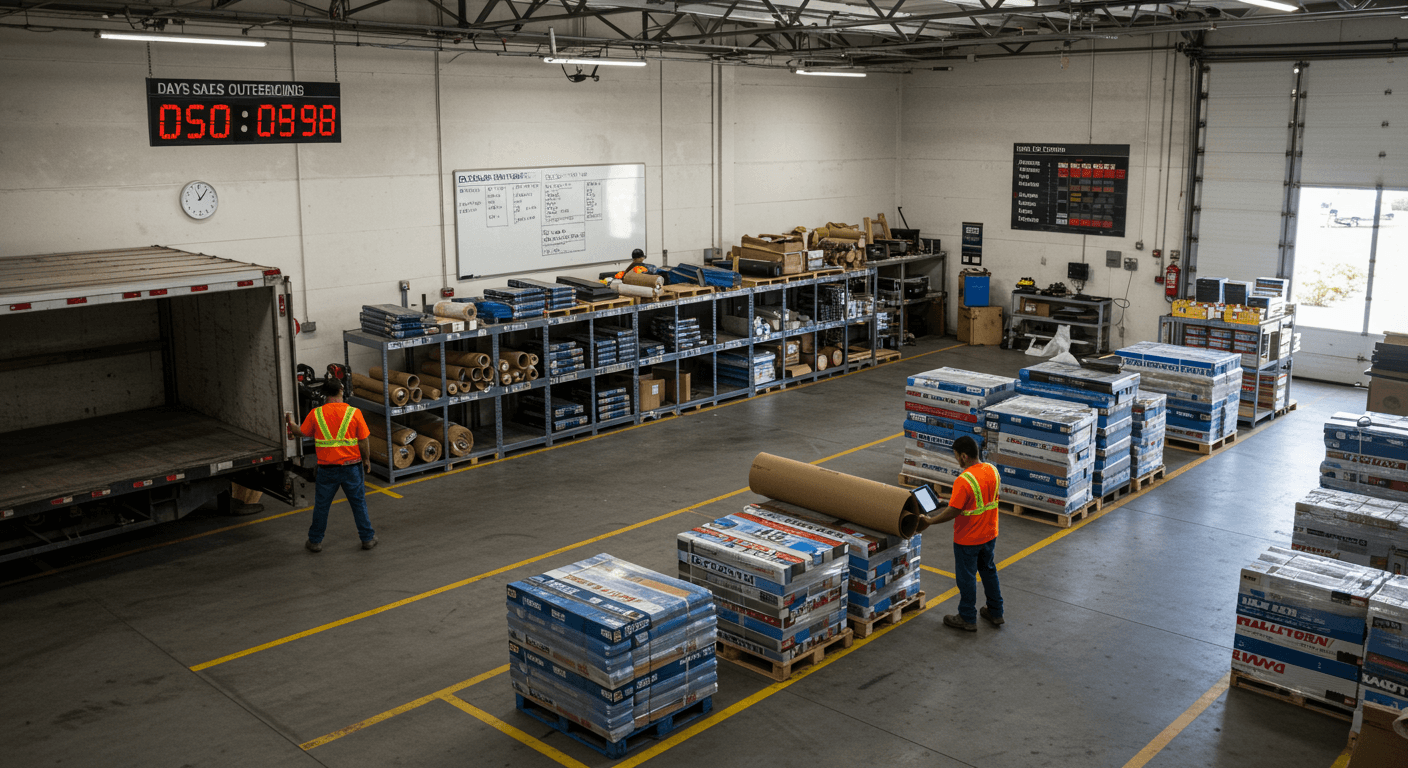
One habit I see across the Central Valley is buying steep-slope stock early to blunt supplier increases. It feels responsible, yet the piles that linger past ninety days can quietly hold the same dollars you swear you do not have for hiring or marketing. A Fresno crew I worked with last year stopped treating the yard like a bunker and started treating it like a timer: they reclaimed $84,219 in working capital inside two quarters by pairing leaner inventory with tighter insurance paperwork and calmer routing.
The tension is real. Physical stock feels safe when asphalt prices jump, but cash that cannot move is still unavailable when payroll hits on Wednesday. Once the focus shifted from hoarding bundles to shortening the cash-to-cash cycle, their interest burden on the operating line also eased, which mattered with California's evolving Title 24 lens on cool-roof specs and steady pressure on workers' compensation costs.
Two ways California roofers defend margin
| Operating choice | Stockpile-first | Velocity-first |
|---|---|---|
| Default mindset on materials | Buy deep when price looks favorable | Match buys to scheduled square footage |
| Typical idle yard risk | High (slow SKU mix) | Culled monthly with return rules |
| Cash personality | Cash sits in pallets | Cash sits in the checking account |
| Code drift exposure | Rises when old reflectivity lots linger | Lower when turns stay fast |
Default mindset on materials
Typical idle yard risk
Cash personality
Code drift exposure
When the yard looks full but payroll feels tight
Idle inventory is not neutral storage, it is dormant money plus rent.
A Riverside audit still sticks with me: strong pipeline on the CRM, yet payroll squeaked every other week at roughly $24,600. Half pallets and spare venting stacked behind the shop had not moved in four months. Once we tagged anything past one hundred thirty-four days without movement, the number landed near $68,000 of effective dead weight. In California, square footage for storage is rarely cheap, so the bleed is both interest and footprint.
Bulk buys can shave a few points off square pricing, but the opportunity cost often swamps that coupon. That same cash deployed into training, retention raises, or a disciplined marketing test usually compounds faster than another layer of bundled shingles you might not install before the next code conversation.
Climate and code direction accelerate obsolescence. Markets leaning harder into reflective assemblies can leave last season's preferred SKUs psychologically "old" even when they are still legal. If your yard is a museum, you are carrying liability dressed up as assets.
What actually freed the dollars
Inventory turns: target fast movement on high-volume goods so cash does not hibernate behind the forklift.
Receivables: chase carrier paperwork with the same urgency as roof photos, not after the crew is already two towns away.
Crew time: protect hours on the roof by tightening loadouts and clustering geography.
Intake: fewer mismatched estimates mean less fuel, fewer redraws, and steadier utilization.
Internal benchmark after lines shrank once collections and inventory discipline paired together.
Insurance lag is still working capital
Slow paperwork turns your shop into a quiet lender.
Supplements and depreciation holdbacks routinely swallow six figures when nobody owns the finish line. A Redding owner once carried north of $140,000 labeled pending while carriers earned the float. According to the SBA Grow Your Business guide, cash discipline is often the difference between scaling safely and simply getting busier.
A blunt change worked: production bonuses did not fully vest until the certificate of completion, photo package, and final invoice were out the door with AD-visible notes. Average collection time fell from fifty-three days to twenty-six. That twenty-seven-day swing pushed about $38,000 back into the operating account inside the first month, part of the Fresno path to the $84,219 figure when combined with yard and routing wins.
The growth-on-bad-collections trap
Signing more squares without tightening payment timing is how shops look profitable on paper while the checking account gasps. Each new job pre-spends materials and labor hours. If deposits lag, volume becomes its own hazard.
Utilization hides in the extras
Every unnecessary run is payroll you will not invoice.
Clock time lost to rescues is subtle because crews still look busy. In San Jose we logged about six hours weekly to supply runs tied to sloppy load planning across a five-person crew. At a burdened rate near $48 per hour, that is roughly $1,500 per week. Across forty-eight workable weeks the math lands near $72,000. None of it shows up as a line item labeled waste.
The counterweight is staging discipline and honest intake filters. When sales drops jobs ninety minutes from the next cluster, logistics taxes you before the tear-off starts. Dense scheduling around your yard or active clusters trims those silent withdrawals.
Illustrative year total from six hours of rescue time weekly at a $48 burdened rate for five techs.
The twenty-two mile rule of thumb
"If a new lead sits outside a tight radius from your next install block, require a routing override before it hits production. Density beats heroic driving when you are protecting working capital."
Intake quality is a balance sheet topic
Unserious estimates still burn salary, fuel, and calendar space.
Model an estimator visit in Los Angeles or San Diego: blended mileage, wear, and loaded wages often land near $140 to $150 per stop even before software time. If too many appointments were never going to sign, you are buying expensive conversations.
This is why verifying project intent early belongs in finance conversations, not only in sales huddles. When homeowners show confirmed ownership and an active timeline, your estimators stop donating hours to soft opportunities that rarely schedule. Close rates rise, which makes material and labor forecasts honest instead of hopeful.
Action Plan
A practical capital recovery sequence
Run these in order so each step funds the next instead of creating chaos.
Tag slow inventory: anything without movement past thirty days gets a return, discount, or job-match plan within a week.
Rewrite bonus triggers: tie part of PM pay to invoice plus documentation sent, not only crew wrap photos.
Publish a DSO number weekly: pick a credible target (a fifteen percent reduction is often achievable) and review AR aging in the same meeting as production.
Tighten territory rules: pause far-flung leads until density around active work improves.
What 2025 favors
Leaner balance sheets and cleaner paydays beat raw appetite for credit.
California roofing balances material volatility with lenders who want clearer collateral stories. Shops that can self-fund through operational tempo will keep optionality when bids require fast mobilization. Just-in-time partnerships that cost slightly more per square can still win on cash if they prevent another season of pallets you cannot liquidate cleanly.
As Harvard Business Review's small-business coverage often stresses, agility frequently beats vanity scale when demand wobbles. Contractor-led financing programs that pay you at completion while the homeowner handles terms can also shorten the cash gap without begging carriers for speed you cannot control.
If the checking account still feels lumpy after tightening ops, step back and look at how predictable your incoming work really is. You can contact our team to map territory fit and intake discipline without turning the conversation into a generic lead pitch.