Watching a $4,382 profit margin evaporate because of a $12 tube of improperly applied sealant is a special kind of hell. I was looking at a P&L sheet with Nolan, who runs a mid-sized operation out of Morris County, and the numbers were bleeding. It wasn't a lead flow problem or a sales problem. Nolan was closing at a healthy clip, but his "tail" was wagging the dog. For every five new roofs his crews punched out in towns like Parsippany and Florham Park, one would inevitably result in a frantic Tuesday morning call about a ceiling leak.
There's a specific frustration that comes with sending a service tech back to a job site you've already paid a crew to finish. In New Jersey, where labor costs are currently some of the highest in the country, that second trip doesn't just cost you the fuel for the truck; it costs you the opportunity of where that tech could have been instead. We sat in his office, overlooking a yard filled with bundles of architectural shingles, and realized that his "hustle" culture was actually a "rework" culture.
The realization hit hard: speed without a verification system is just a faster way to go broke. According to the IBISWorld Roofing Industry Report, professional market research shows that operational efficiency is the primary differentiator between shops that scale and those that stagnate. Nolan's shop was definitely stagnating, stuck in a loop of fixing yesterday's mistakes with today's revenue.
At a Glance
Rework costs in New Jersey often exceed 18% of the original job's gross profit when factoring in labor, fuel, and lost opportunity.
Standardizing quality control via a 22-point digital checklist reduces "tribal knowledge" errors by up to 47.3%.
Shifting crew incentives from "speed-to-completion" to "zero-defect-handover" directly impacts long-term referral rates.
Implementing a third-party or dedicated QC auditor role pays for itself within 6.4 months through reduced warranty claims.
The Hidden Cost of the "Done is Done" Mentality
In the Garden State, we deal with a unique cocktail of weather. From the humid summers in Cherry Hill to the ice damming we see up near High Point, our roofs take a beating. When a crew is rushing to beat a thunderstorm rolling in over the Meadowlands, they cut corners. Usually, it's the small stuff: over-driven nails, missing starter strips at the rakes, or poorly integrated step flashing.
Nolan's crews were fast. They could strip and flip a 30-square ranch in a single day. But "done" doesn't mean "correct." When we audited his last 14.5 months of operations, we found that his average callback cost him $746 per incident. That's not just the materials; it's the two hours of drive time on the I-280, the tech's hourly rate, and the "goodwill" discount he'd often have to give the homeowner to keep them from leaving a scathing 1-star review.
We started by looking at industry training and certification standards from the National Center for Construction Education. It became clear that while his guys knew how to lay shingles, they didn't have a systematic way to verify the critical "invisible" work—the underlayment laps, the drip edge staggering, and the chimney crickets. If you aren't measuring it, you aren't managing it.
I told Nolan we needed to treat his job sites like an assembly line, not a craft project. In an assembly line, every station has a "go/no-go" gauge. We needed the roofing equivalent.
Building the "Triple-Check" Framework
Transformation doesn't happen by shouting louder at a morning huddle. It happens through the infrastructure of the job itself. We moved Nolan away from a verbal "everything look good?" check and toward a rigorous, photo-documented "Triple-Check" system.
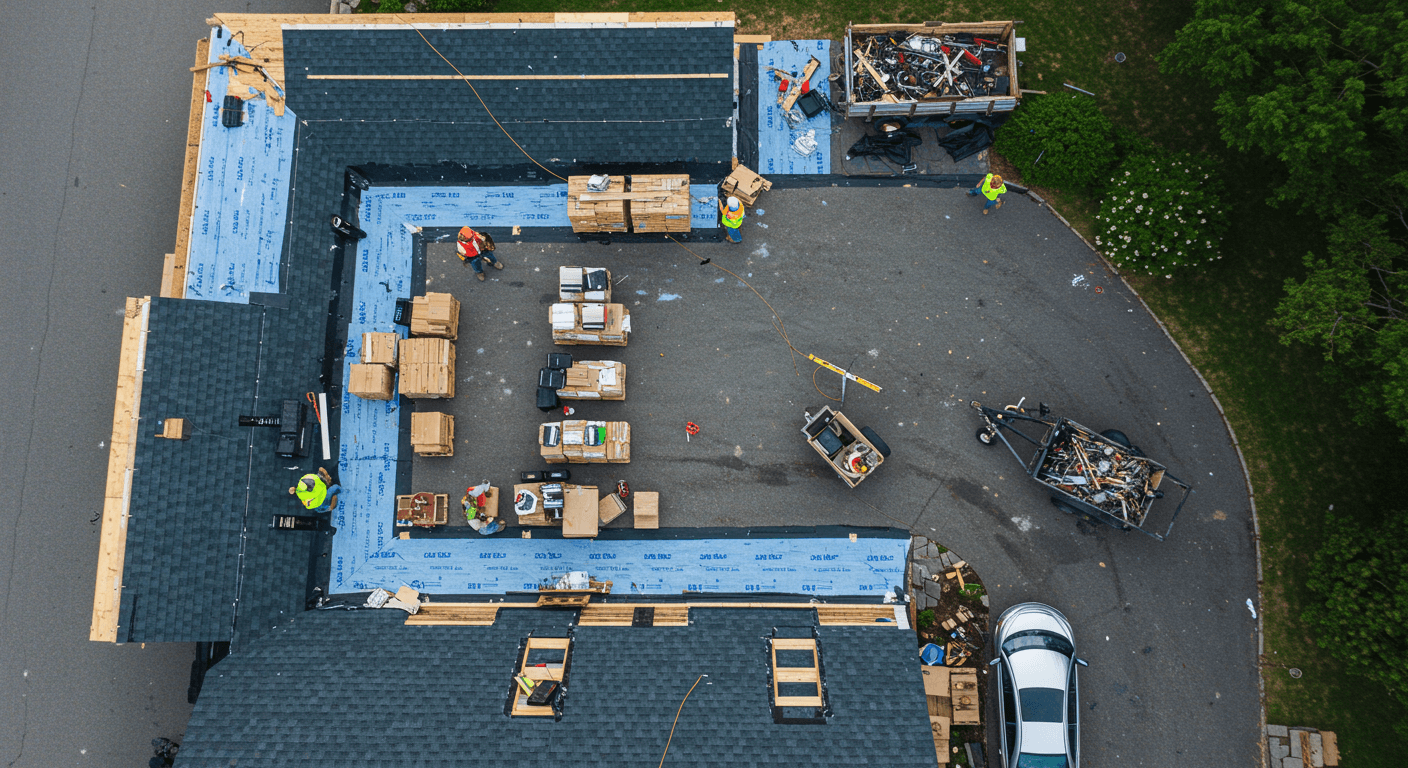
The first check happens at the "Deck-Ready" stage. Before a single shingle is nailed, the lead needs to upload photos of the re-nailed decking and the ice and water shield application. If I don't see the six inches of overlap on the valleys in the photo, the shingles don't go on.
The second check is the "Mid-Point" flash check. This is where most Jersey roofs fail. We focused specifically on skylights and pipe boots.
The final check is the "Ground-Sweep." This isn't just about picking up nails with a magnet; it's a systematic walk-around with the homeowner (if available) or a dedicated auditor.
Action Plan
Steps to Implement a Zero-Defect QC System
A systematic approach to implementing a quality control framework in a high-volume roofing shop that eliminates preventable callbacks.
Mandatory Photo Documentation: Require 15 specific photos for every job (decking, flashing, ventilation, final cleanup) uploaded to your CRM before the crew leaves the site.
The "Service Tech" Audit: Once a week, send your best service technician to a "finished" job by another crew to perform a blind inspection.
Shift Incentive Structures: Tie 12.5% of the crew leader's bonus to the absence of callbacks within the first 94 days post-install.
Digital Verification: Use platform features to integrate your lead data with your project management tools, ensuring that the specific requirements of the original verified lead are met during the install.
Want to skip the manual work and get exclusive, verified leads instead?
Get $150 in Free CreditsThe Metrics of Quality (The Transformation)
After 7.2 months of running this system, the data started to tell a very different story. Nolan's callback rate, which had been hovering around 11.4%, plummeted to 4.2%. On a volume of 210 roofs per year, that's 15 fewer headaches.
But the real win was in the margins. Because the crews knew they were being "graded," the quality of the initial install went up. They stopped rushing. Paradoxically, while the jobs took about 55 minutes longer on average to complete due to the documentation, the "total time per job" (including rework) dropped by 18.2%.
Nolan saw a 22.7% increase in his "Referral Close Rate" within nine months of implementing the QC checklist, as homeowners were noticeably more impressed by the structured walkthrough at the end of the project.
We also saw a shift in how he handled his pipeline. When you aren't terrified that your crews are leaving a trail of leaks behind them, you can scale your marketing with confidence. Nolan stopped worrying about whether his reputation could handle more work. He began to see how it works when you have a predictable, verified lead flow feeding a predictable, high-quality production engine. He wasn't just buying leads anymore; he was buying opportunities to showcase a superior process.
Scaling with Verified Certainty
The final piece of the puzzle was the psychological shift in his sales team. Before the QC overhaul, his reps were hesitant to push for a premium price in competitive markets like Summit or Westfield. They knew the back-end was messy.
Once the "Triple-Check" system was in place, the sales presentation changed. They started showing prospects the actual checklist. They showed the photo-documentation process. They turned "quality" from a vague promise into a tangible system. This allowed Nolan to raise his prices by 6.8% across the board without a drop in closing percentage.
He realized that his company was founded by people who were actually roofers and understood that the "secret sauce" wasn't a fancy logo—it was the discipline to do the boring stuff right every single time.
The "NJ Inspection" Hack
"In many New Jersey municipalities, the building inspector is stretched thin. Don't wait for them. Create your own "Pre-Inspection" report and leave a copy on the job site for the official inspector. When they see you've already documented the flashing and underlayment, they often become your biggest fans, leading to faster permit sign-offs and fewer "nitpick" delays."
The Process-Driven Future
The transition from a "firefighting" operation to a "process-driven" one isn't easy, but in the New Jersey market, it's the only way to protect your bottom line. Nolan isn't just a roofer anymore; he's a systems operator who happens to install shingles. And his P&L has never looked better.
When you integrate platform features that connect your lead verification with your project management workflow, you're not just buying software—you're buying the infrastructure to scale with confidence. Every verified lead becomes a documented opportunity to showcase your process, and every completed job becomes a referral engine.