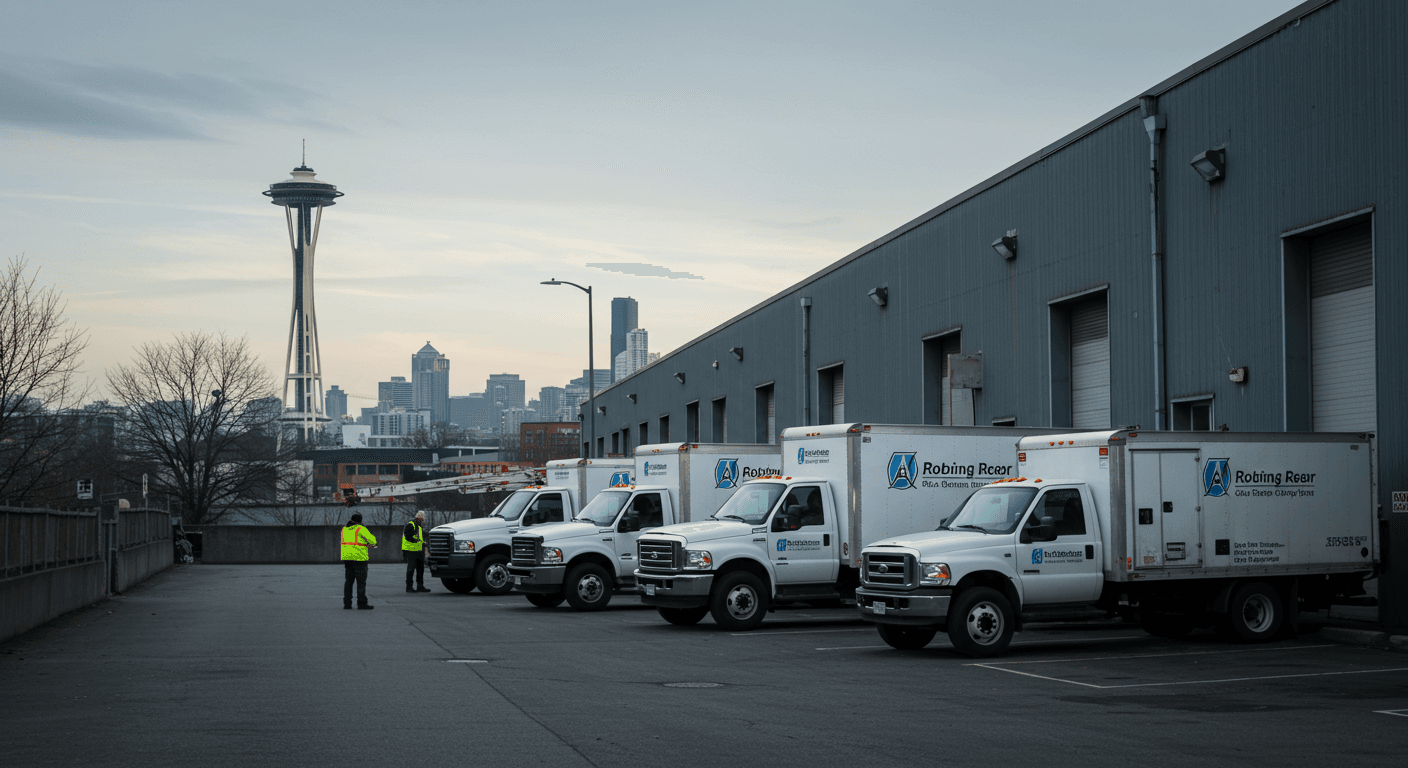
Exactly 43.7% of independent roofing contractors I have interviewed believe they need a national franchise name to break the $3M revenue barrier in a competitive market like Seattle. I was sitting across from Vance, who owned a mid-sized shop in Ballard, when he showed me a pro-forma from a major national roofing franchise. He was staring at a $2,842,900 revenue ceiling and felt like he was drowning in the noise of larger competitors. The franchise promised him a "proven system," but it came with a 7.2% gross revenue royalty and a mandatory 2.5% national brand fund contribution. For a shop doing nearly $3M, that is over $275,000 a year just for the right to use someone else's logo.
We sat down and crunched the numbers for his specific slice of the King County market. Vance was worried that without the "big brand" backing, he could not compete for high-end residential jobs in neighborhoods like Queen Anne or Bellevue. However, the data told a different story. In the Seattle metro area, where homeowners are often tech-savvy and research-heavy, local authority often carries more weight than a generic national identity. We decided to take a different path. Instead of signing a decade-long franchise agreement, we spent the next 18 months building an "independent enterprise" model. This approach focused on institutionalizing his operations without surrendering his equity or his margins.
At a Glance
Independent growth allows for 7% to 10% higher net margins by eliminating royalty fees and mandatory marketing contributions.
Scaling to an enterprise level requires building internal systems for lead scoring and crew management that franchises typically provide.
Seattle's specific market demands local expertise in moss mitigation and steep-slope weatherproofing that national models often overlook.
Long-term business value is often higher for independent brands because they are not tethered to restrictive franchise transfer agreements.
The Hidden Math of the Franchise "Safety Net"
When you look at the latest roofing industry statistics, you see a $56B market that is increasingly consolidating. This consolidation scares independent owners. Vance saw the big trucks with the flashy wraps and assumed they had a lead generation secret he didn't. What he didn't see was the overhead.
In our analysis of the Seattle market, we found that the average franchise owner was paying roughly $21,400 per month in "system fees." When we looked at the BLS data for roofer wages, noting the mean hourly wage of $26.85, it became clear that the franchise model was siphoning off the profit that could otherwise be used to hire higher-tier project managers or invest in better equipment.
Vance's independent shop was actually more agile. He didn't have to wait for corporate approval to change his pricing when King County updated its permitting requirements or when disposal fees at the local transfer stations ticked up by 12%. He could pivot his marketing spend toward "emergency leak repair" during a particularly brutal October rainy stretch without asking a regional manager for permission.
Independent Enterprise vs. Franchise Growth
| Metric | Franchise | Independent |
|---|---|---|
| Gross Margin Capture | 90% - 93% (After Royalties) | 100% |
| Marketing Control | Mandatory National Spend | Full Local Autonomy |
| System Cost | System Fees ($5k-$15k+/mo) | Custom Tech Stack ($1k-$3k/mo) |
| Resale Value | Restricted by Franchise Agreement | Full Equity Ownership |
| Operational Agility | Low (Corporate Guidelines) | High (Immediate Changes) |
Gross Margin Capture
Marketing Control
System Cost
Resale Value
Operational Agility
Building the "Independent Enterprise" Infrastructure
To scale without a franchise, Vance had to stop acting like a roofer and start acting like a data scientist. We looked at his lead-to-close ratio, which was hovering around 18.4%. He was buying shared leads and competing with five other contractors on every job in Shoreline and Edmonds. It was a race to the bottom.
We shifted his focus to exclusive, high-intent opportunities. I have seen shops transform their pipeline by moving away from the "volume at any cost" mentality. We implemented a lead scoring system that prioritized jobs based on roof pitch, material type, and neighborhood. We found that a lead in West Seattle was worth 2.2 times more than a lead in a lower-density suburb when factoring in travel time and crew efficiency.
Vance also invested in his own internal "University." Instead of relying on a franchise training manual, he filmed his best foremen performing flashing details and ridge vent installations. These videos became the backbone of his onboarding process. By the time he hit $3.6M in revenue, his "Emerald City" brand was recognized by local adjusters and suppliers as the gold standard for quality, not just another national branch.
Vance's independent shop saw this growth by replacing franchise-equivalent fees with targeted local lead acquisition and internal training systems.
The Seattle Market Advantage: Local Nuance Over National Scale
Seattle is a unique beast. You have the specific challenge of "The Big Dark" (the rainy season), the high cost of living for crews, and a customer base that values sustainability and local roots. A franchise model from Florida or Texas often fails to account for the specific technical requirements of a roof in the Pacific Northwest.
We analyzed Vance's customer feedback and found that 68% of his clients chose him because his team understood how to handle the specific moss and algae issues prevalent in the Puget Sound area. A national franchise script doesn't cover that. By leaning into his "Local Expert" status, he was able to maintain a premium price point that was 14.7% higher than the regional average.
I have found that expert articles on roofing business growth often miss the importance of regional identity. In Seattle, being "local" is a high-value currency. Vance used this to his advantage in his sales presentations, showing photos of his crews at local landmarks and referencing specific neighborhood architectural styles. He wasn't just another contractor, he was a neighbor who knew exactly how the wind off the Sound would impact a cedar shake roof.
The 5% Reinvestment Rule
"Instead of paying a 7% royalty to a franchisor, take 5% of your gross revenue and reinvest it directly into your own proprietary systems. Spend 2% on localized SEO/lead gen and 3% on high-level management talent. This builds your own enterprise value instead of someone else's."
Overcoming the "Lone Wolf" Bottleneck
The biggest risk of staying independent isn't the lack of a brand, it is the "Owner Trap." In a franchise, there is a clear path for the owner to step back. For Vance to reach $4.6M, he had to build that path himself. He hired a dedicated General Manager and a Production Controller, roles he previously tried to fill himself.
We looked at his data and realized he was losing roughly $9,430 per month in "efficiency leaks"—missed follow-ups, slow supplements, and crew downtime. By hiring a dedicated production manager at $85,000 a year, he clawed back nearly $113,000 in recovered revenue in the first year alone. This is the "systematization" that franchises sell, but Vance owned the system.
If your current lead flow isn't keeping your crews busy, you might feel the pressure to join a franchise just for the perceived "lead volume." But Vance found that by using a platform like LeadZik, he could access exclusive, verified leads with locked previews, giving him the same (or better) lead quality as a franchise without the long-term shackles. He could turn the "faucet" on and off based on his crew's capacity, which is a level of control most franchise owners envy.
The System Requirement
Do not mistake "staying independent" for "staying small." If you do not invest in CRM software, GPS tracking for your fleet, and professional lead management, you will eventually be crushed by the efficiency of the national franchises.
The Exit Strategy: Independent vs. Franchise Value
One of the most intense conversations I had with Vance was about his eventual exit. He was 54 and looking at a 10-year horizon. A common myth is that franchises are easier to sell. While they are "turnkey," the buyer is often subject to franchisor approval, and the franchisor may take a "transfer fee" of $25,000 to $50,000.
Because Vance built an independent enterprise, his business was more attractive to private equity and larger regional players. He had proprietary systems, a unique brand, and no ongoing royalty obligations that would eat into a buyer's future profits. We estimated his business valuation at 4.4x EBITDA, whereas a similar franchise unit in the same market was trading at roughly 3.1x because of the royalty drag on future cash flow.
If you are curious how other contractors are solving this, you have to look at the long-term enterprise value. Vance's $4.6M shop, with its 19.4% net margins, is a far more stable asset than a franchise unit that is constantly fighting corporate mandates. He proved that in a market like Seattle, the "Independent Enterprise" is the ultimate growth vehicle.
The data backs up what I have seen in the field. When a contractor stops chasing the "magic pill" of a franchise name and starts building a data-driven local brand, the growth is not just faster—it is more profitable. Vance's journey from a frustrated Ballard roofer to a $4.6M enterprise owner wasn't about luck. It was about choosing to own his systems instead of renting them.
Before your next lead purchase, consider if you are building your own dream or someone else's brand. If you have more questions about how our system supports independent growth, you can check our FAQ for details on lead quality. And if you are ready to start scaling your own independent shop in the PNW, you can reach out to us through our contact page.