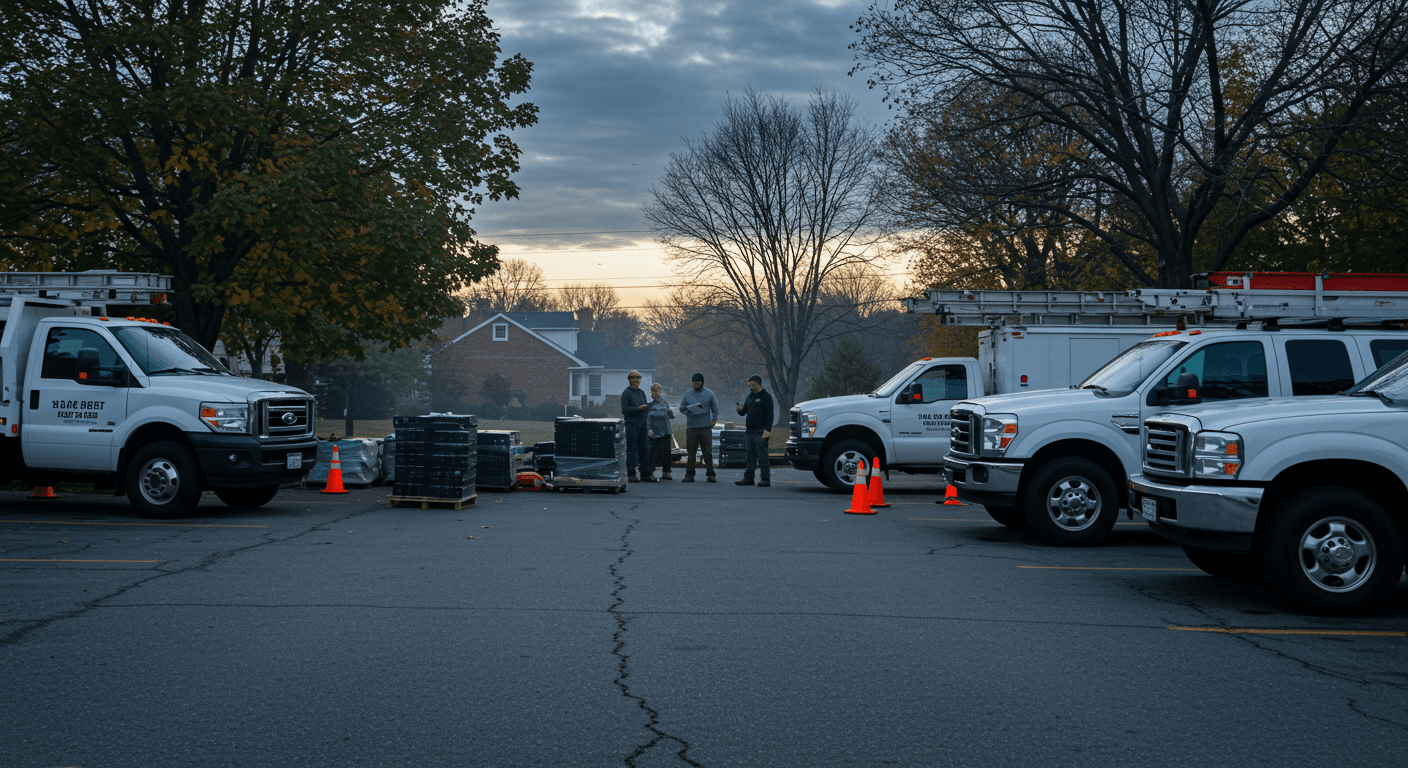
Roughly 62.4% of solo roofing contractors who attempt to hire their first full-time crew in Western New York fail to keep that team on the payroll for more than 11.2 months. That is a staggering loss of momentum for any owner trying to move from the ladder to the office. I was reviewing the books with a contractor named Vance last October at a diner in Greece, New York, just as the first lake-effect winds were starting to kick up. He was exhausted. He had closed $482,750 in gross sales that year working mostly solo with two "helpers," but his take-home pay was barely higher than when he was a lead sub for someone else.
The math of scaling a roofing operation isn't just about adding more hands. It is about a fundamental shift in how you view your hourly value. When you are the one on the ridge in Irondequoit, your value is capped by your physical stamina. To move to a multi-crew operation, you have to stop being a roofer and start being a CEO. This transition is where most Rochester shops hit a wall, usually because they try to scale their chaos instead of their systems.
Scaling Models: Subcontractors vs. In-House Crews
| Factor | Subcontractor-Heavy Model | Internal Crew Model |
|---|---|---|
| Upfront Overhead | Low ($0 - $1,200/month) | High ($12,400+ for payroll/insurance) |
| Quality Control | Variable (Harder to enforce) | High (Direct supervision) |
| Profit Margin | 14% - 19% net | 22% - 31% net |
| Scaling Speed | Instant (Based on availability) | Slow (Hiring and training take 3+ months) |
Upfront Overhead
Quality Control
Profit Margin
Scaling Speed
At a Glance
Transitioning to a CEO mindset requires delegating the $25/hour tasks to focus on $250/hour growth activities.
Financial stability during scaling requires a minimum of 3.5 months of operating capital in the bank.
Lead generation must be automated to ensure crews aren't sitting idle during the Rochester rainy season.
Standard Operating Procedures (SOPs) are more valuable than the best crew lead in the world.
The 27% Net Profit Myth
Many solo operators believe that hiring a crew will automatically double their profit. In reality, the first 8.5 months of adding a crew often result in a "profit dip." You're paying for a foreman, a specialized dump trailer, and significantly higher workers' comp premiums before the efficiency of that crew fully kicks in.
I've seen shops in the 585 area code try to jump from solo to three crews overnight. It almost always ends in a cash flow crisis. When Vance and I looked at his numbers, we realized he was losing roughly 12.8% of his potential margin simply because he was still trying to do the estimates himself while his guys waited for materials at a job site in Pittsford. You cannot be the bottleneck and the leader at the same time.
The first step to a multi-crew operation is mastering your unit economics. You need to know exactly what it costs to put a square of shingles on a roof in Rochester, including the local permit fees and the 9.3% buffer for waste that seems to plague older Victorian homes in the Park Avenue district.
Building a Predictable Lead Pipeline
You cannot scale with "word of mouth" alone. While referrals are great, they are inconsistent. A multi-crew operation requires a minimum of 18 to 24 qualified leads per month to keep the schedule full. If you have six guys standing around because a closing fell through on a Friday morning, you are burning roughly $340 per hour in idle labor and overhead.
I've encouraged many of my clients to check out expert articles on growth strategies to understand how to diversify their lead sources. In a market like Rochester, where the roofing season is compressed between April and late November, every day of downtime is a permanent loss of revenue. You need a mix of organic search, local service ads, and a reliable partner for exclusive opportunities.
If you aren't sure how to handle the influx of data that comes with more leads, the FAQ section on lead quality can help clarify how to filter for high-intent homeowners. Scaling is a volume game, but it's also a conversion game. If your sales process is still a "back of the napkin" sketch, you'll lose 16% or more of your bids to more professional-looking outfits from Buffalo or Syracuse who are moving into the Monroe County market.
for contractors who implement a formal sales training program within the first year of scaling
The Logistics of the First Crew
Hiring your first crew lead is the most dangerous hire you'll ever make. This person is essentially your surrogate. If they cut corners on a flashing job in a windy suburb like Webster, it's your reputation on the line. I recommend looking for a foreman who has at least 6.5 years of experience but is tired of the administrative headache of running their own tiny "chuck-in-a-truck" operation.
Vance eventually found a lead through a SCORE business mentorship program connection. This mentor helped him see that he wasn't looking for a worker; he was looking for a manager. Once that foreman was in place, Vance's role shifted to "Lead Salesman and Operations Director."
We implemented a simple rule: if a task could be done by someone earning $30 an hour, Vance wasn't allowed to touch it. This freed him up to network with local realtors and property managers in the 14607 zip code, which eventually led to a consistent stream of multi-family roof replacements.
Overcoming the Seasonal Rochester Slump
Growth in Western New York is unique because of our winters. To maintain a multi-crew operation year-round, you have to pivot your strategy starting in September. While solo guys might hunker down and live off their summer savings, a multi-crew shop uses the winter for internal training, equipment maintenance, and aggressive "early bird" spring booking campaigns.
According to the SBA business growth guide, managing seasonal cash flow is the number one reason small businesses in northern climates fail. You need a line of credit or a significant cash reserve to keep your best talent from jumping ship to a competitor the moment the first snow hits the ground.
The 15% Retention Bonus
"To keep high-quality crew leads through the Rochester winter, consider a 15% retention bonus paid out in March. This ensures your team is ready to hit the ground running the moment the asphalt plants open back up."
Systems Over Sweat
The difference between a $600k shop and a $2.8M shop is systems. When you're solo, the "system" is your brain. When you have three crews, the system must be a set of documents and software that anyone can follow.
This includes:
- A CRM to track every customer interaction from the first call to the final warranty send-off.
- Digital estimating tools that prevent "guesstimate" errors that can cost you $1,100 per job in missed material costs.
- A standardized photos-at-every-stage requirement for crews to ensure quality without you being on-site.
I've seen contractors try to build these systems from scratch, but it's often more efficient to use existing platforms. If you ever run into technical hurdles or need advice on integrating lead flow into your CRM, don't hesitate to reach out via our contact page for guidance.
Common Questions
The Path Forward
Scaling is not a linear path. It is a series of plateaus and climbs. Vance struggled for the first 5.5 months after hiring his crew, but by the end of year two, he had three crews running and his personal income had jumped by 37.8%. He wasn't working harder; he was just managing a better machine.
The goal isn't just to have more trucks with your logo on them. The goal is to build a business that serves your life instead of consuming it. In a competitive market like Rochester, the shops that win aren't necessarily the ones with the fastest installers—they are the ones with the most resilient systems and a consistent flow of verified work.