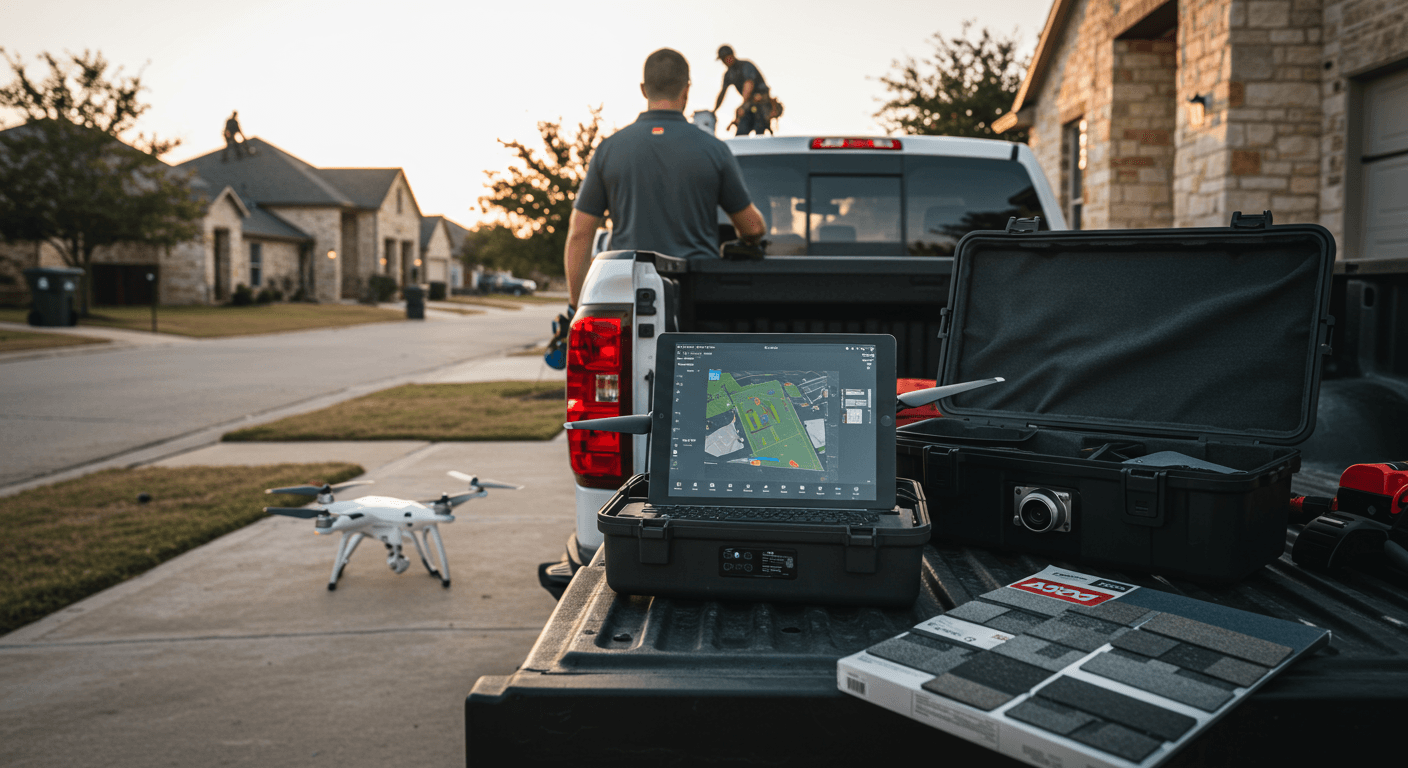
The Texas roofing market is in the middle of a hard reset. Carriers are slower and pickier on claims, and impact-resistant shingle packages can swing more than 8.4% quarter to quarter. In pockets like Plano, Round Rock, and Pearland, the old playbook of showing up after hail and acting like an order taker is fading. Homeowners now collect bids the way they compare trucks, and five estimates before they even talk deductible is common. That turns a lead problem into a conversion problem, which pushes owners to treat the funnel like a process, not a lucky streak.
I was on the phone last month with Wyatt, who runs twelve crews out of a shop near San Antonio. He had put $15,830 into digital leads over ninety days, but his team closed only 16.2%. When we opened the records, reps were burning 43% of their week on tiny repairs, satellite-office curiosity calls, and homeowners who wanted a conversation about solar readiness, not a roof. Once Wyatt stopped feeding the team sheer volume and raised the floor on intent, his close rate moved to 25.7% in under ninety days. He did not need a fire hose. He needed cleaner water through the same pipe.
Where Texas roofing sales teams leak margin
| Metric | Volume-first selling | Precision-first selling |
|---|---|---|
| Average close rate (tracked shops) | 14.2% | 26.8% |
| Customer acquisition cost (blended digital) | $1,240 | $745 |
| Rep burnout signal (qualitative) | High | Low |
Average close rate (tracked shops)
Customer acquisition cost (blended digital)
Rep burnout signal (qualitative)
Illustrative ranges from mixed Texas metros; your source mix and radius will move the numbers, but the direction usually holds when qualification tightens.
The math behind a flat close rate
A single point of slippage is not a rounding error when density, deductibles, and labor are all expensive.
Cost per acquisition does not sit still across Texas. In DFW, a one-point drop in close rate on a mid-sized shop can quietly pull something like $12,450 a month out of net profit once you stack labor burden, trucks, and supplements that never land. The reflex is often to buy more leads, which spreads the sales team thinner and trains reps to rush. That is how you get fast talk tracks on the wrong roofs.
Management writing in the Harvard Business Review Small Business section keeps repeating a useful idea for operators: brute-force marketing scales poorly once service delivery is local and human. For roofers, that shows up as region-to-region tone. A Gulf Coast homeowner is thinking about wind uplift and moisture behind the deck. A West Texas owner is thinking about UV, thermal movement, and whether the attic is cooking the shingles. If the pitch does not shift with those realities, you are not losing on price alone. You are losing on relevance.
Close rate levers that actually move in Texas
Score leads on a simple 1 to 10 scale using roof age, storm proximity, and whether the homeowner already has an adjuster file open.
Treat the first minutes as part of the job: a 4.5-minute contact goal on digital inquiries beats a perfect slide deck delivered two hours late.
Train reps on local failure modes, not generic manufacturer talking points: hail patterns near I-35 feel different than humidity issues closer to the coast.
Build estimates that show what you saw: photo sets, labeled damage, and clear scope reduce the trust tax before you ever discuss price.
Qualification as a growth lever
Time is the hidden line item. Protect it the same way you protect copper and underlayment.
The mistake I see most is equal urgency for every ring and every form fill. Not every lead deserves a same-day run to the Hill Country. If your estimator burns four hours on a roof replaced eighteen months ago, you paid tuition on diesel and labor for a conversation that was never going to fund payroll.
Qualification is the filter in front of your best asset, which is still a skilled rep in front of a homeowner. When your intake shows enough detail that the desk can see scope before wheels turn, you get a short pre-close inside the office. The rep knows whether this is a repair, a full replacement, or a wait-and-see before the truck leaves. Plenty of expert articles on home service growth point at qualification as the single biggest lever for rep retention, and field shops feel it first when win rates climb.
The number is not magic. It is what happens when fewer conversations start with five other logos in the homeowner's recent calls list.
Technical precision in the living room
Satellite maps are not novel anymore. Proof on a tablet still is.
In Austin and Houston, many buyers have already looked at their own roof online before you knock. A paper-only estimate can feel like a step backward. Drone stills, tight zooms on hail hits, and moisture reads that homeowners can see in real time shift the talk track from skepticism to sequencing. You are not arguing whether work exists. You are deciding when the crew can be there safely and legally.
The SBA Grow Your Business Guide frames sustainable expansion around efficiency, not heroics. For roofing, one of the cleanest efficiency wins is density inside a tight radius. If you lift close rate inside fifteen miles, you cut windshield time, stack production, and protect gross margin per job without touching your labor rate.
The 72-hour trust window
"In many Texas metros, deals cool fast once homeowners sit with three PDFs and a group text full of opinions. If the contract is not in their hands within about 72 hours of inspection, you are often fighting inertia, not price. Build the estimate so you can send it before you leave the driveway, or within one business morning at worst."
Breaking the three-bid habit
You will not out-yell adjusters and neighbors. You can out-clarify them.
Texas homeowners hear the same advice: get three bids. That is not evil. It is predictable. If you want the job without a week of silence, bring something the next two contractors are unlikely to match. Speed matters, but so does calm. When a lead is blasted to half the county, you are racing to the bottom before you open your mouth. When the homeowner has not been hammered by identical scripts, you can ask better questions and set a schedule that fits the crew calendar.
Margin also gets easier when you know what happens when a lead is weak. I like teams that actually read how refunds work before they scale spend, because the policy details change how aggressively you can test a new channel without feeling exposed on junk data.
Action Plan
Weekly loss review that changes close rate
Treat every no like a datapoint. Patterns show up fast when you stop guessing.
Pull last week's signed jobs and lost bids with the same lead source tags attached.
Tag each loss: price, timing, scope mismatch, financing, competitor, or talk-track gap.
Compare metal versus shingle, steep versus walkable, and insurance versus retail to spot training holes.
Assign one fix: a new opener, a tighter inspection script, a financing one-pager, or a dispatch rule on radius.
If metal is trailing composite by double digits, you probably have a story problem, not a crew problem. If timing kills you after storms, your production promise may be honest but unreadable on the page. Small lifts stack. A couple points from qualification, a couple from presentation, and a couple from follow-through is how a shop ends up owning a ZIP code instead of renting attention on it.