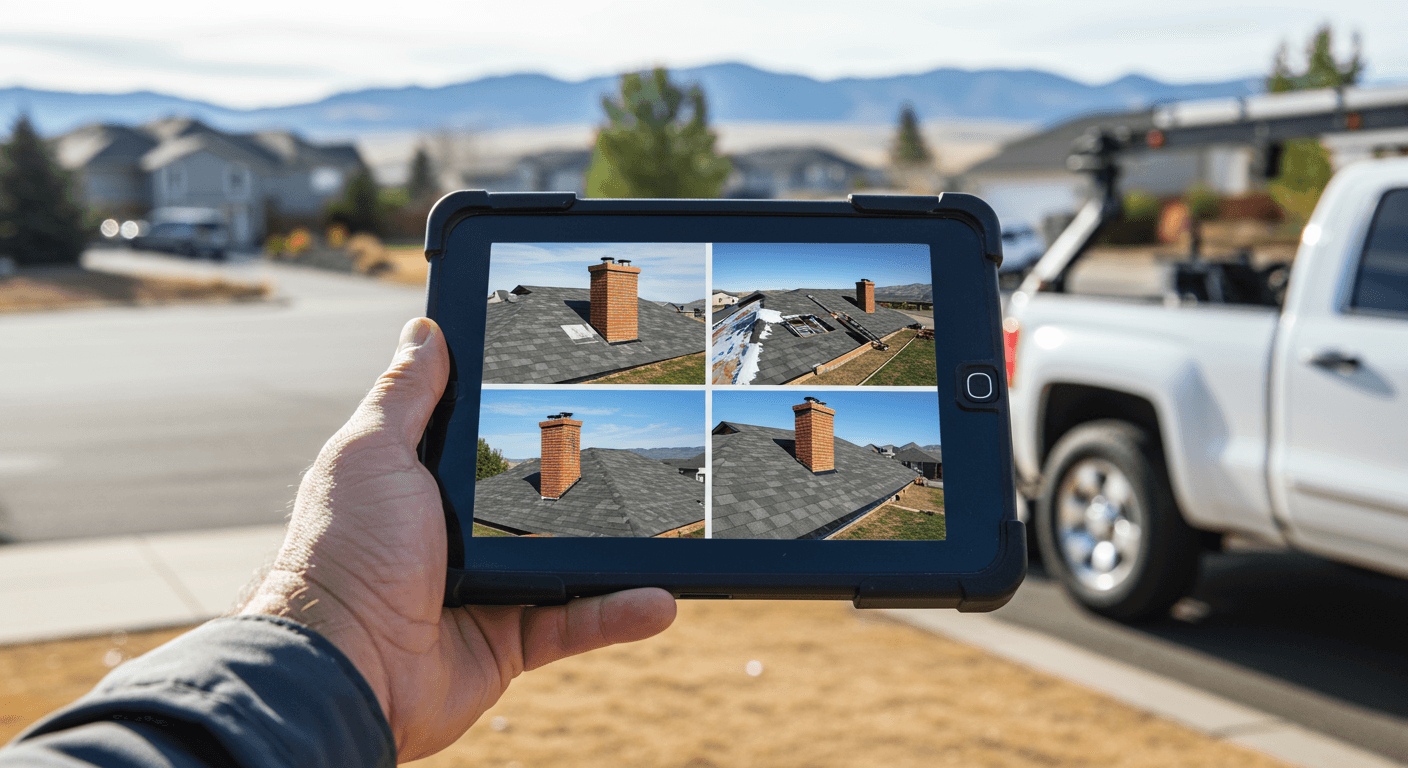
Standing on a ridge vent in Nampa, looking at a valley that had been "finished" twice, it hit me that we weren't failing at roofing, we were failing at the handoff. Finn, the owner of a mid-sized shop I was visiting, was frustrated because his crew had just spent four hours fixing a leak on a job that was supposed to be his "cleanest" of the month. The cost wasn't just the labor or the fuel for the truck, it was the fact that his best lead technician was stuck in a valley instead of starting a $28,450 tear-off in Meridian.
Quality control in the roofing industry often feels like a luxury until the moment a homeowner calls after a Boise thunderstorms with a ceiling stain. According to market research from IBISWorld, efficiency and reputation management are the primary drivers of long-term profitability in this fragmented industry. In Idaho, where wind speeds can gust over 85 mph in the Treasure Valley and snow loads vary wildly as you move toward the Panhandle, "good enough" is a recipe for bankruptcy.
I've spent the last 12.5 years obsessed with the math of roofing operations. I've seen that a lack of a formal QC process usually costs a shop between 9.4% and 15.2% in annual net profit. This isn't just about shingles, it's about the systematic waste of your most expensive asset: time.
At a Glance
Reducing callbacks can increase net profit margins by 11.4% or more by freeing up crews for new production
Internal QC models are cost-effective but risk "blind spots" if the inspector is also the production manager
Third-party audits offer the highest level of liability protection and are often required for premium manufacturer warranties
Hybrid tech models using photo-documentation reduce inspection time by 42% compared to manual site visits
The High Cost of the "Tailgate Inspection"
Most Idaho contractors rely on what I call the "Tailgate Inspection." The lead hand stands at the back of the truck, looks up at the roof, asks the crew if they flashed the chimney, and takes their word for it. This isn't a process, it is a hope-based strategy.
Last year, I analyzed the books for a shop in Coeur d'Alene that was doing roughly $3.2 million in annual revenue. They were losing $142,800 a year just to "nuisance callbacks." These weren't major structural failures. They were missed kick-out flashings, over-driven nails, and debris left in gutters. When we broke it down, each callback cost them an average of $647 in lost opportunity and direct labor.
If you want to scale, you have to choose a model that moves beyond the tailgate. Below is a comparison of the three most effective frameworks I've implemented for my clients.
Due to labor waste and reputation damage, callback increases directly impact profitability.
Option 1: The Internal Dedicated Inspector
In this model, you hire or promote a specific person whose only job is to sign off on completed projects. They do not haul materials. They do not manage the schedule. They only inspect.
The Pros:
The primary benefit is consistency. When one person is responsible for the final 15-point checklist, they develop an eye for the specific quirks of your crews. They know that the crew led by Jaxon always struggles with valley transitions, so they check those first. This person can also be trained to NCCER standards to ensure every roof meets the Idaho building code requirements for high-wind fastening.
The Cons:
The biggest hurdle is the overhead. You're looking at a salary of $58,000 to $74,000 plus a vehicle and insurance. For a shop doing under $2 million, the ROI can be hard to justify unless your callback rate is currently over 12%. There is also the "buddy-buddy" risk. If the inspector is friends with the crew leads, the inspections can become lax over time.
Critical QC Rule
Never allow the person who sold the job to be the final quality control inspector. Their incentive is to close the file and get paid, which often leads to overlooking minor operational defects.
Option 2: The Third-Party Audit Model
This is becoming more popular in the high-end residential markets of Eagle and Sun Valley. You contract with an independent roofing consultant or a specialized inspection firm to verify the work.
The Pros:
Unbiased data. A third party doesn't care about your production schedule or your crew's feelings. They provide a "pass/fail" report that you can show the homeowner. This is an incredible sales tool. Telling a prospect that an independent auditor will certify their roof justifies a 10% higher price point than the "chuck-in-a-truck" competitor.
The Cons:
Scheduling is a nightmare. You are at the mercy of the auditor's calendar. If your crew finishes on Tuesday but the auditor can't get there until Friday, the homeowner is staring at a dumpster in their driveway for three extra days. This can tank your referral rate.
The Idaho Wind-Code Edge
"In Idaho's "Special Wind Regions," like parts of Ada and Canyon County, standard 4-nail patterns often aren't enough. Use your QC process to document a 6-nail high-wind installation. It's a major selling point that protects you from the 90-mph gusts we see in the spring."
Option 3: The Tech-Enabled Hybrid (Photo-Documentation)
This is the system I recommend for 82% of the contractors I consult with. It involves using a mobile app where the crew must upload specific photos of every critical stage: ice and water shield in the valleys, starter strips, flashing details, and the final ridge cap.
The Pros:
It creates a "digital paper trail" without the cost of a full-time inspector visiting every site. Your production manager can review 5-10 jobs from their office in 30 minutes. It also forces the crew to look at their own work through a lens. When you know you have to take a clear, high-res photo of the counter-flashing, you tend to do a better job on the counter-flashing.
The Cons:
Implementation friction. Crews often hate "babysitting the app." If you don't have a solid training program, you'll end up with 50 blurry photos of shingles that tell you nothing about the actual water-tightness of the roof.
Action Plan
How to implement a 4-step digital QC process without slowing down your crews
A systematic approach to implementing photo-based quality control that protects your margins without creating crew resentment.
The Critical 5 Checklist: Identify the five areas where 90% of your leaks occur (e.g., chimney, valleys, pipe boots). Require timestamped photos of these BEFORE the shingles cover them.
The "Clean Site" Verification: Require a wide-angle photo of the entire property from the street and the backyard to prove the magnet was run and the yard is spotless.
The Morning Audit: Have your production manager review all photos from the previous day's completions by 8:30 AM. Any "fails" are sent back to the crew before they start their new job.
The Client Handoff: Email the curated photo report to the homeowner along with their invoice. This reduces payment friction and increases "review-ready" happiness.
Want to skip the manual work and get exclusive, verified leads instead?
Get $150 in Free CreditsQuality Control Model Comparison
| Factor | Tailgate Inspection | Formal QC System |
|---|---|---|
| Cost per Job | $0 (Tailgate inspection) | $47-$89 (Tech hybrid) or $185-$240 (Third-party) |
| Inspection Time | 2-5 minutes (visual only) | 15-20 minutes (photo review) or 45-60 minutes (on-site audit) |
| Callback Reduction | Minimal (8-12% callback rate) | Significant (3-5% callback rate with proper implementation) |
| Liability Protection | Low (no documentation) | High (photo documentation or certified audit) |
| Scalability | Poor (relies on memory) | Excellent (systematic process) |
Cost per Job
Inspection Time
Callback Reduction
Liability Protection
Scalability
Calculating the ROI on Quality
I recently worked with a contractor who felt that spending $1,400 a month on a QC software and a part-time reviewer was "too expensive." We looked at his numbers. He was averaging 2.4 callbacks per month. Each one took a two-man crew about 3.5 hours to resolve.
When we factored in the fuel, the shingles, and the lost revenue from the job they didn't start that morning, his actual cost per callback was $892. That's $2,140 a month in pure waste. By spending $1,400 on the system, he "bought" back $740 in profit and freed up 16 hours of crew time that generated an additional $6,200 in production revenue.
This kind of operational efficiency is exactly why we started LeadZik. Our company story is rooted in the frustration of seeing great contractors waste their hard-earned leads on inefficient processes. When you are buying exclusive, verified leads, you can't afford to burn those margins on rework. Every dollar you save on a callback is a dollar you can reinvest into your sales pipeline or better equipment.
Which Model Fits Your Shop?
The "right" choice depends on your volume and your long-term goals. If you're doing 4 roofs a week, the Tech-Enabled Hybrid is your best bet. If you're running 15+ crews across Southern Idaho, you probably need a mix of a Dedicated Internal Inspector and digital documentation.
Regardless of the model, the goal is to stop being a fire-fighter. You didn't start a roofing business to spend your Saturdays apologizing to homeowners in Meridian. You started it to build a profitable, scalable asset. A systematic QC process is the only way to ensure that the expert operational advice you follow actually turns into cash in the bank.